
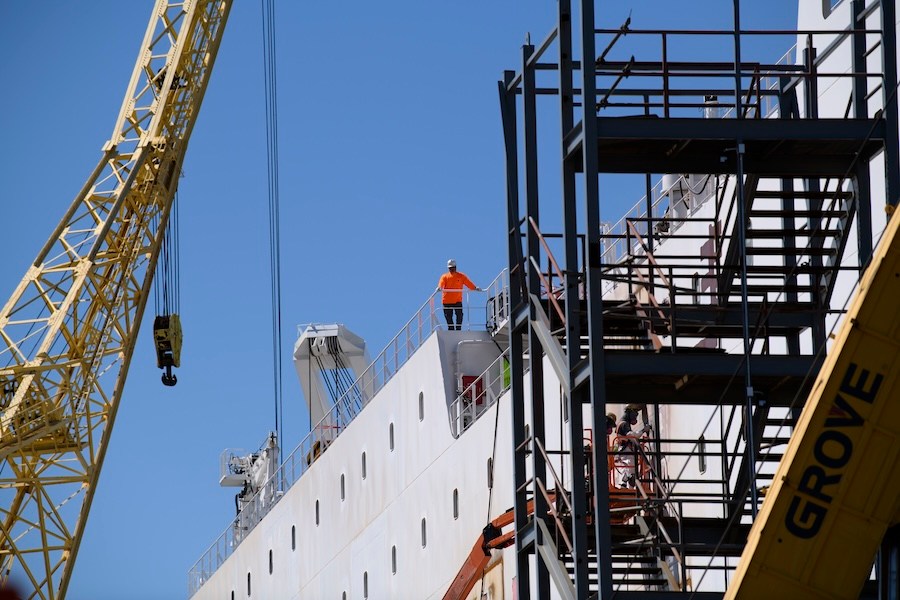
The United States and China called off a fight over commercial shipping Monday, but the truce could weaken Washington’s efforts to curb China’s rise as a maritime power.
President Donald Trump had recently started imposing fees on Chinese commercial ships when they docked in U.S. ports. The policy was designed to limit the use of Chinese vessels for transporting goods to the United States.
China retaliated with similar levies on American vessels. But the countries agreed to suspend the fees for a year as part of their recent trade pact. They announced Monday that fee collection had stopped.
The decision to halt the fees showed that Trump’s efforts to revive American shipyards, which produce almost no large commercial vessels, face obstacles. He has promised a maritime action plan, due last week, to support shipyards and train up mariners.
China made 60% of the world’s large vessels in 2024, up from 44% five years earlier, according to BRS Shipbrokers. China has produced more than 700 large commercial vessels this year and the United States just one, according to BRS.