
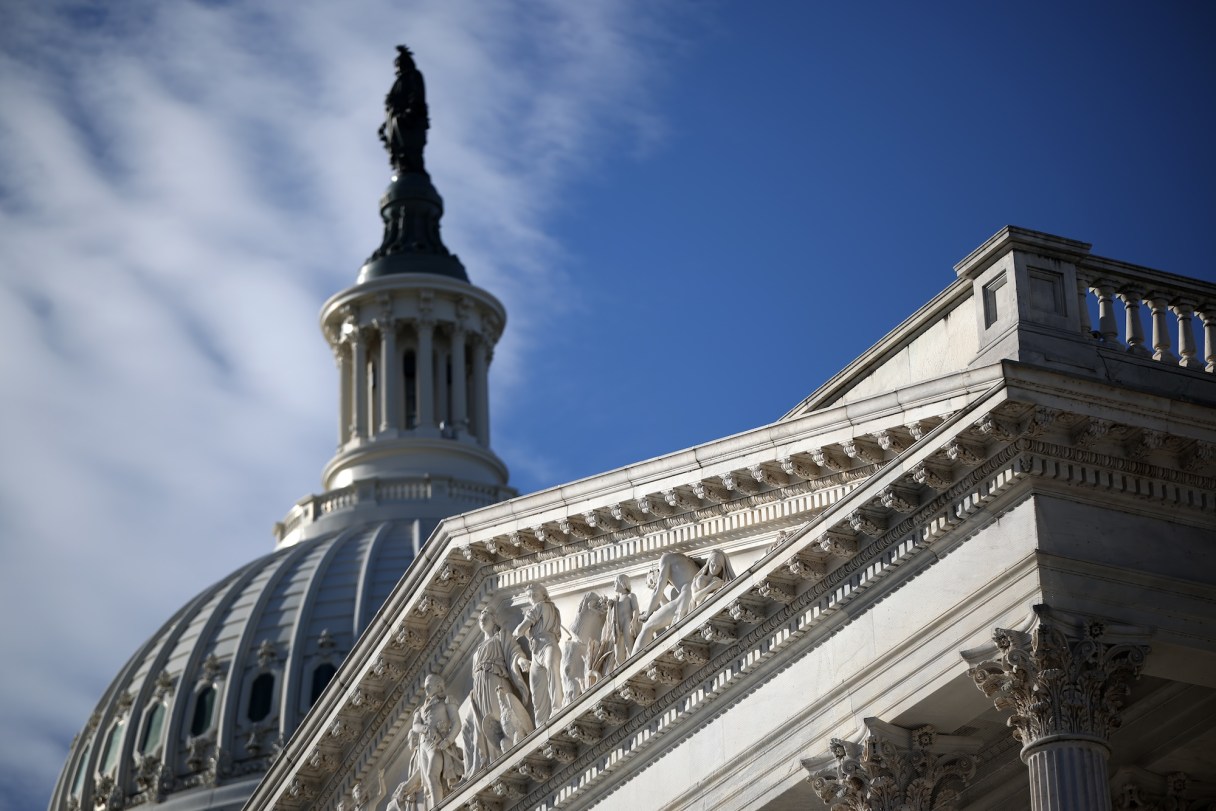
The way Congress makes decisions seems almost designed to produce government shutdowns. Senate rules require a three-fifths supermajority to close debate on most bills.
This means senators from both parties must agree to advance legislation to a final vote. In such a polarized political environment, negotiating an agreement that both sides can accept is no easy task. When senators inevitably fail to agree on funding bills, the government shuts down, impacting services for millions of Americans.
Arbitration could offer us a way out of this mess. The parties select a neutral third party to resolve their disagreement. While we probably would not want to give unelected arbitrators the power to make national policy decisions, arbitration could help resolve the much more modest question of whether an appropriations bill could advance to a final vote in the Senate. This process would allow the Senate to make appropriations decisions by a majority vote while still protecting the minority’s interests.
Decisions about whether to close debate on appropriations bills could be made by a three-person panel. Senate Democrats and Republicans would each select one arbitrator, and the two party-appointed arbitrators would jointly select a neutral third. This panel would decide whether proposals fairly balanced the interests of both sides. Any proposal approved by a majority of the panel would move to a final vote in the Senate, where it could be passed by a simple majority.
Senators would need to define what it means for a funding proposal to be fair to both sides. Given support for minority rights in the Senate, it may be much easier for senators to reach an agreement on an arbitration standard than it would be to reach an agreement on funding the government.
For example, senators might agree the majority should be able to implement its agenda, while the minority should be able to protect its interests. This could be expressed as three principles to guide arbitration decisions. First, the majority should generally be able to implement its funding priorities. Second, the majority should not be permitted to implement its priorities in a way that causes substantial harm to the minority. Third, the minority should be able to incorporate its priorities into legislation so long as doing so would not significantly conflict with the interests of the majority.
Deep disagreements over funding policy would remain, and arbitration proceedings might often be contentious. Any standard would necessarily be subjective, and arbitrators would be required to make difficult and sometimes controversial decisions.
However, arbitration would decrease the likelihood of a shutdown while also ensuring that the interests of both parties are reflected. The process would not be perfect, but it would almost certainly be better than our present dysfunction.
When the alternative to a negotiated agreement is arbitration, the range of possible outcomes is much smaller. As a result, senators may find it easier to reach agreements. The mere possibility of arbitration could help prevent shutdowns in the future.
Congress’s appropriations process is broken. Creating an arbitration process for funding bills could help fix it. Instead of spending our time blaming Democrats or Republicans, let’s focus on designing a system that works.
Joseph Crupi is a legal scholar who studies the legislative process. He previously served as a Scholar-in-Residence at the Law Library of Congress.