
While competition heats up in the final weeks of college football’s regular season as usual, a handful of Southeastern Conference teams are getting their annual sweet gift: a cupcake on the schedule before rivalry showdowns take place on Thanksgiving weekend and postseason play arrives in the form of bowls or the 12-team playoff.
Third-ranked Texas A&M (10-0) hosts Samford (1-10) of the Southern Conference in NCAA Division I’s lower-tier Football Championship Subdivision on Saturday, when No. 4 Georgia (9-1) hosts Charlotte (1-9) of the American Conference, No. 10 Alabama (8-2) hosts Eastern Illinois (3-8) of the OVC-Big South Association in the FCS, and LSU (6-4) hosts Western Kentucky (8-2) of Conference USA.
Whether these games promise a stress-free Saturday is up for debate, but they were scheduled with the intention of giving projected contenders a breather before the home stretch. This is a longtime scheduling feature in the SEC, helped somewhat by the league requiring only eight conference games.
That comes to an end next season. In August, the SEC announced a switch to nine conference games in 2026, which has left coaches fearing a lot more is at stake than the loss of an easy win in late November.
“I’ve already been on the record saying it makes no sense to go to nine games in the SEC,” Kentucky coach Mark Stoops said Wednesday. “Everybody outside of our league, of course they want us to. They want us to devour each other like we’re doing. Makes no sense.”
Stoops, in his 13th season with the Wildcats, is the longest-tenured coach in the league.
Texas fifth-year head coach Steve Sarkisian is near the end of his second regular season coaching in the SEC. The Longhorns competed in the Big 12 for his first three seasons.
“In the National Football League right now, today, there are 451 active players from the Southeastern Conference,” Sarkisian said. “The next-closest conference with players in the NFL is the Big Ten with 288, then the ACC with 218, and then the Big 12 with 207. So that should just speak to the volume of quality players that are in this league.”

The Big 12 and Big Ten already play nine-game conference schedules, and SEC commissioner Greg Sankey made clear the reason for his league’s impending shift, noting “our requirement to play an additional power opponent ensures SEC teams are well prepared to compete and succeed in the College Football Playoff.” A month later, the ACC made the move as well, albeit with some wrinkles.
All conferences are looking for ways for their teams to spruce up their resumés for the College Football Playoff, which had four SEC teams last season in its first edition as a 12-team event after a first decade with a four-team format.
Still, Missouri coach Eli Drinkwitz criticized the selection process, which this fall added more emphasis on a team’s schedule strength. The CFP committee this week ranked independent Notre Dame ninth — one spot ahead of SEC member Alabama in a decision that turned heads. Both teams have two losses, but the Crimson Tide have four ranked wins compared to Notre Dame’s one ranked win against Big Ten member Southern California.
“The level of inconsistencies that have been created is hard to ignore, and we were all given the promise there’s going to be a strength of schedule metric factored in,” Drinkwitz said. “Didn’t happen.”
Nine-game conference schedules won’t eliminate all so-called guarantee games from the schedule — with the guarantee (in general) a home win for the SEC team and a good paycheck for the visitors. Most teams in the Power Four conferences play 12 regular-season games and strive for 10 of those to be against their peers, leaving room for two other games that will almost certainly be against FCS or Group of Five teams. Payouts for FCS games are usually less than for Group of Five matchups.
This season, teams from the higher-tier Football Bowl Subdivision — which includes P4 and G5 programs — are 118-4 against FCS opponents with a margin of victory of 34.5 points, according to Sportradar. Within that, power conference teams are 56-0, winning by an average of 42.7 points. They are virtually guaranteed wins, and that can be attractive to team schedule-makers looking at seasons that can stretch to 16 games when the CFP is included.
Kentucky is out of the playoff picture, and Missouri and Texas are in the lower half of the CFP selection committee’s 25-team rankings with three losses apiece. But it’s not just those on the outside looking in who have complaints.
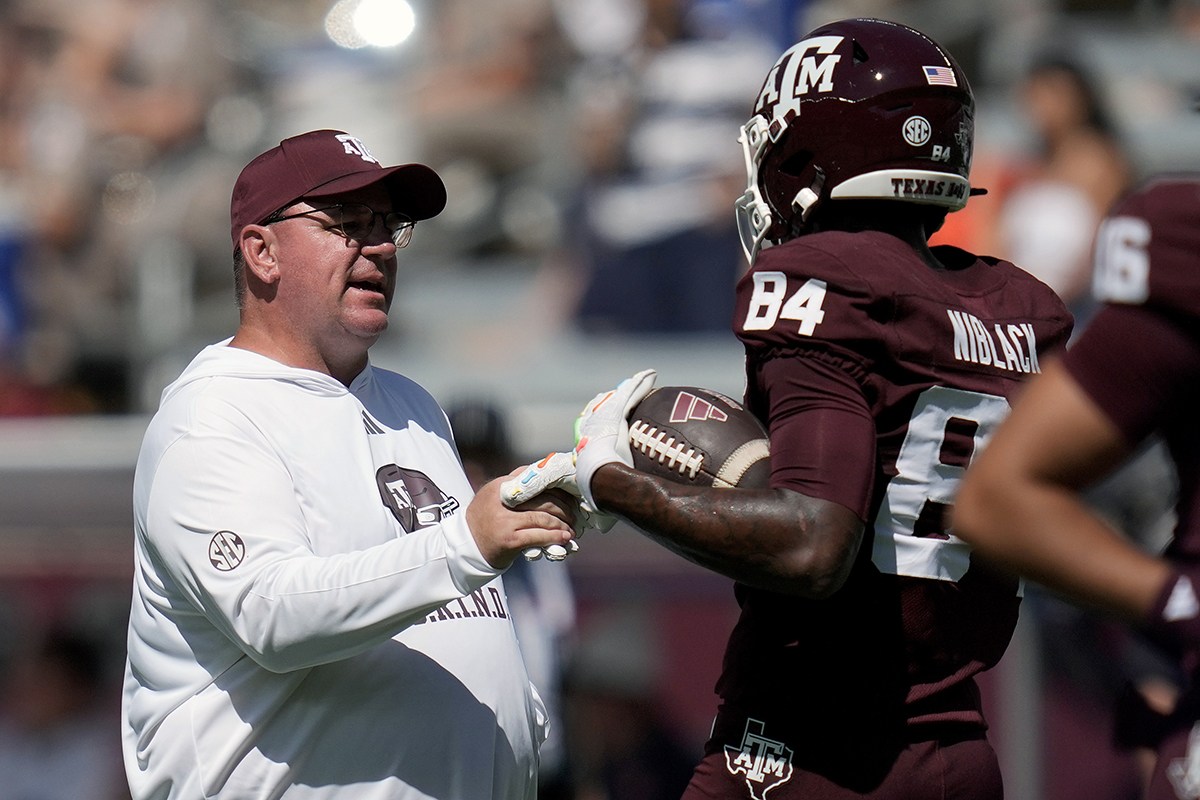
Texas A&M coach Mike Elko, whose Aggies top the SE standings and are primed for a first-round bye in the playoff, worries about the future of the league’s teams in the 12-team CFP bracket if strength of schedule isn’t taken into account.
“We have to figure out how to reward SEC teams for playing in the SEC,” he said, “because if we’re not going to be rewarded for strength of schedule metrics, and we’re not going to be rewarded for strength of record, then it’s going to become really, really challenging with us going to nine SEC games to figure out how the best teams are going to get into the playoffs.”
Easy wins aren’t the only thing at risk. With the addition of a ninth conference game, coaches fear they may be trading them for fewer CFP bids. And without acknowledgement from the selection committee, the SEC could find itself taking on a tougher challenge with a lesser reward.
“The coaches have been pounding this drum,” Elko said, “and nobody seems to be listening.”