
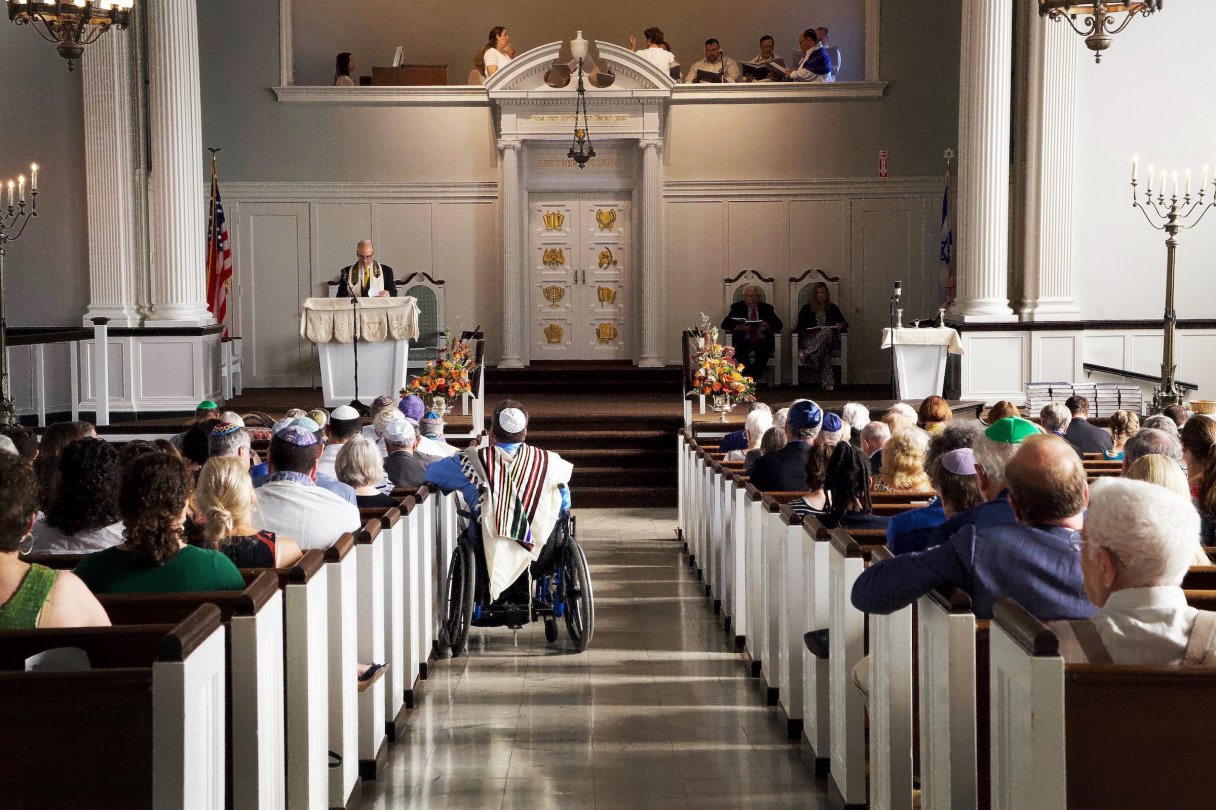

After a welcome from Rabbi Craig Lewis, Yom Kippur services commenced at Mizpah Congregation with an almost hauntingly beautiful rendition of Kol Nidre on the cello, setting a solemn tone for the Day of Atonement to come.
The Kol Nidre service is the first in a series populating the holiday, characterized in the prayer book as the Jewish people’s Festival of the Soul. Yom Kippur begins at sundown on the 10th day of the Hebrew month Tishrei, this year falling on the first of October, and goes to nightfall of the next day. The holiest day of the year is set aside for the Jewish people to be cleansed from all their sins before God.
Yom Kippur, or the Day of Atonement, is about finding forgiveness from God as well as forgiveness from people, as the prayer book says, to begin the new year with freedom from fear and failure. Yom Kippur is the conclusion of the Ten Days of Repentance, which begin on Rosh Hashanah, the Jewish New Year.
“The day is marked specifically by the things you don’t do. It’s not like a seder, where you’re gathering together, you’re making certain food, you have all these symbolic acts of eating the matzah, eating the bitter herbs,” Rabbi Sam Rotenberg — from B’Nai Zion, the Conservative Judaism Congregation — said in an interview. “It’s not a flashy day. People are specifically not eating. You’re refraining from going to work and doing the normal things that mark a weekday. People are sitting in shul (Yiddish for synagogue), going through the traditional liturgy, learning, praying.”
Yom Kippur is one of two 25-hour fast days in the Jewish calendar, and Rotenberg said it is by far the most important.