
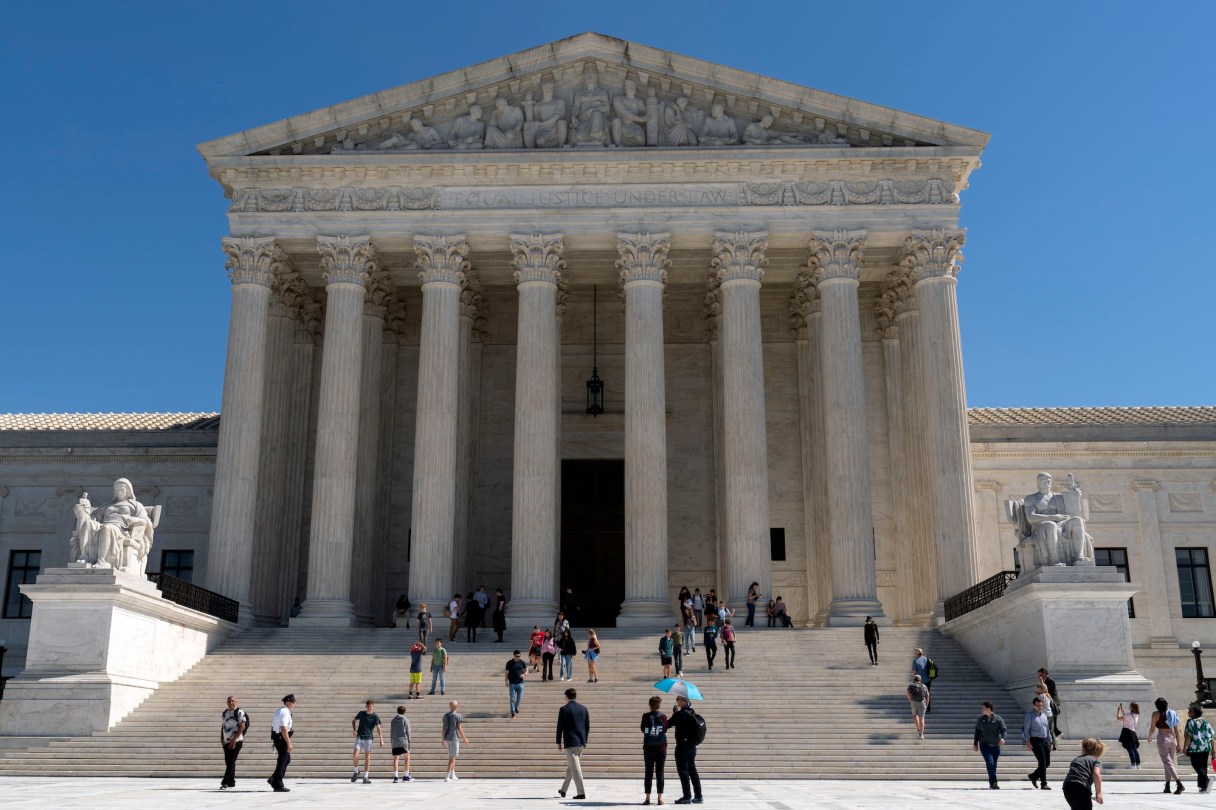
When the Supreme Court returns for its new term on Monday, the crucial question will be whether it serves as a check on President Trump or just a rubber stamp approving his actions.
In the last few months, the Supreme Court has allowed the Trump administration to fire the heads of the Consumer Product Safety Commission and Federal Trade Commission, to eliminate the Department of Education, to terminate grants from the National Institutes of Health and to allow ICE agents’ racial profiling of individuals they choose to stop in L.A. These were all 6-3 rulings on the “shadow docket,” often with no explanation from the court and always with strong dissents from the liberal justices.
The court selected two matters that arose on its emergency docket for full briefing and oral argument later in this term. On Nov. 5, the justices will hear oral arguments in Learning Resources Inc. v. Trump and Trump v. V.O.S. Selections as they determine whether Trump had the legal authority to impose tariffs on goods imported from foreign countries.
In December, though an argument date hasn’t been set, the court will hear Trump v. Slaughter, concerning the power of Congress to limit the president’s authority for firing agency heads. In 1935, in Humphrey’s Executor v. United States, the Supreme Court unanimously upheld a federal law that prevented the firing of Federal Trade commissioners unless there was good cause for removal. In Trump v. Slaughter, the Supreme Court has a granted review as to whether to overrule Humphrey’s Executor and also to decide “whether a federal court may prevent a person’s removal from public office.”
Previous rulings in cases on the summer’s shadow docket strongly suggest the conservative justices will overrule the 90-year-old precedent and embrace the idea of a “unitary executive” that has the power to fire anyone who works within the executive branch.