
ANCHORAGE, Alaska (AP) — The house rocked as if an earthquake had struck, and suddenly it was floating. Water seeped in through the front door, and waves smacked the big glass window.
From the lone dry room where Alexie Stone and his brothers and children gathered, he could look outside and see under the water, like an aquarium. A shed drifted toward them, threatening to shatter the glass, but turned away before it hit.
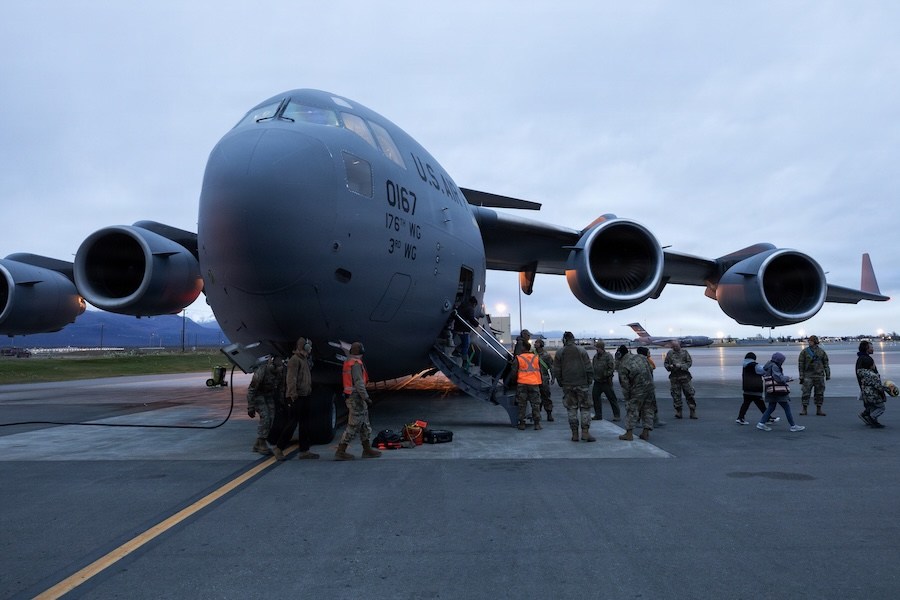
The house came to rest just a few feet away from where it previously stood, after another building blocked its path. But it remains uninhabitable, along with most of the rest of Stone’s Alaska Native village of Kipnuk, following an immense storm surge that flooded coastal parts of western Alaska, left one person dead and two missing, and prompted a huge evacuation effort to airlift more than 1,000 residents to safety.
“In our village, we’d say that we’re Native strong, we have Native pride, and nothing can break us down. But this is the hardest that we went through,” Stone said Thursday outside the Alaska Airlines Center, an arena in Anchorage, where he and hundreds of others were being sheltered. “Everybody’s taking care of everybody in there. We’re all thankful that we’re all alive.”
The remnants of Typhoon Halong brought record high water to low-lying Alaska Native communities last weekend and washed away homes, some with people inside. Makeshift shelters were quickly established and swelled to hold about 1,500 people, an extraordinary number in a sparsely populated region where communities are reachable only by air or water this time of year.