
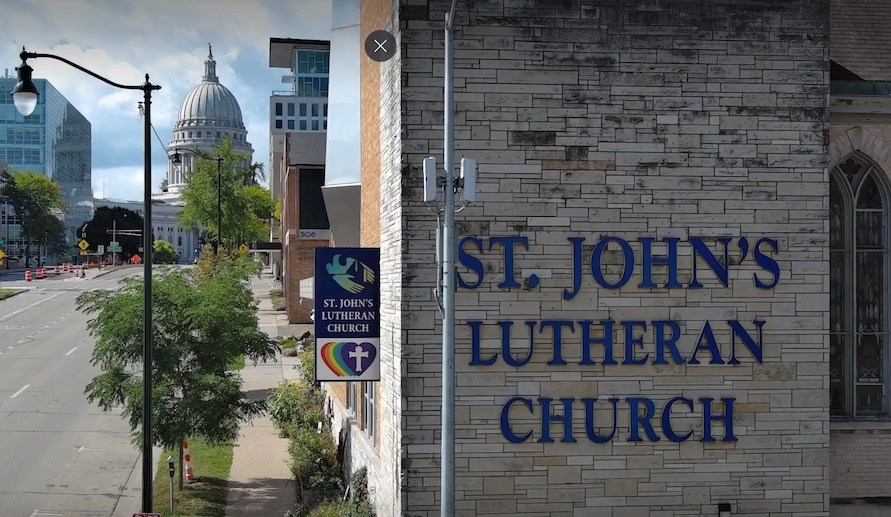
Growing up in a religious family, Florida Republican state Sen. Alexis Calatayud has seen how many church communities are no longer anchored to a single building in the way they used to be. Her small prayer groups take place over chats these days, not necessarily in person or sitting shoulder-to-shoulder in pews.
With churches in her Miami-Dade County district grappling with shrinking membership and aging buildings, Calatayud thinks those institutions can do good with their unused land, by acting as anchors of new housing rather than as bystanders in neighborhood redevelopment.
“When you look at someone sitting on a small church, on a 10-acre property with a dwindling congregation, the question becomes, ‘How can this entity continue to be the beating heart of the community?'” Calatayud said in an interview. “I think it’s to create a village, where we can create more housing and even centralize other needs in the community on that land.”
This year, Florida enacted a measure, sponsored by Calatayud, allowing multifamily residential development on land that is both owned by a religious institution and occupied by a house of worship, so long as at least 10% of the new units are affordable. Some housing advocates believe the zoning override has the potential to unlock roughly 30,000 parcels statewide.
Florida’s new law is part of a growing movement known as YIGBY — Yes in God’s Backyard. Touted by many faith leaders, lawmakers and developers, the movement imagines a connection between a religious mission to serve and the very real hurdles of building affordable housing.