
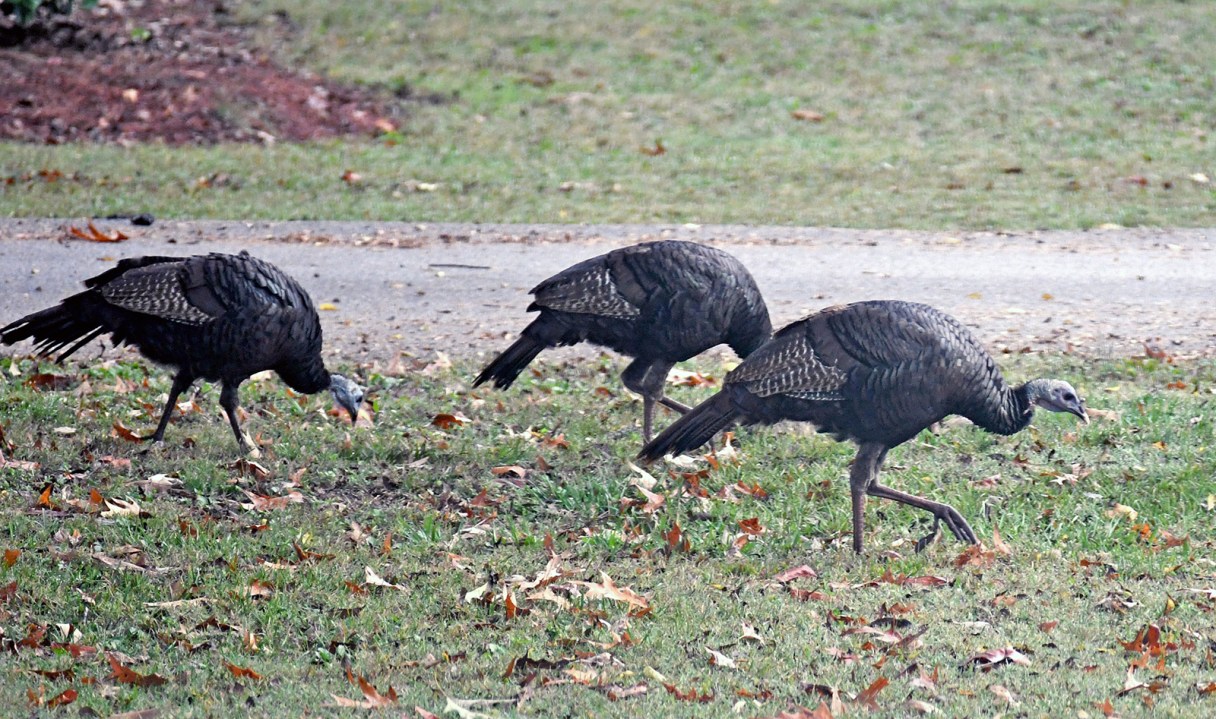
Maybe you already know of Tom Kelly, the turkey hunting author.
If you are a hunter, especially a turkey hunter, and you don’t know who Kelly is and have never read any of his books — well, I am not going to say shame on you, but I am probably thinking it.
In 1953, Kelly published a book of his own titled “Tenth Legion.” Kelly, who was born in 1927, was a military man, a colonel in the U.S. Army (having previously served in the U.S. Navy), and he drew an analogy between an elite Roman legion (the aforementioned 10th) and turkey hunters.
He had never written a book before and reportedly created this turkey hunting masterpiece by recording into a portable dictation machine while walking in the woods on his job as a timber surveyor in Alabama. His words were then transcribed into the chapters of the book by his wife, Helen.
It went on to become an absolute classic in the turkey hunting world, and many times Kelly has been called “the poet laureate of turkey hunting.” To give you some idea how Kelly sees things and maybe a taste of his writing, he is quoted as saying that he has been called the “poet laureate of the functionally illiterate.”
Kelly didn’t just write about turkey hunting. He wrote about the turkeys, the people who hunted them, the land and history of where he hunted, and a hundred other things somewhat connected to the crazy world of hunting these crazy birds. Kelly’s writing is something we will not see the likes of again, but you can find his books online at tomkellyinc.com.
Kelly went on to write many more books after “Tenth Legion,” and maybe my favorite is his second book, “Dealer’s Choice.” One thing I loved about this book is he talks about fall turkey hunting in his home state of Alabama. His stories on this were from many years ago, and though he was and is an avid spring turkey hunter, I just loved reading about his exploits in the fall and winter woods.
(READ MORE: Fall turkey hunting is a tradition worth trying if you haven’t)
Fall turkey hunting and spring turkey hunting are very different, and Kelly would be the first to tell you this, but it doesn’t mean you can’t love both of them. We are in a time now in our hunting culture where fall turkey hunting has fallen from favor, and we may have an entire generation with very little fall experience.
When people don’t understand or know much about something, we sometimes get warped views about that subject. Some hunters who have never hunted turkeys this time of year sometimes express negative ideas about the fall hunt. Spring hunters often talk about how fall hunting is “too easy,” meaning you may scatter a flock of young turkeys and they might come running to you the first time you call. This can happen, no doubt, but the spring-only guys don’t seem to admit that sometimes — sometimes — a lovesick gobbler will come running to your yelps just 10 minutes off the roost.
Some days they do, many days they do not. That’s turkey hunting.
(READ MORE: ‘The Pull’ is strong as spring turkey season approaches)
Just to continue that “how easy it is” discussion, many times I have had a flock off fall turkeys scattered (often with the use of a good turkey dog), and for reasons known only to the turkeys, they call very little or maybe not at all.
Why do they do this? Again, only the turkeys and those in heaven know.
Something I have said many times to those who think that fall turkey hunting is too easy is this: Take a day or two and hunt exclusively for old turkeys in the fall. Mature male turkeys, longbeards, are a completely different animal in the fall and winter compared to spring.
In the spring of the year, turkeys are involved with romance and procreation — and like many forest animals (and, let’s face it, us humans), this makes them throw all of their good sense and caution right out the upstairs window. The smartest old gobbler in the woods may on the right morning come charging in to your hen calls with amorous intentions.
In the fall and winter, none of this nonsense is going on. Male turkeys usually go back into staying in bachelor groups after the spring and don’t have much to do with the hen turkeys or the young ones hatched that year. These turkeys are only concerned with one thing: survival.
If you can locate these old reprobate gobblers in the fall and get them separated, they will often call and sometimes respond to your calling. How often they may call and how long it will take them to do it is a matter of pure randomness, about as easy to predict as the accuracy of your local weather report.
I have at times (rarely) seen mature gobblers call fairly quickly after being scattered. I have also often seen them go two or three hours before calling a time or two, then walk away like, “Yeah, I don’t really care if we get together or not.”
I guess my point is sometimes fall turkey hunting is a little easy, but most of the time it is not — just like spring hunting. As Kelly wrote: “I really don’t want to argue about this, but I am perfectly willing to fight about.”
If your state has a fall turkey season, maybe you should check it out and give it a try.
Tom Kelly and I would both like that.
“Guns & Cornbread” is written by Larry Case, who lives in Fayette County, W.Va. You can write to him at larryocase3@gmail.com.