
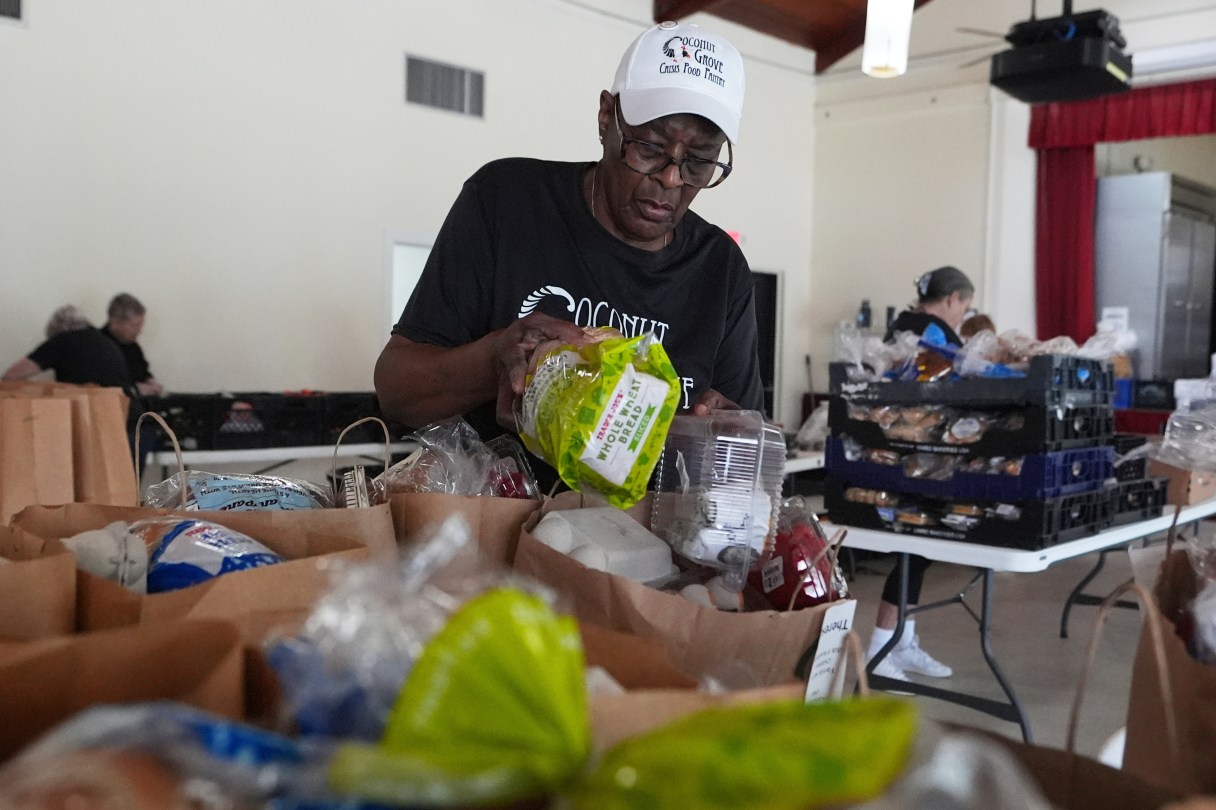
A federal food aid program that helps about one-eighth of Americans buy groceries stands to be paused Nov. 1 because of the government shutdown, and even some states that want to step in to fill the gap have found they can’t.
Recipients of the food aid, food banks, states and advocates are bracing for a pause to the Supplemental Nutrition Assistance Program, or SNAP, payments at the end of next week. Here’s what to know.
It’s not certain the program will be paused, but it’s looking likely
Lower-income families who qualify for SNAP receive debit cards loaded each month by the federal government that work only for groceries at participating stores and farmers markets.
The average monthly benefit is $187 per person. Most beneficiaries have incomes at or below the poverty level.