
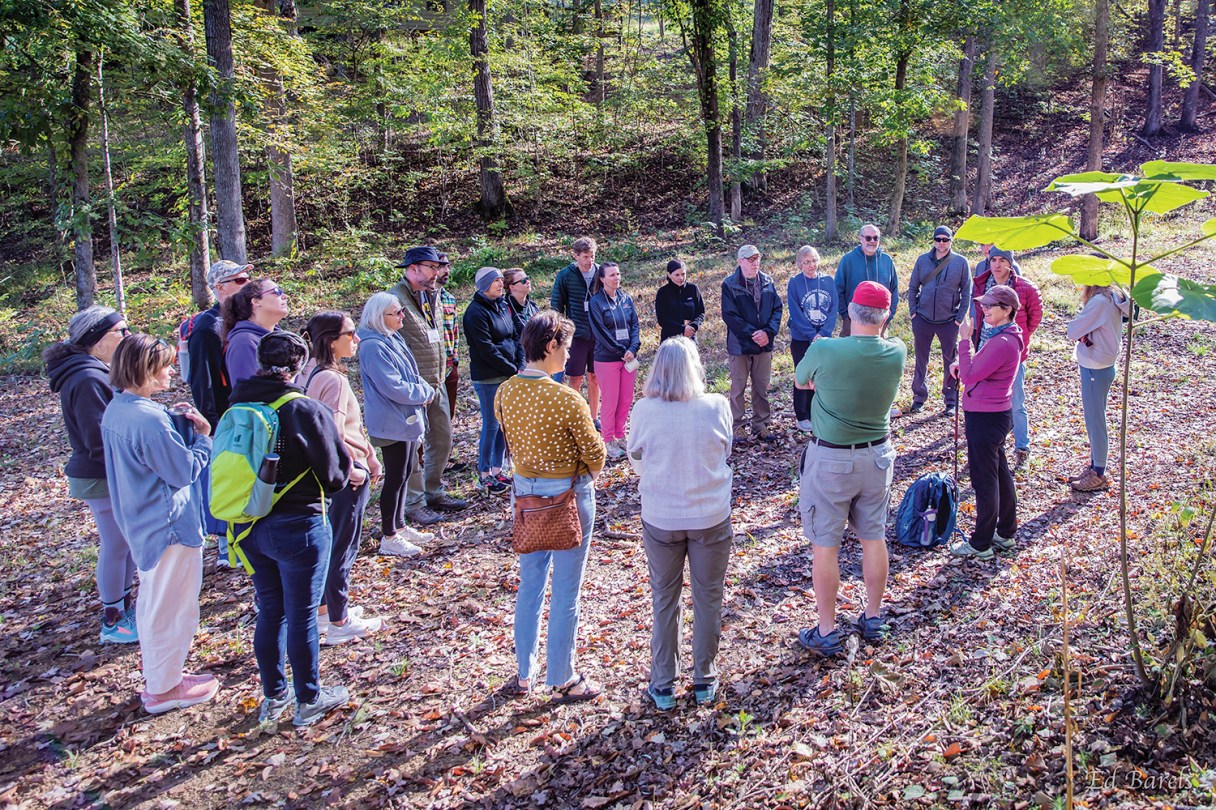
Before you grab your loofah and head for the nearest tree, let’s clear something up. Forest bathing, though initially sounding like a quiet bath in the forest, has nothing to do with soap, showers or stripping down in the woods (not recommended). What it does involve is intentionally immersing yourself in nature — slowing down, breathing deeply and soaking up the natural medicine the forest provides.
According to studies done by the Department of Hygiene and Public Health in Tokyo, Japan, Shinrin-yoku (aka forest bathing) originated in Japan as a short, leisure visit to a forest while breathing in fresh air, which provides volatile substances such as phytoncides (wood essential oils) that are antimicrobial. Though it was originally introduced in 1982 as a method of pursuing a healthy lifestyle, Japan officially acknowledged forest bathing as a form of preventative care in later years. It is a science-backed form of nature therapy that’s been shown to reduce stress, boost mood, improve focus and even strengthen your immune system.
Janiece Sanderson, a nurse, wellness coach and certified forest therapy guide, discovered forest bathing after years in the ICU left her craving a more proactive, holistic approach to health. A lifelong nature lover from Texas and raised with summer escapades in the forests of Oregon, Sanderson eventually blended her medical background and her holistic nursing practices with her passion for the outdoors. “The type of medicine I was practicing, it was beautiful and it was saving people’s lives, but it really wasn’t following a path of what I see to help people be more proactive about [their health],” she says.
After earning her certification from Forest Therapy School and moving to North Georgia, she now helps people slow down and reconnect with their senses in nature by volunteering with Outdoor Chattanooga and guiding others on her own time — through what she calls “an alternative way of feeling, seeing the world, and maybe seeing themselves.”
“We can really see the benefits of forest bathing through things like stress reduction, decreasing cortisol levels and also increasing the activity of … the cells that protect us from cancer,” Sanderson says.