
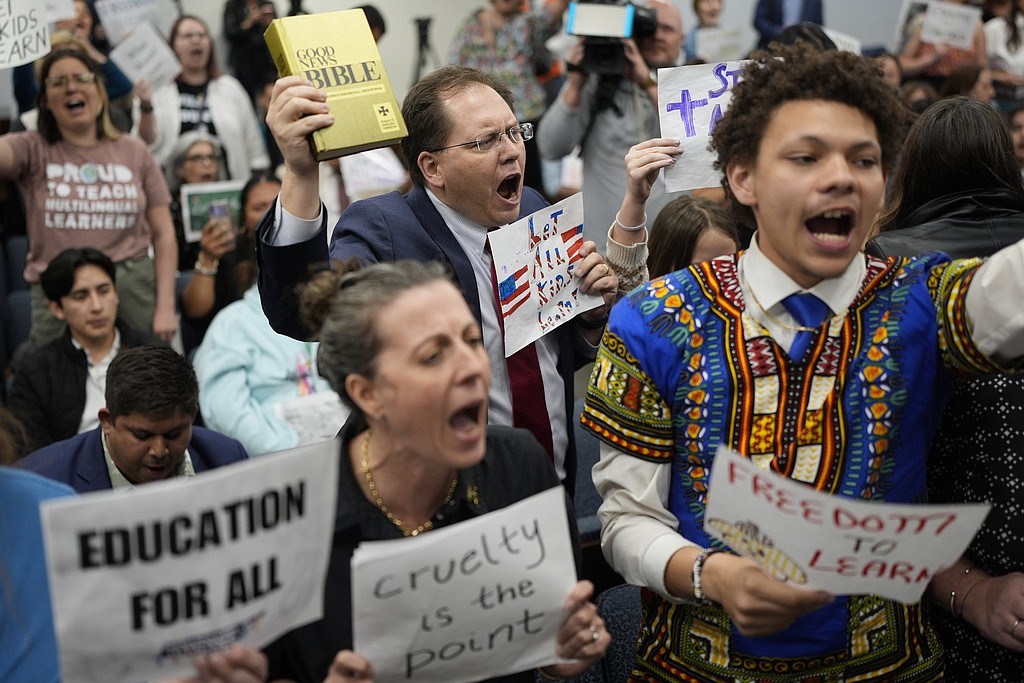

Throughout the Bible, God instructs his followers to show compassion to the foreigner, while some Scripture can be found that distances the foreigner from the covenant people of God, the Israelites.
As in other sectors of American society, there is tension in the church surrounding immigration, and an array of positions can be found across denominations.
As enforcement efforts increase across the country, the National Catholic Reporter reported that more and more clergy are attending immigration court hearings to comfort and support those summoned. Meanwhile, according to a Pew Research Center survey from 2024, most white evangelical Christians say that the migrant situation at the U.S. southern border is leading to more crime in the country.
In the Pew Research Center’s latest Religious Landscape Study, Americans less engaged with religion are more likely to view rising immigration in a positive light than more religious Americans.
The study, which looks at religion in conjunction with lots of hot-button political and social issues, also found that of all U.S. adults, 52% say that religious diversity strengthens American society. Evangelical Protestants are, out of all religiously affiliated subgroups identified in the study, most likely to say that religious diversity weakens American society (38%) as opposed to strengthens it (35%). Mainline Protestants (52%), Historically Black Protestants (43%) and Catholics (50%) are more likely to say religious diversity strengthens society.