
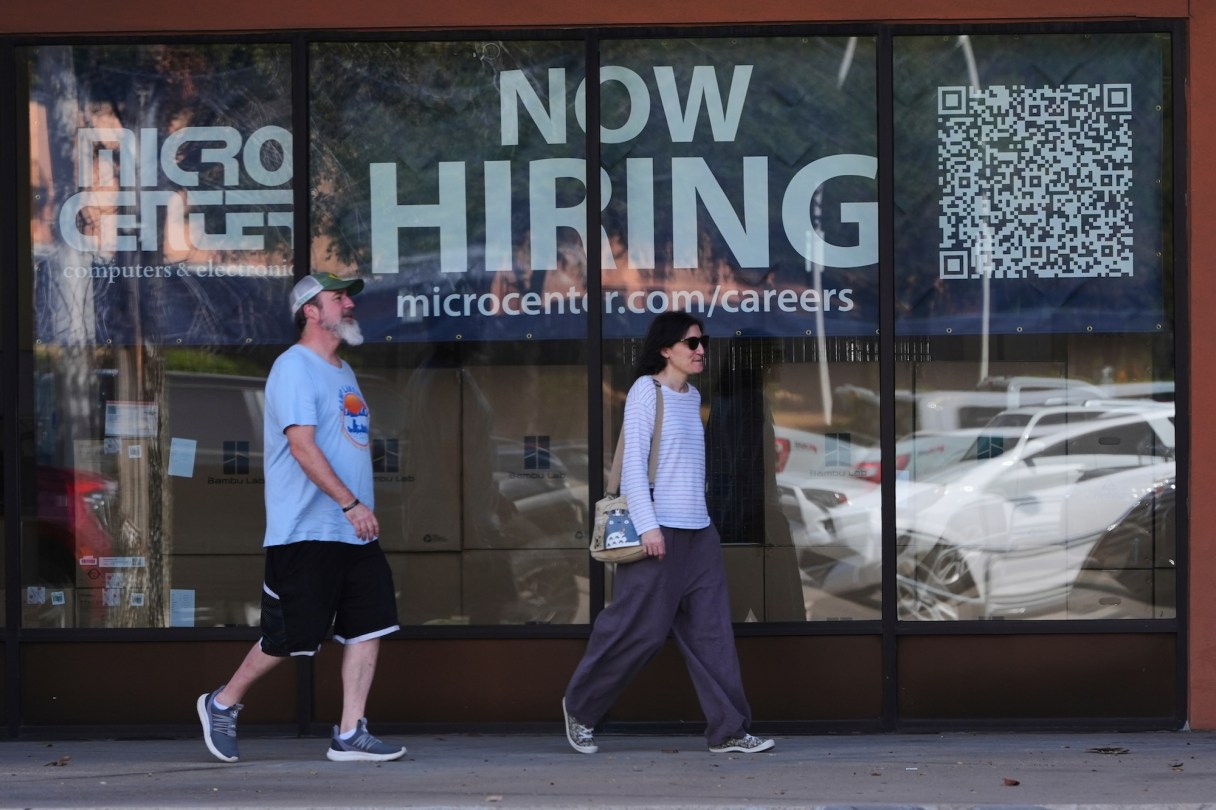
On paper, these are good times for the U.S. economy. The latest GDP numbers show growth was at 3.3% in the second quarter. Business investment is up. The unemployment rate remains low, and the inflation rate is reasonable.
Still, underneath it all lies a nagging question: If the economy is so good, why does it feel so bad?
First, the numbers. Nominal GDP has grown more than 50% since the bottom of the last recession in 2020 — an annualized quarterly growth rate that’s more than 7%. Real median wages are up 5% since 2022, after failing to keep up with inflation in previous years. Unemployment has remained at about 4.5% since 2021 — and for much of that time, there was a worker shortage and a labor market that was very dynamic. Oh yeah, and there’s the stock market: The S&P is up more than 140% from the end of the recession.
And yet. This boom has always felt kind of terrible. For years, there has been a lot of chatter about how bad things were — remember the “vibecession” of 2022? This might be the worst best boom ever.
Certain things have made this boom different from all other booms. First was the return of inflation. After being dormant for nearly 40 years, inflation came back in 2021. In the first few years of the boom, many Americans experienced a wage cut — and even now, real wages are not as high as they were in 2020.