
This story was originally published by the Nashville Banner. Sign up for their newsletter at nashvillebanner.com/newsletters.
Earlier this month, Nashville criminal justice officials received a regular email outlining the daily population of the city’s jail facilities. It showed that, with the exception of the mental health-focused Behavioral Care Center, every one of them was overcrowded.
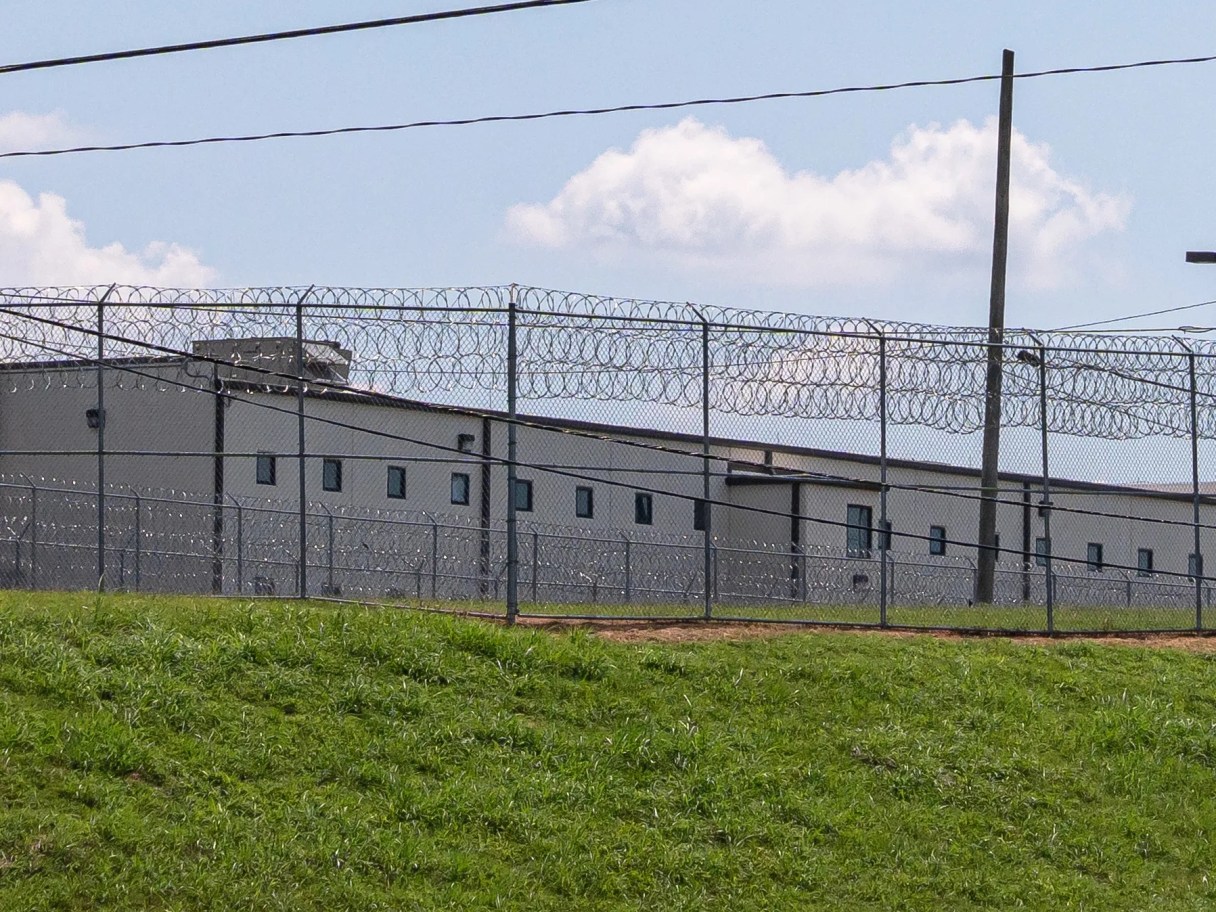
This was not a surprise. As a whole, the jail system run by the Davidson County Sheriff’s Office has been holding more people than it’s supposed to since the beginning of this year. At some facilities, the problem goes back even further. The most recent data from Metro’s Criminal Justice Planning department shows the Correctional Development Center for men — a jail on Harding Place designed to hold 768 people — has been over capacity every day since May 25, 2024. That facility failed a state inspection earlier this year. Two others — the Correctional Development Center for women and the Maximum Correctional Center, which contains people awaiting trial along with some serving one-to-six-year felony sentences — have been over capacity for at least five months.
It’s a situation that calls to mind the 1987 class action lawsuit that led to the Metro government conceding in court that its overcrowded jails were unconstitutional. And Metro Public Defender Martesha Johnson said she believes it has already contributed to violence, including an alleged assault in June that led to the death of one of her clients.
The problem, Sheriff Daron Hall told the Nashville Banner, is largely the result of a perfect storm of events five years ago. As COVID-19 began its rapid spread around the country — including jails and prisons — in the spring of 2020, Nashville criminal justice officials worked to reduce the local jail population. At one point during the pandemic, in a jail system that could hold more than 3,400 people at the time, the population was less than 1,000.
But in October 2020, an effort led in-part by current Nashville Mayor Freddie O’Connell ended a 30-year relationship with the private prison company CoreCivic. The Brentwood-based corporation had been contracted to operate the Metro Detention Facility, which housed people who had been convicted and locally sentenced to up to six years of incarceration. When the Sheriff’s Office took over the facility, it took custody of around 500 people.
“What no one really paid attention to was, we also took over a building that was dead,” Hall said.
The generally accepted math in the jailing world, Hall said, is that a jail built 30-years ago is three times that old. The Sheriff’s Office moved the 500 people who had been incarcerated at the formerly CoreCivic-run detention center into other Metro facilities, which were well under capacity at the time. The Metro Detention Facility, which could once hold 1,200 incarcerated people, has been empty ever since.
On Aug. 18, there were 2,644 people incarcerated in Nashville jails, nearly 300 over capacity.
Hall regularly compares the jail system to a bathtub with a faucet and a drain. In his view, he said, the faucet is not the primary problem right now. Although arrest numbers have increased in the years since the pandemic, he said, they are still below where they were before it. But with the pandemic-era measures aimed at reducing jail populations rescinded, and some recent changes in law lengthening average jail stays, the drain is not working as quickly as it might. Absorbing the people who were incarcerated at the old Metro Detention Facility, while also taking that facility offline, is something like shrinking the tub after pouring an outside bucket of water into it.
“If you could snap your fingers and turn the lights back on,” Hall said of the old facility, “we would not be overcrowded by any means.”
NO QUICK FIX
That won’t be happening, though. Hall said he started talking to the mayor’s office and state officials more than a year ago about the need to work out a plan for renovating, if not completely replacing, the facility. But even if the prospect of spending public money on a new jail was met with unlikely unanimous local support, it wouldn’t be built overnight. In the meantime, Hall said, there are other factors contributing to the overcrowding problem. One is around 120 people who have been convicted of felonies and sentenced to state prisons but, for a variety of reasons, are backing up into the county system. Another, Hall said, is a backlog of people in the jails waiting for psychiatric evaluations required under a 2024 state law passed after the murder of Belmont University student Jillian Ludwig.
While having a jail over capacity isn’t unconstitutional in and of itself, Hall said it means more people are being added to what can already be a tense environment. That dynamic creates unsafe conditions and makes it harder for the sheriff’s office to fulfill its legal obligations to the people in its custody.
“Providing the services, ensuring people have access to courts and lawyers and family and programs and all the things we’re committed to … is compromised every time you start adding more bodies to space that is not designed to house that many people,” Hall said.
Johnson, whose staff of lawyers represents many of the people who move through Nashville’s jails, said she sees overcrowding making it harder for incarcerated people to access mental health services and meet regularly with their attorneys.
“The biggest concern I have is that when you have an overcrowded jail facility, you create a lot of safety risk for my clients and even for the sheriff’s staff,” she said. “It creates an atmosphere where violence is happening.”
Johnson said one of her office’s clients was recently the victim of such a situation. After he was allegedly assaulted at the male jail facility on Harding Place in June, Rodney Haynes died from his injuries in July. The man accused of attacking him, Emmanuel Nash, was charged with attempted criminal homicide, a charge Johnson expects will be upgraded.
While violence in jails isn’t unheard of, Johnson echoed Hall’s concern that overcrowding increases the chances it could occur. She also worried about strained jail staff struggling to keep contraband out of the facility, noting that the same week Hanyes was assaulted also saw a fatal overdose at that facility.
Moreover, Johnson highlighted the fact that the largest population of people in Nashville’s jails are those awaiting trial. She worried that increasingly inhumane conditions inside put even more pressure on people accused of a crime to simply make a deal and get out.
“It is really hard for us to say people are presumed innocent, and these are the conditions they’re subject to as they are going through this process,” she said. “It creates an atmosphere where people will not exercise their constitutional rights.”
The sheriff and the public defender agreed on the urgency of the matter.
“We have to commit to solving the problem,” Hall said. “You can’t live this way for long.”
This article first appeared on Nashville Banner and is republished here under a Creative Commons Attribution-NoDerivatives 4.0 International License.