

Q. Is Chattanooga in the Eastern time zone?
A. “Well, of course,” Southeast Tennessee residents are probably saying to themselves. “Why are you asking such an obvious question?”
For two reasons: No. 1, that wasn’t always the case, and No. 2, for people living outside the area, figuring out which time zone Chattanooga is in can be a bit confusing because of its geography, since most of Tennessee is in the Central time zone.
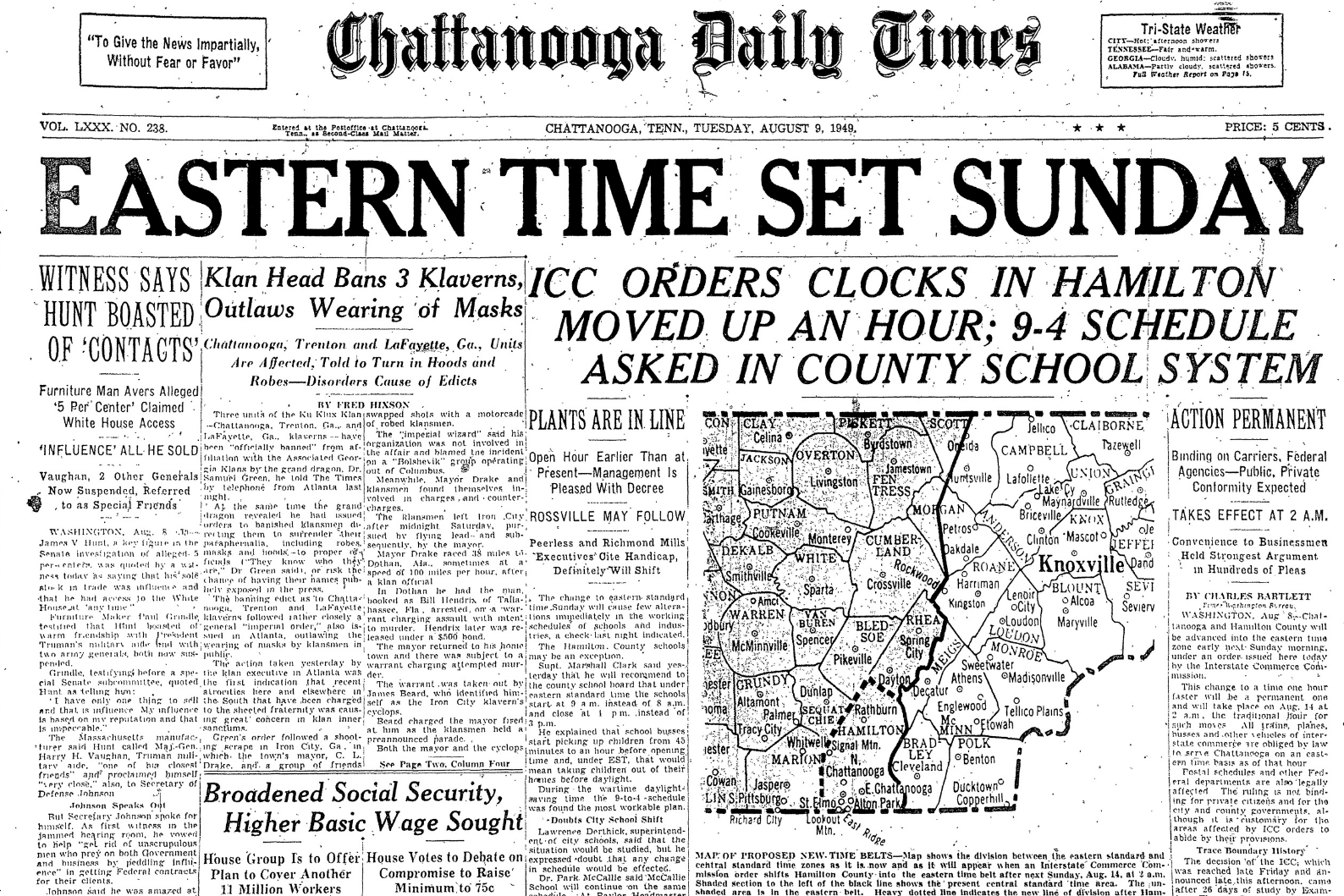
The Scenic City was also part of the Central time zone until officially making the change at 2 a.m. Sunday, Aug. 14, 1949. The change came after the federal Interstate Commerce Commission ordered it. The motive for the change? In large part, peer pressure.
“The change to one hour faster will be a permanent one,” the Chattanooga Daily Times, then the city’s morning newspaper, reported in its Aug. 9, 1949, edition that featured a large headline, “Eastern Time Set Sunday.”
“All trains, planes, buses and other vehicles are obliged by law to serve Chattanooga on an Eastern time basis,” the story continued. “Postal schedules and other federal departments are also legally affected. The ruling is not binding for private citizens and for the city and county governments, although it is customary for the areas affected by ICC orders to abide by their provisions.”
The Interstate Commerce Commission was a regulating agency formed by the federal government originally to oversee the railroads, and its jurisdiction was later extended to all common carriers, according to federalregister.gov. The agency was terminated in late 1995.
(READ MORE: The pros and cons of permanent daylight saving time for Chattanoogans)
The Times reported that local retailers were pleased with the decision because it would be “better for business” and helpful to customers who visited Hamilton from neighboring counties already in the Eastern time zone, often referred to in that era as the Eastern time belt. S.L. Weeks, manager of the W.T. Grant store and president of the Retail Merchants Association, added that store employees were happy with the change because it would seem to give them an hour longer at home each evening.
Is Chattanooga in the Eastern time zone?
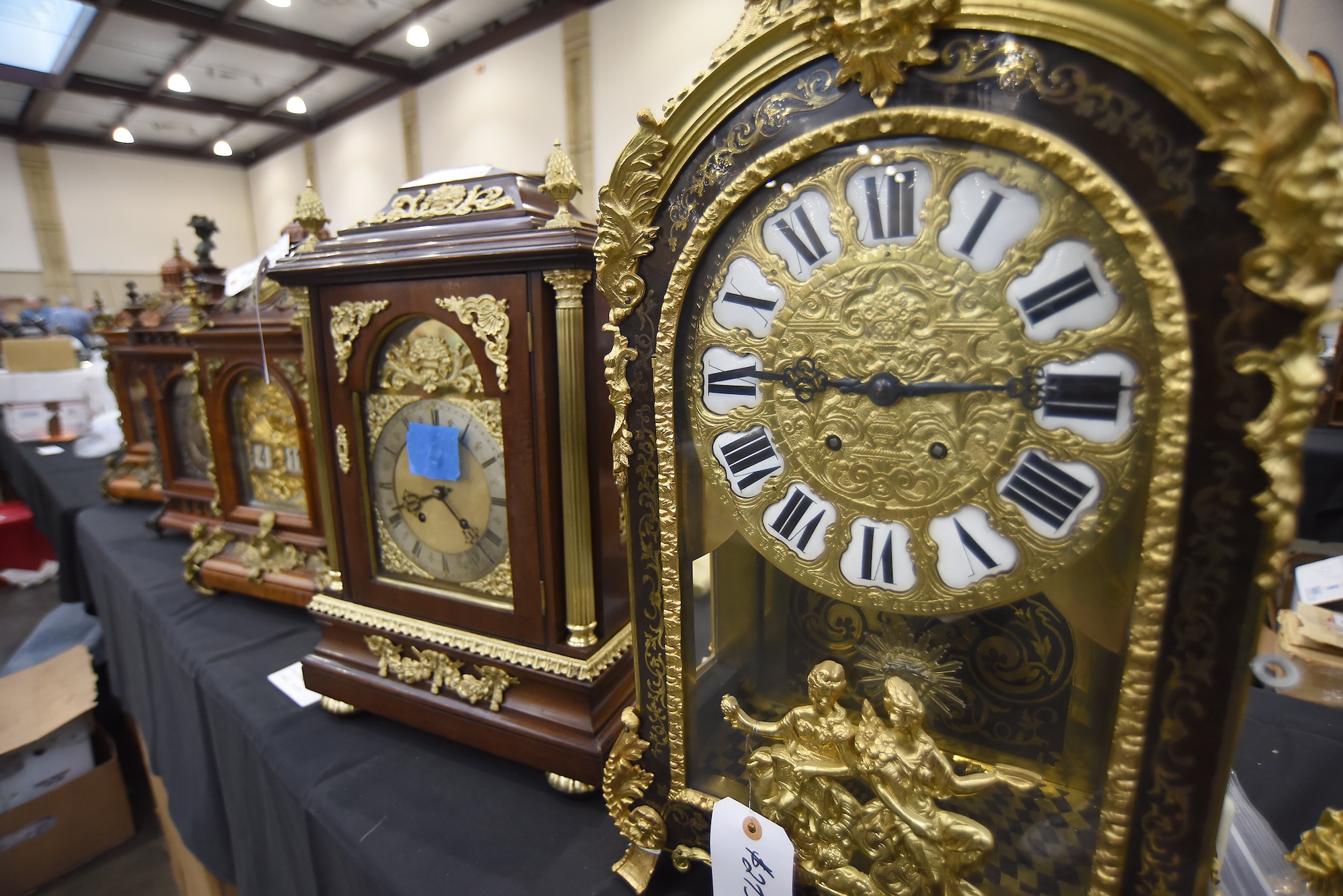
City and county officials told the Times that department schedules would likely remain the same, although one official said playgrounds might be left open 30 minutes to an hour longer to take advantage of the extra daylight.
“I am glad some decision has been made,” said Chattanooga’s then-mayor, Hugh Wasson. “It didn’t matter to me personally. Perhaps some plants will make minor adjustments, but that, of course, is a matter for the individual plants.”
The Chattanooga News-Free Press, then the city’s afternoon newspaper, reported in its Aug. 9, 1949, edition that city schools would probably continue on their existing schedule, but Hamilton County Schools’ then-superintendent, Marshall Clark, said he would recommend to the school board that the system change its daily start time to 9 a.m. from 8 a.m. and finish classes each day at 4 p.m. instead of 3 p.m.
Clark said that without the change, some students would be catching buses in the morning before daylight.
Not everybody was happy with the time switch.
The News-Free Press reported some labor unions would attempt to write into their contracts a provision that schedules be based on Central time.
“Our people as a whole are very much against Eastern time,” said Stanton E. Smith, secretary of the American Federation of Labor’s Chattanooga Central Labor Union. “We filed a brief against it when the case was before the commission. We had information that our brief held up the commission in its decision. What future course we will take will have to be decided by our various unions.”
KNOXVILLE
Before 1946, all of Tennessee was in the Central time zone. So, what changed? The Knoxville senior and junior chambers of commerce created a petition to extend the Eastern time zone to their city. The junior chamber then sponsored a law that would make the change official, according to a story by Knoxville’s WATE-TV, citing information from the Blount County Public Library.
When Knoxville residents went to the polls for city elections in November 1945, they OK’d the switch. A lawsuit was filed, temporarily putting the move in doubt, but when the state Supreme Court sided with the city, the change became imminent. Knoxville Mayor Cas Walker then proclaimed that the city would switch to Eastern time April 27, 1946, according to WATE, citing the Knoxville Journal.
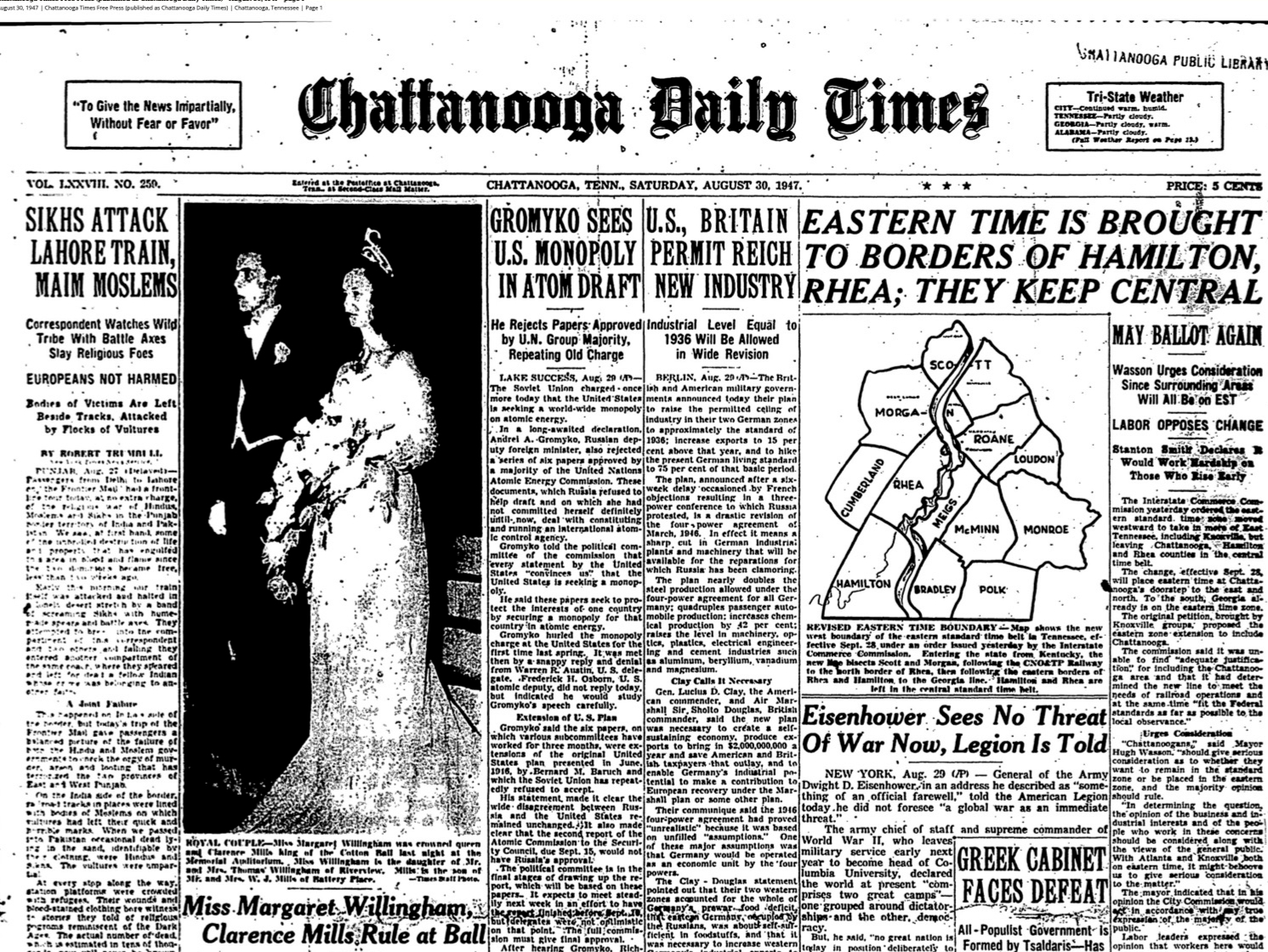
Oak Ridge announced it would make the change as well. It would be joined by Maryville, Greeneville, Morristown, Loudon, Clinton, Harriman, Sweetwater, Gatlinburg, Lenoir City, Norris, Sevierville, Alcoa and Jefferson City, according to the April 28, 1946, edition of the Times. Four months later, the paper reported that under an order from the Interstate Commerce Commission, the new western border of the Eastern time zone would be the eastern borders of Hamilton and Rhea counties, thus leaving them on Central time.
“The commission said it was just unable to find ‘adequate justification’ for including the Chattanooga area and that it had determined the new line met the needs of railroad operators and at the same time, ‘fit the federal standards as far as possible to the local observance,'” the Times reported in its Aug. 30, 1947, story.
Why did some in Knoxville want the change? Essentially, they wanted to take advantage of the use of daylight saving time, according to WATE.
With World War II underway, the entire nation was ordered to move clocks ahead one hour beginning Feb. 9, 1942, with the idea being that year-round daylight saving time would help conserve energy, according to Time magazine. During the war, daylight saving time became known as “war time.”
Mandatory daylight saving time was ended in 1945, leaving areas on their own to decide whether to observe it. Time reported in 1947 that while the some areas, mostly in the urban East, continued daylight saving time in the spring and summer, “32 whole states in the South and West still refused to have any truck with it.”
When areas in the Eastern time zone were observing daylight saving time, they were two hours ahead of areas in the Central time zone that did not, creating challenges for Central businesses when dealing with their Eastern counterparts.
PEER PRESSURE
The 1946-47 changes had parked Eastern time on Hamilton County’s doorstep, creating fertile ground for debating which time zone was best for the Chattanooga area.
Wasson, the Chattanooga mayor, saw good cause for moving to Eastern time.
“Chattanoogans should give serious consideration as to whether they want to remain in the standard zone or be placed in the Eastern zone, and the majority opinion should rule,” he told the Times for its Aug. 30, 1947, edition. “In determining the question, the opinion of the business and industrial interests and of the people who work in these concerns should be considered, along with the views of the general public. With Atlanta and Knoxville both on Eastern time, it might behoove us to give serious consideration to the matter.”
Georgia, it should be noted, made the decision to go to Eastern time in March 1941, and the federal government made that official about six weeks before the attack on Pearl Harbor.
The original Knoxville petitioners had wanted Chattanooga moved into the Eastern time belt, and some in communities around the Scenic City, including Athens and Cleveland, favored the move as well.
“It is very disconcerting to put in an important call only to find that, due to the difference in time, the man you want is either out for lunch or has left the office for the day,” one Cleveland manufacturer told the Times in 1945.
Finally, in 1949, following a petition from the Chattanooga Chamber of Commerce, the Junior Chamber of Commerce and the Retail Merchants Association, and 26 days of study by the federal government, the change to Eastern time was ordered by the Interstate Commerce Commission as part of 16-page report tracing the history of the Eastern time zone boundary and outlining the positions taken by various groups in Chattanooga, the Times reported Aug. 9, 1949.
(READ MORE: Chattanooga Knows: What Scenic City area attraction faced foreclosure in 1985?)
Supporters of the change, the paper reported, ranged from Wasson to the city’s financial and commercial interests to retail customers living in Northwest Georgia. Both the Times and News-Free Press supported the change, as did the three airlines serving Chattanooga and two of the city’s four railroads.
Rossville City Clerk H.C. Hicks told the News-Free Press for its Aug. 9, 1949, edition that his city would now likely adopt Eastern time. Rossville, despite being in an Eastern time state, had been observing Central time to stay in step with Chattanooga.
There was support in surrounding counties, including Marion, Sequatchie, Bledsoe and Rhea, for moving to Eastern time as well, but only Rhea would ultimately be successful in making the change, gaining approval on its second try after originally being turned down by the Interstate Commerce Commission and saving itself, as pointed out in the Aug. 18, 1949, edition of the News-Free Press, from the strange circumstances of being a Central time island surrounded by sea of Eastern time counties.
Do you have Chattanooga related trivia to share or a question you’d like answered? Email news@timesfreepress.com with subject line Chattanooga Knows.