
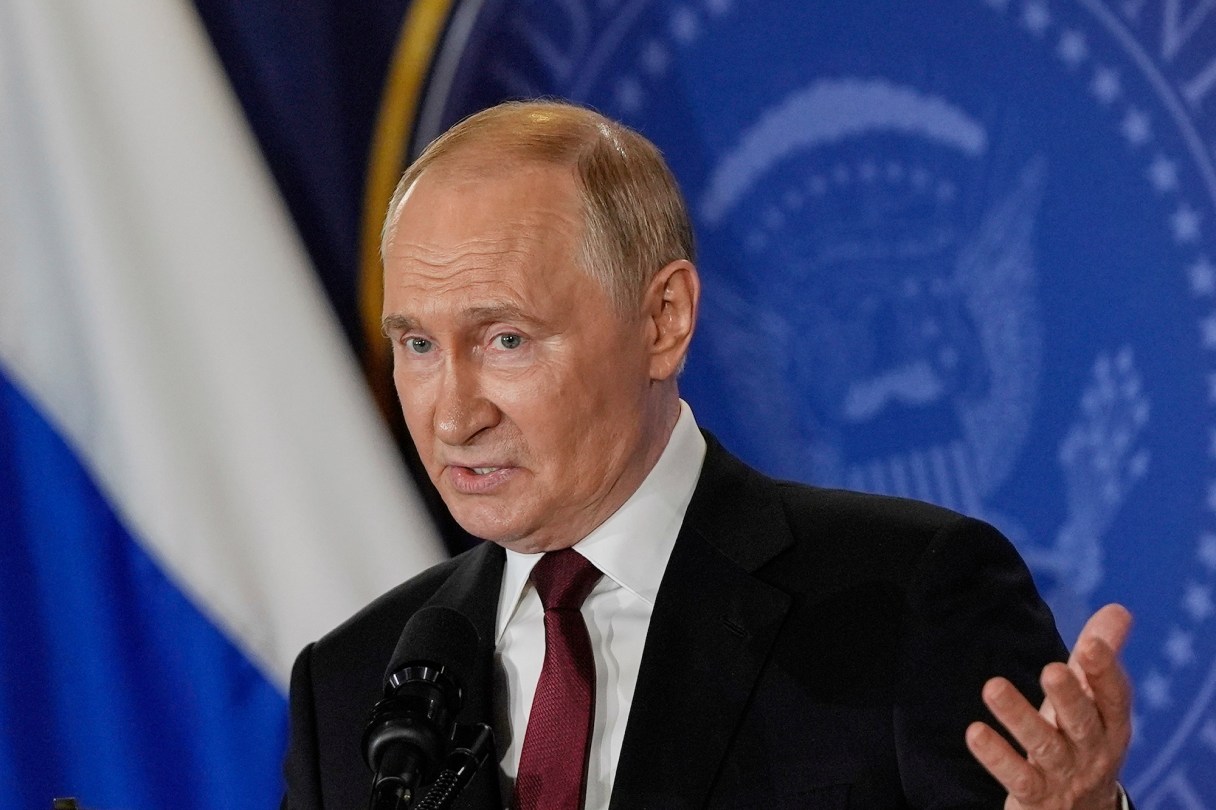
Vladimir Putin has been on a roll the past few weeks. First President Donald Trump invited him to Anchorage. Then he got a three-way hug with China’s President Xi Jinping and Indian Prime Minister Narendra Modi at a summit in China. And an invitation to a grand military parade in Beijing.
Since the 2014 annexation of Crimea, Putin had been shunted to the fringes of summit group photos. After Russia’s full-scale invasion of Ukraine in February 2022, he had been treated as a pariah by the United States and Europe. Indicted by the International Criminal Court on charges of genocide, he could travel only to countries that wouldn’t arrest him. In short, Moscow was not being treated with the respect it believed it deserved.
Trump thought that by literally rolling out the red carpet for Putin in Alaska — and clapping as the Russian loped down the red carpet — he could reset the bilateral relationship. And it did. But not the way Trump intended.
The Alaskan summit convinced the Russians that the current administration is willing to throw the sources of American global power out the window.
Trade partners, geopolitical allies and alliances — everything is on the table for Trump. The U.S. president believes this shows his power; the Russians see this as a low-cost opportunity to degrade American influence. Putin was trained by the KGB to recognize weakness and exploit it.
Russia believes it will win the war. China has been a steady friend, willing to sell Russia cars and dual-use technology that ends up in drones that are attacking Ukrainian cities. Europe and the United States have not been willing to apply the kind of economic pressure that would seriously dent Russia’s ability to carry on the war.
Putin keeps saying that a resolution to the war requires that the West address the “root causes” of the war. These causes, for Russia, relate to the way it was treated after losing the Cold War. The three Baltic nations joined Europe as fast as they could. Central and Eastern European countries decided that they would rather be part of NATO than the Warsaw Pact. When Georgia, Moldova and Ukraine started asking for membership in the European Union and NATO, Russia realized it wouldn’t be able to convince them to stay with economic appeal or soft power. It had to use force.
The real “root cause” of the war in Ukraine is Russia’s inability to accept that centuries of empire do not confer the right to dominate former colonies forever. Mongolia learned this. As did the British. And the French. And the Ottomans. The Austro-Hungarians.
Eventually this war will end. But not soon. Russia is insisting on maximalist demands that Ukraine cannot agree to, which include control over territory it hasn’t managed to occupy. Ukraine will not stop fighting until it is sure that Russia will not attack again.
In the meantime, Ukrainian cities on the frontline will continue being wiped out, citizens in Kherson will continue being subjects of “human safari” for Russian drone operators, people across Ukraine will continue experiencing daily air raids that send them scurrying into shelters. Soldiers, volunteers, civilians and children will continue dying.
Trump is understandably frustrated with his inability to “stop the killing” because he has assumed that satisfying Russian demands is the answer. The opposite is true: Only by showing — proving — to Russia that its demands are unattainable will the U.S. persuade the Kremlin to consider meaningful negotiations. Countries at war come to the negotiating table not because they are convinced to abandon their objectives. They sit down when they realize their goals are unattainable.
Alexandra Vacroux is the vice president for strategic engagement at the Kyiv School of Economics.