
Chickamauga Creek’s story has three interesting parts: Dragging Canoe, Chickamauga Station and Lovell Field.
The narrative begins with Dragging Canoe, a prominent Cherokee war chief known for his fierce resistance against white, largely Scotch-Irish, encroachment on Native American lands during the American Revolutionary War. After breaking from the main Cherokee towns, he and his followers established a group of settlements along the Tennessee River and South Chickamauga Creek in the winter of 1776-1777. Their principal base, known as Chickamauga (Tsikamagi) Town, was situated where the Great Indian War and Trading Path, which ran from upper New York into Alabama, crossed the creek. The position of Chief Dragging Canoe’s strategic stronghold on the creek gave the band its name, the Chickamaugans. His primary village is thought to have been at the south end of today’s Lovell Field, where Brainerd Road crosses Chickamauga Creek.
The proximity of British Indian agent John McDonald’s well-stocked trading post facilitated a supply of weapons, ammunition and goods from British and Spanish supporters for Dragging Canoe. The Chickamauga Creek area became a key trade and communication base for the war chief and useful in coordinating resistance of his band with roving groups of Creeks and Shawnees as they launched raids against settlers in the region. Chief Dragging Canoe died in February 1792 after an all-night Eagle Dance celebrating a band success.
Several decades later, site history centered on the Chickamauga Station (aka Chickamauga, Tennessee), a stop on the Western and Atlantic Railroad. The station, since demolished, sat 200 yards east of Lovell Field on a rail line that remains in service for CSX. During the Civil War, its strategic position in connecting important Confederate supply lines allowed the station to play a major role in the movement of Rebel troops, weapons and materials, especially in mobilization for the Battle of Chickamauga.
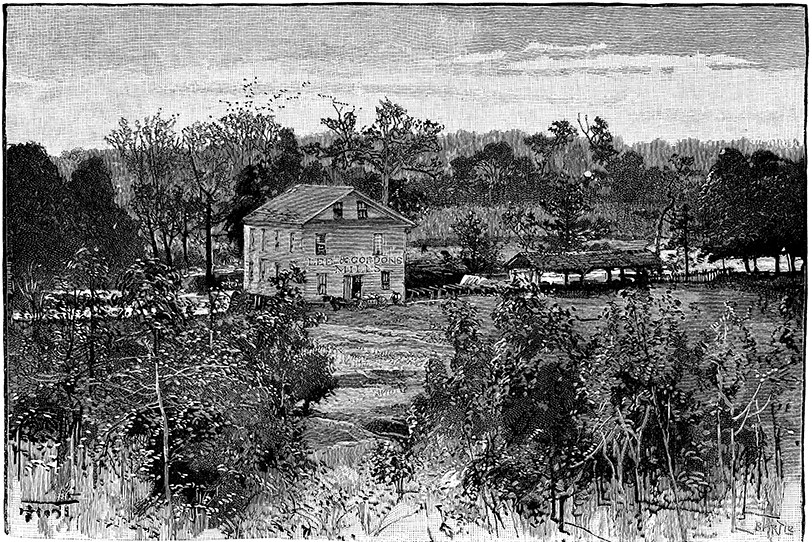
The Chickamauga Station received Confederate reinforcements from Mississippi as battle lines formed in September 1863 along West Chickamauga Creek at Lee and Gordon’s Mill. Conveyance of troops and equipment during the oncoming battle underscored how railroads began transforming military strategy.