
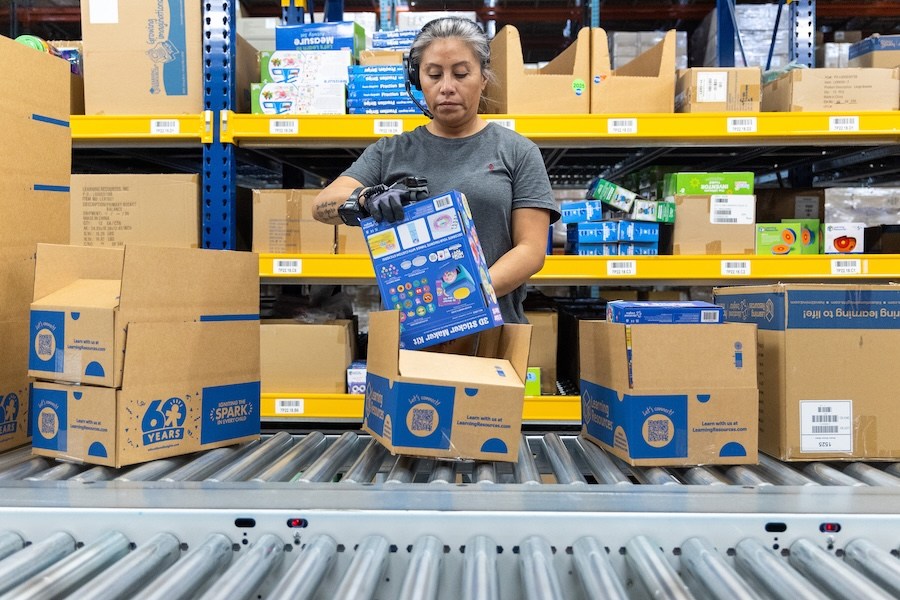
CHICAGO — In an airy warehouse in Vernon Hills, Illinois, workers pack educational toys designed to bring children joy and expand their worlds. Plastic apples that can be taken apart to understand fractions, a toy cash register and a kit with a purple stethoscope are stacked on blue metal racks, waiting to be shipped to a budding elementary school CEO or doctor.
The orderly buzz of workers driving forklifts and the routine whirring of a conveyor belt belie the fact that Learning Resources and its sister company, hand2mind, have been in the eye of a storm trying to adapt to tariffs. The companies produce around 50% of their products in China.
When the Trump administration’s tariffs on goods from China shot up in April from around 20% to around 104%, CEO Rick Woldenberg, who has a law degree from the University of Chicago, decided he couldn’t stand by and watch. He hired counsel and sued President Donald Trump’s administration in federal court, saying that the tariffs were unlawful.
In May, the court ruled in favor of Woldenberg, saying that the Trump administration had inappropriately cited the International Economic Emergency Powers Act when imposing the tariffs.
The tariffs stayed in effect while the Trump administration appealed the ruling. Earlier this month, the U.S. Supreme Court agreed to decide the legality of Trump’s tariffs at a hearing Nov. 5, consolidating Woldenberg’s case with lawsuits filed by businesses in other states.