
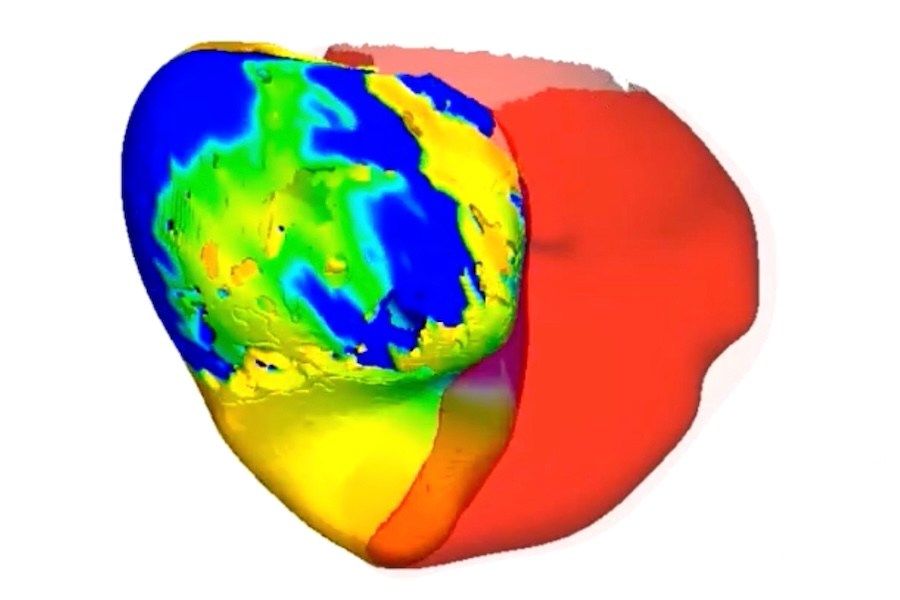
WASHINGTON (AP) — Scientists created virtual replicas of patients’ diseased hearts so precise that blocking a dangerous irregular heartbeat in these digital “twins” showed doctors how to better treat the real thing.
One of the first clinical trials of these custom models suggests it might improve care for ventricular tachycardia, a notoriously difficult-to-treat arrhythmia that is a major cause of sudden cardiac arrest, blamed for about 300,000 U.S. deaths a year.
The study, by researchers at Johns Hopkins University, was a small first step. The Food and Drug Administration allowed the digital twin technology to guide treatment for just 10 patients, and much larger studies will be needed.
But the results reported Wednesday in the New England Journal of Medicine come as doctors increasingly are exploring how a technology long used in aerospace and other industries might be harnessed for better health, too.
Dr. Jeffrey Goldberger, a heart specialist at the University of Miami who wasn’t involved with the study, experimented with more rudimentary iterations 15 years ago and praised the new findings. “This is what we envisioned,” he said.