
Thursday, November 26, 2026Nov 26

Times Opinion: ‘Eat real food’ is great advice, but it’s only part of the equation

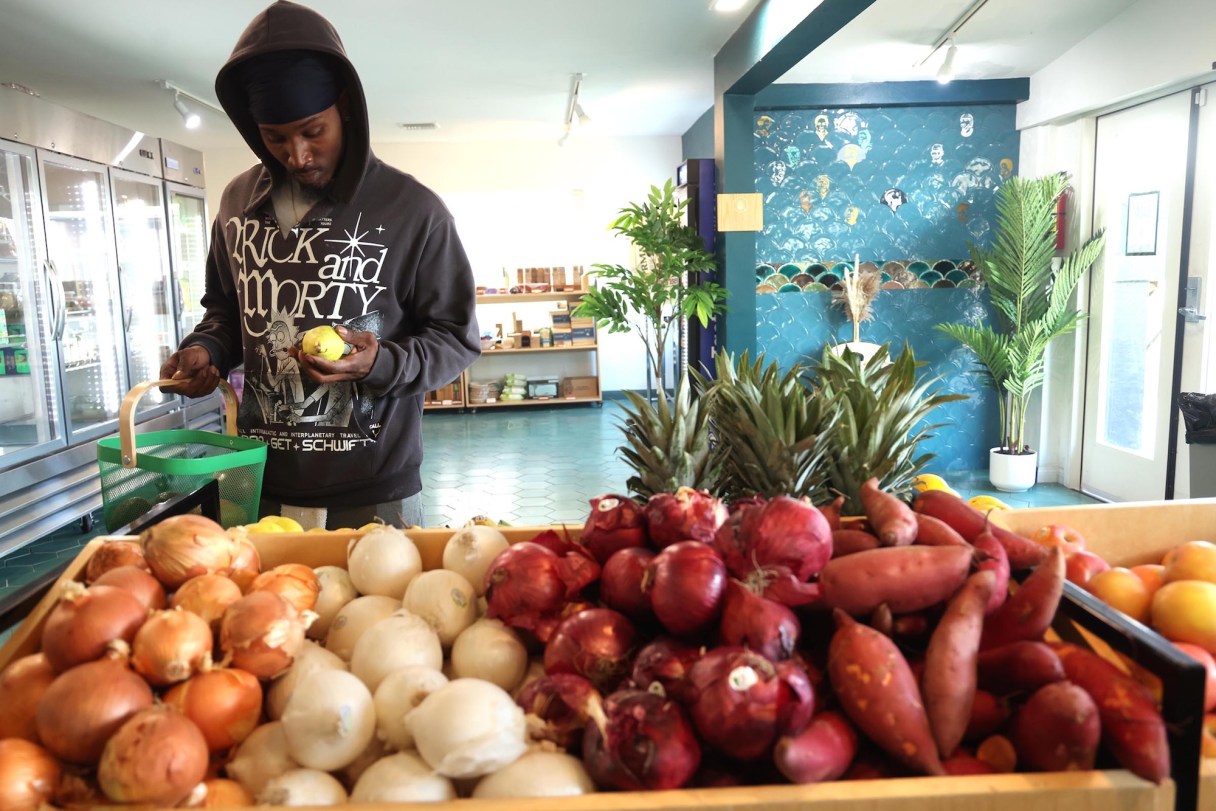
Photo by G enaro Molina via Los Angeles Times / Hannibal Ali shops at Suprmarkt, an organic vegan grocery store on Slauson Avenue in South Los Angeles on November 18, 2025. Ali has been shopping at the market because of its organic options and that it's a Black owned business in the neighborhood. Store owner Olympia Auset, who became vegan 10 years ago, learned how hard it was to find fresh organic produce in South L.A. where she lives and how much it cost at stores across town. Her brick-and-mortar store Suprmarkt, aims to bring the kind of healthy, nutritious food that's been sorely lacking in her community to those who seek it, with special programs for customers who receive food-assistance and whose benefits have been threatened by uncertainty in federal spending on low-income Americans. Her brick-and-mortar store has been serving the community for the past year.

“Eat real food.” That new message, a key pillar of the 2025-2030 Dietary Guidelines for Americans, isn’t controversial. Nutritionists, scientists, politicians and lunchbox-packing parents all generally agree that’s a solid goal.

You’ve heard this statistic before: More than half of the calories Americans consume now come from ultra-processed foods, according to the Centers for Disease Control and Prevention. The new guidelines, issued in January by the U.S. Department of Health and Human Services and the Department of Agriculture, directly address this problem. They emphasize a return to whole foods, prioritizing protein while discouraging the consumption of highly processed foods and refined carbohydrates. They also reflect growing scientific consensus that overall diet quality, rather than single nutrients alone, is central to preventing and reversing chronic diseases.

But strong guidelines are only one part of the solution.

Here’s the challenge: While “eat real food” isn’t difficult to understand, it is difficult to actually do. It’s difficult at 6 p.m., after a double shift, when there’s a fast-food meal available at the drive-through for under 10 bucks. It’s difficult when the closest grocery store stocks three times as many processed options as fresh produce items. It’s difficult on a government-assisted Supplemental Nutrition Assistance Program (SNAP) budget when, calorie-for-calorie, highly processed foods are often the cheapest choice on the shelf. And it’s difficult if you haven’t learned to cook healthy meals that your family will actually eat.

It is essential to articulate and to implement what it will actually take for these new guidelines to truly result in better health outcomes for all.