
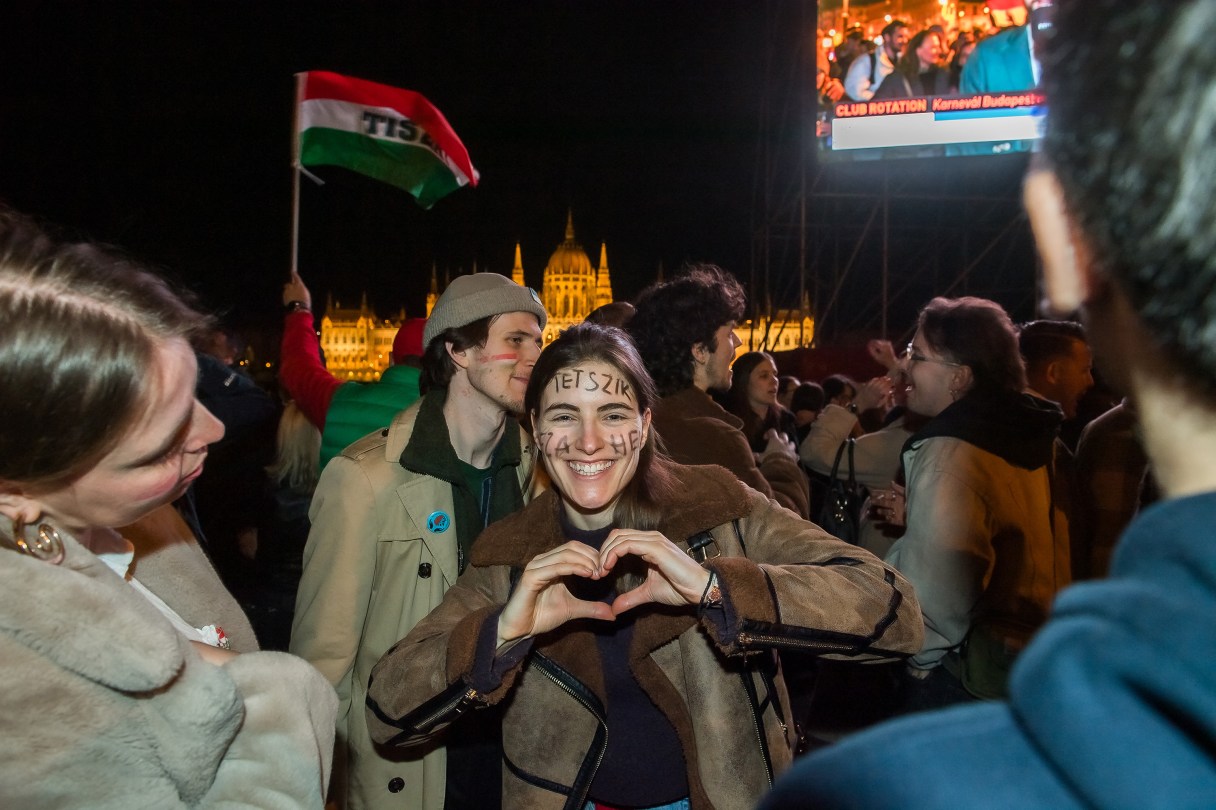
On Sunday night, Hungarian Prime Minister Viktor Orbán conceded defeat in one of the most important elections I’ve ever witnessed. The right-wing strongman stepped down from power in Hungary after a rule of 16 years — years that spanned the adult lifetime of a generation of young people, who have now made their voice heard, through their vote. In these 16 years, Hungary’s new democracy has been on the line, taking hit after hit, as the government has taken over control of the media, rigged the electoral system, threatened immigrants and stripped away human rights.
I am a newcomer to Hungary. I arrived in 2018, fell in love with the country — despite the politics — and was captivated by this place. I am incredibly grateful to now be a permanent resident, to have found and developed a community of friends (local and expatriate) and made a life here.
But I have never been as grateful as I am now. Sunday night’s victory for the Tisza Party, the first to successfully rally support against the giant of Fidesz, Orbán’s party, was historic. Nearly 80% of the Hungarian population got out and voted — a statistic that is simply unthinkable in the United States, where I’m from. People here cared, spoke up and were heard.
I do not write about Hungarian politics, but I can tell you what I’ve witnessed here. Many Hungarians have felt defeated. People who are members of the LGBTQ community may be afraid to go out in public, though last year’s Pride parade in Budapest drew more than 100,000 marchers from across the European Union. An “anti-pedophilia” act conflates gay people with pedophiles and prohibits gay characters from appearing in children’s books or school curriculum. Teachers are paid little and adhere to strict rules.
When I gave a talk at a high school in Pécs about my book, “The Women Are Not Fine,” I was told: “Do not mention LGBTQ.” I could talk about war, rape, domestic violence and infanticide — just not a man loving a man.