
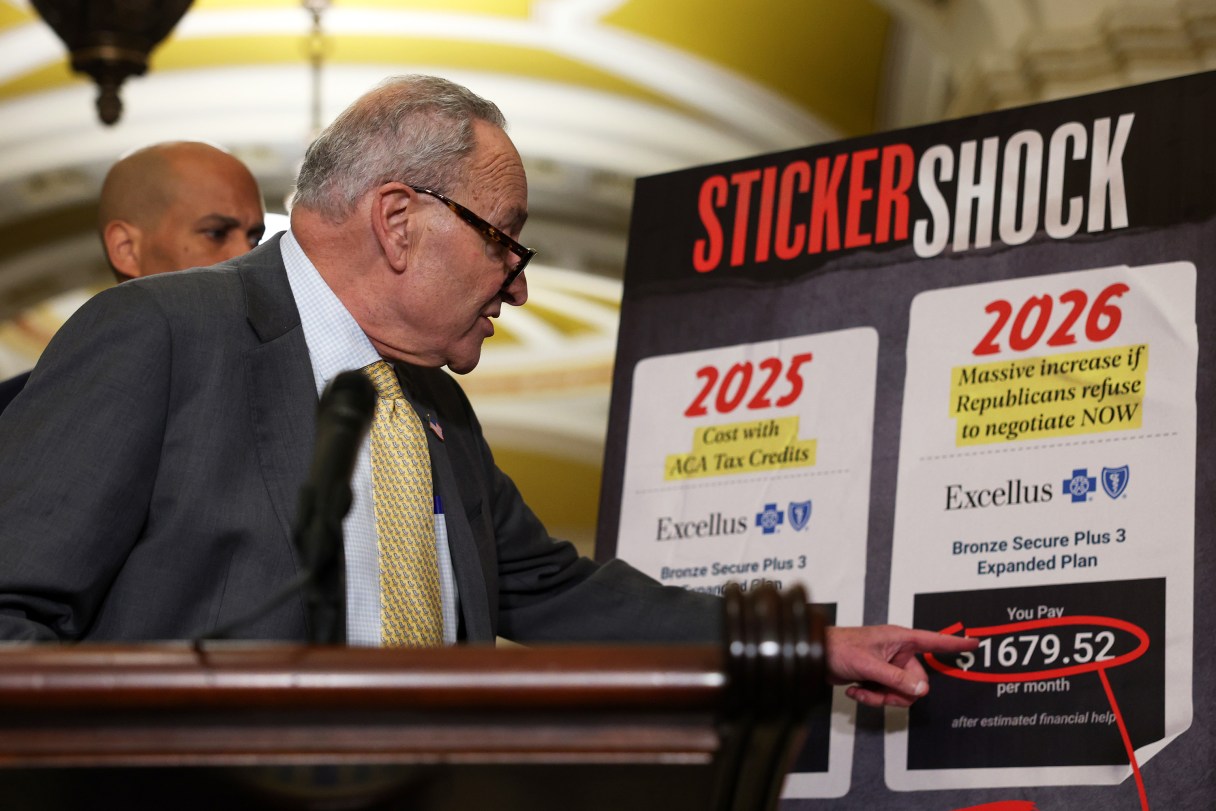
It was just six months ago that Senate Democrats shut down the government rather than address the failures of Obamacare. Their rhetoric was dark, warning of disaster for millions of people and families who might be forced to pay more for their own health care unless the GOP agreed to extend subsidies for those who purchased coverage on state exchanges.
“Make no mistake, the blame behind the skyrocketing health care costs millions are facing today is squarely at the feet of House Republicans, and the American people know it,” huffed and puffed Rep. Suzan DelBene, the Washington Democrat who chairs the Democratic Congressional Campaign Committee, back in October.
Politico reported that Democrats “are already moving to turn the expiration of the subsidies into a potent election-year attack on congressional Republicans.”
As part of this scorched earth approach, Democrats closed Washington for six weeks, the longest such stretch in our history, from Oct. 1 through Nov. 12, when a handful of party members in the upper chamber backed off amid public outcry.
A half year later, and that strategy seems particularly misguided. In fact, the much-ballyhooed calamity — millions of Americans forced to go without health insurance coverage — never took place. The most recent report from the Centers for Medicare & Medicaid Services (CMS) notes that enrollment on the exchanges did indeed drop, from a record 24.3 million in 2025 to 23.1 million in 2026. But this year’s enrollment numbers are still significantly higher than the 16.3 million who signed up in 2024.