
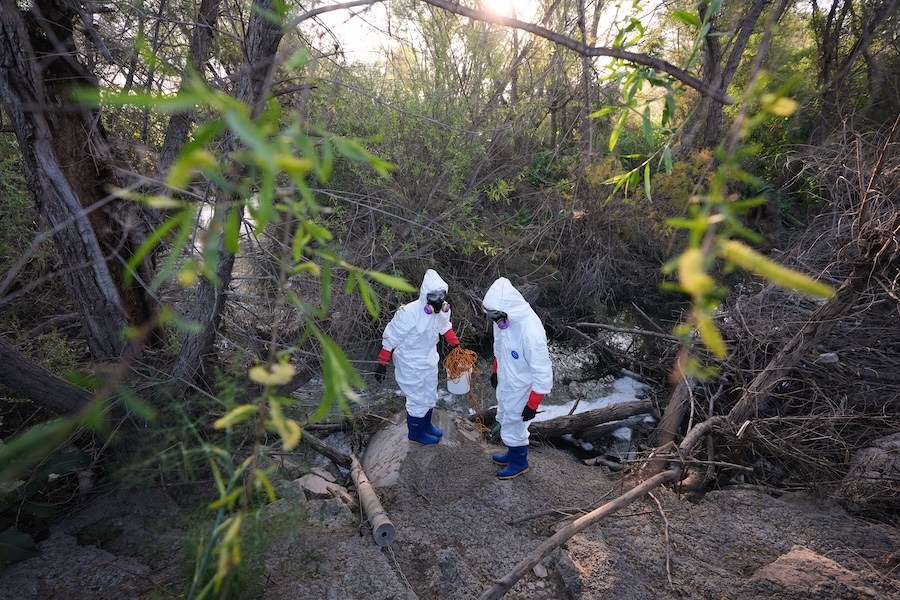
SAN DIEGO (AP) — The smell of rotten eggs permeates Steve Egger’s Southern California home, especially at night as the nearby Tijuana River foams up with sewage from Mexico before emptying into the Pacific Ocean.
Egger, 72, says he and his wife have frequent headaches and wake up congested and coughing up phlegm. Their home is outfitted with a hospital-grade filtration system that cycles the air every 15 minutes.
Despite those measures, “most nights we breathe in a horrible stench,” he said. “It’s awful.”
Since 2018, more than 100 billion gallons (378 billion liters) of raw sewage laden with industrial chemicals and trash have poured into the Tijuana River, according to the International Boundary and Water Commission. The river traverses land where three generations of the Egger family once raised dairy cows. The United States and Mexico signed an agreement last year to clean up the longstanding problem by upgrading wastewater plants to keep up with Tijuana’s population growth and industrial waste from factories, many owned by U.S. companies.
In the meantime, tens of thousands of people are being exposed to the sewage. Environmental Protection Agency Administrator Lee Zeldin said during a February visit to San Diego that it will take about two years to resolve one of the nation’s worst and longest-running environmental crises, which affects a largely poor, Latino population.