
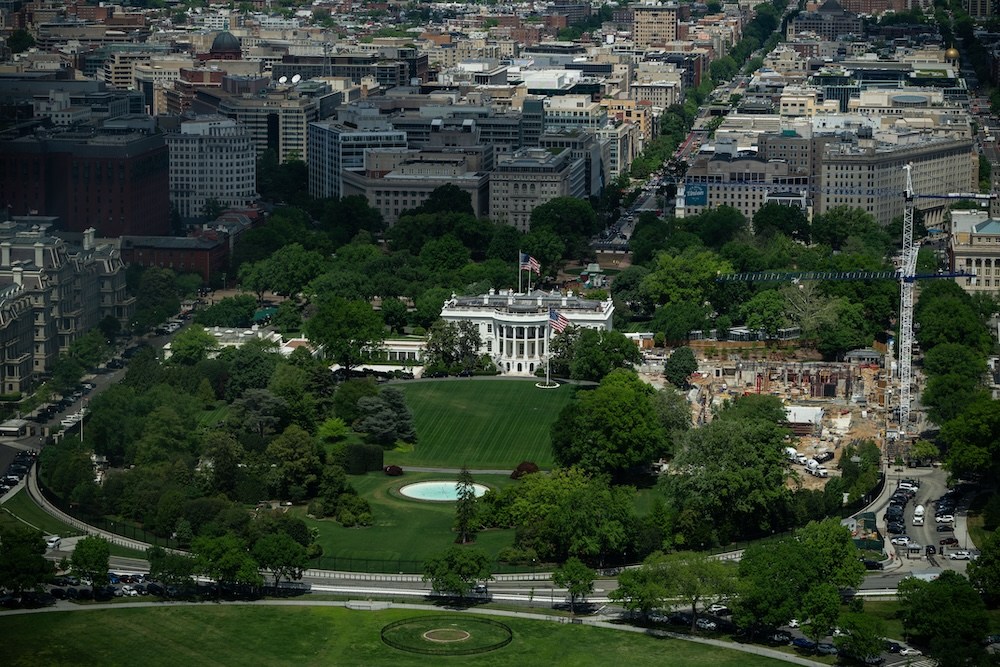
Secrecy surrounding White House security makes details hard to come by, but President Donald Trump’s court fight over his $400 million ballroom casts some light on an underground bunker at the site that has had a role in history.
The bunker emerged in the Trump administration’s court fight against the National Trust for Historic Preservation, which is challenging the 90,000-square-foot (8,400-square-meter) ballroom project in Washington. A federal appeals court last week permitted the president to continue with construction of the project at the site of the former East Wing, which was demolished last fall.
That ruling put on hold a lower-court judge’s order blocking aboveground construction but exempted work to ensure the safety and security of the White House. The Republican administration’s appeal cited materials that would be installed to make a “heavily fortified” facility, including adding bomb shelters, military installations and a medical facility underneath the ballroom.
The bunker’s role in presidential history
The history of a bunker beneath the East Wing dates to Franklin D. Roosevelt’s presidency, when an underground bomb shelter was installed in 1942 after the United States had entered World War II. Beyond that, detail is obscured by secrecy resulting from concerns about presidential safety.