
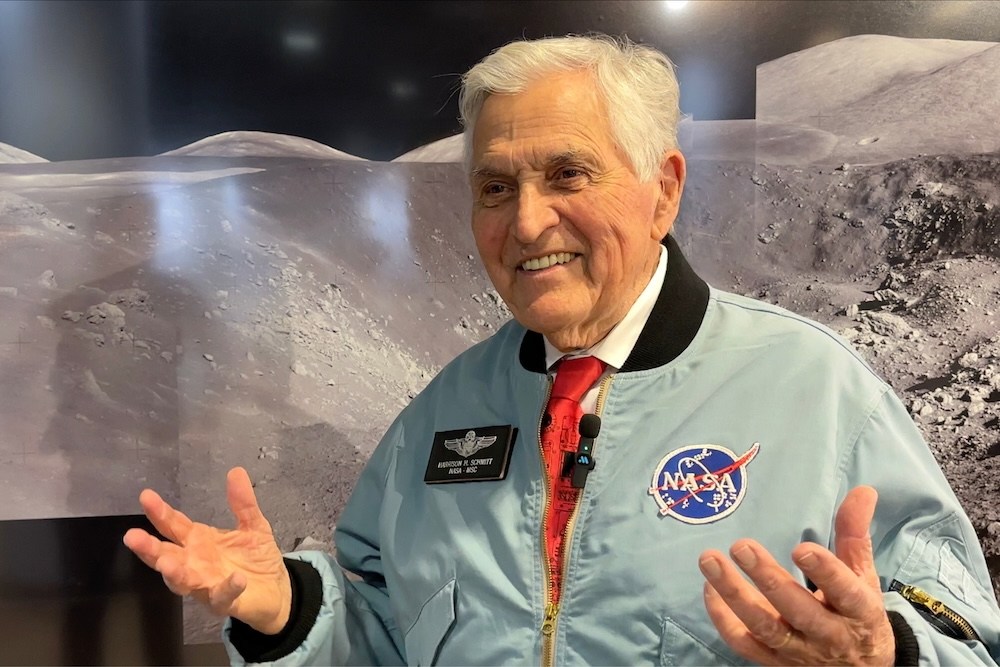
ALBUQUERQUE, N.M. (AP) — It was 1972 and Apollo astronauts Harrison “Jack” Schmitt and Eugene Cernan had just stepped onto the moon’s surface to begin collecting rock and soil samples.
The mission would mark the end of an era for the American space program, but Schmitt already was looking to the future. His voice crackling over a high-frequency radio signal that day, he shared his thoughts with Cernan and those listening in at Mission Control.
“Well, I tell you Gene, I think the next generation ought to accept this as a challenge. Let’s see them leave footsteps like these someday,” Schmitt said.
Schmitt, 90, is one of the four Apollo moonwalkers still alive today. A field geologist, he was the first scientist to set foot on the moon and his expertise helped answer questions about the origin of that big rock up there and what it tells us about the solar system.
Schmitt felt the thrill again when the Artemis II crew rocketed into space on a historic lunar flyby. Pure excitement and the potential for so much more. And he’s hopeful as new generations get back to the moon and beyond.