
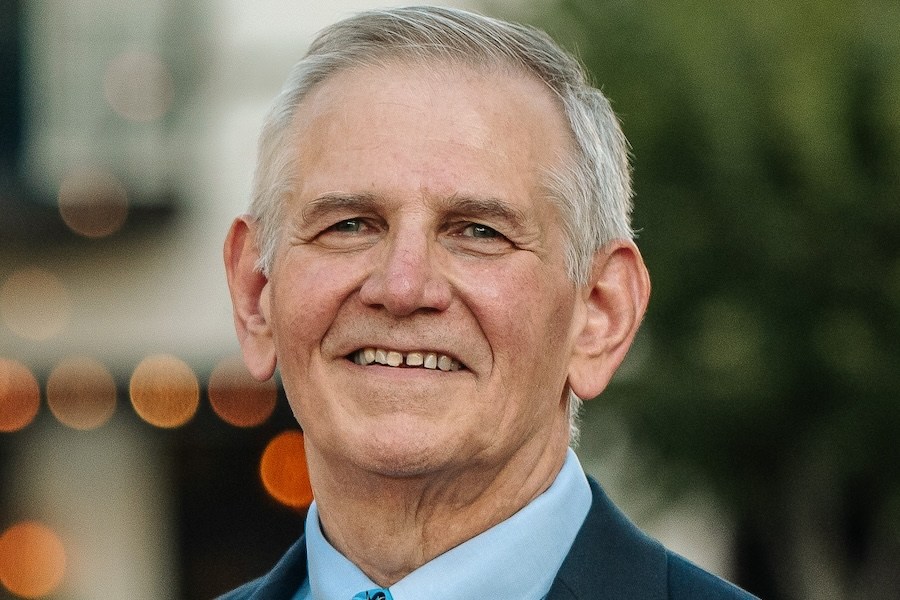
Last week, the Senate Banking Committee held a hearing to vet President Donald Trump’s nominee for chair of the Federal Reserve Board of Governors. The president’s pick, Kevin Warsh, previously served as a member of the board from 2006 to 2011 and is currently a visiting scholar at the Hoover Institution at Stanford University. If confirmed by the Senate, Warsh will replace current Chair Jerome Powell, whose term expires in May.
Warsh faced aggressive questioning on several topics from his views on the independence of the Fed to his own personal fortune, but at the policy level the question of interest rates remained front and center.
As most Americans witnessed over the past four years, the primary tool in the Fed’s arsenal to combat excess inflation is its ability to influence the level of interest rates. In response to the sharp rise in prices in 2022, during which inflation briefly touched 9%, the central bank hiked its benchmark interest rate from near zero to 5.5% over several months, the fastest pace on record. The rate has since been lowered to 3.75%.
The Fed’s action was belated but largely successful, with inflation now down to around 3%, but the ongoing debate surrounding the appropriate level of interest rates today was on full display at the confirmation hearings. All of which suggests a basic question: Exactly how does the Fed exert control over interest rates?
The Federal Reserve System was created in 1913 by the Federal Reserve Act. The system consists of a semi-independent Board of Governors appointed by the president and confirmed by the Senate, and 12 regional Federal Reserve Banks. The regional banks are private entities, owned by commercial banks that belong to the Federal Reserve System.