

Several human-bear encounters in the Great Smoky Mountains National Park this month have triggered trail closures and warnings throughout the park.
There were three incidents April 18-19 in which bears were aggressive, in two cases taking backpacks from people, National Park Service officials said in a press release, following three other incidents April 11-12, including one case in which a bear bit someone who entered a closed area.
On April 18-19, park rangers responded to three bear-related incidents on Ramsey Cascades Trail, according to the park service. The trailhead and parking area on Ramsey Prong Road is about 14 miles east of Gatlinburg in an extremely remote area of the park.
Two encounters involved a bear said by officials to have approached visitors and taken two backpacks. A third encounter was with a bear that displayed aggressive behavior and briefly chased a group of people. Park officials said Ramsey Prong Road and Ramsey Cascades Trail are closed as rangers monitor bear activity.
Three other incidents were reported April 11-12 in the southern end of the park on Abrams Falls Trail, about 18 miles southeast of Maryville, Tennessee, involving an aggressive black bear, officials said. Those incidents include one case in which the bear bit a visitor who entered a closed area. The Abrams Falls access road and trail were initially closed for monitoring but are now open, after several days with no observed bear activity.
Fiery Gizzard State Park officials reported a sighting at the park Thursday and, according to the Blue Ridge, Georgia-based Appalachian Friends of Bears conservation group, one was spotted Wednesday on a front porch in Cobb County, Georgia.
BLACK BEARS
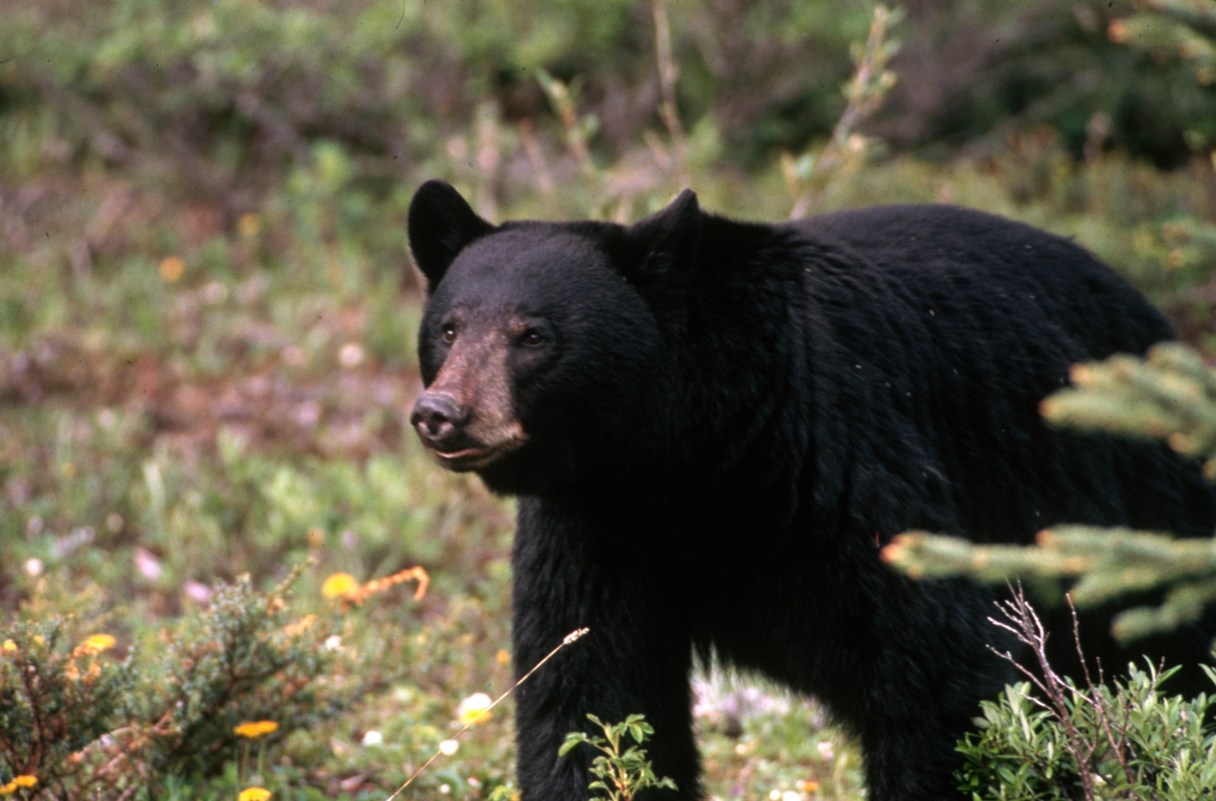
The American black bear is the South’s largest predatory mammal, and national park officials estimate there are roughly 1,900 of them in the Smokies, inhabiting all elevations of the park. This equals a population density of about two bears per square mile. The Smoky Mountains have the densest population of black bears in the country.
Before European colonization, the black bear’s range included most of North America, according to national park information, but loss of habitat and unregulated hunting resulted in a significant reduction of the bears’ range. By the early 1900s, bear populations were nearly eliminated in the continental U.S., according to the National Park Service.
(READ MORE: Black bears roused from winter slumber by March warm-up)
Black bears in other regions may appear brown or cinnamon. But in the Smokies, they are black with a brown muzzle and sometimes a white chest patch, according to the park service, according to the park service. Adult males average about six feet in length and three feet tall at the shoulder, weighing around 250 pounds in summer. Some of the largest males weigh up to 500 pounds. Females are smaller, usually just over 100 pounds. As fall approaches, both sexes can nearly double their weight in preparation for winter.
They are well-equipped for life in the wild with small eyes, rounded ears, long snouts and large, muscular bodies, the park service said. Bears’ non-retractable claws and flat-footed gait help them climb trees, swim efficiently and run up to 30 mph.
Black bears number an estimated 6,000 or more statewide, according to the Tennessee Wildlife Resources Agency. Most of the bear population is concentrated in East Tennessee, but they are expanding their range.
Black bears
As bear and human populations increase and more people move near public lands and bear-inhabited areas, officials say to stay safe by following these steps:
— Never feed or approach bears.
— Do not store food, garbage or other recyclables in areas accessible to bears.
— Do not feed birds or other wildlife where bears are active.
— Feed outdoor pets a portion size they will completely consume during each meal and securely store pet foods.
— Keep grills and smokers clean and stored in a secure area when not in use.
— Talk to family and neighbors when bear activity is occurring in your area.
Source: Tennessee Wildlife Resources Agency
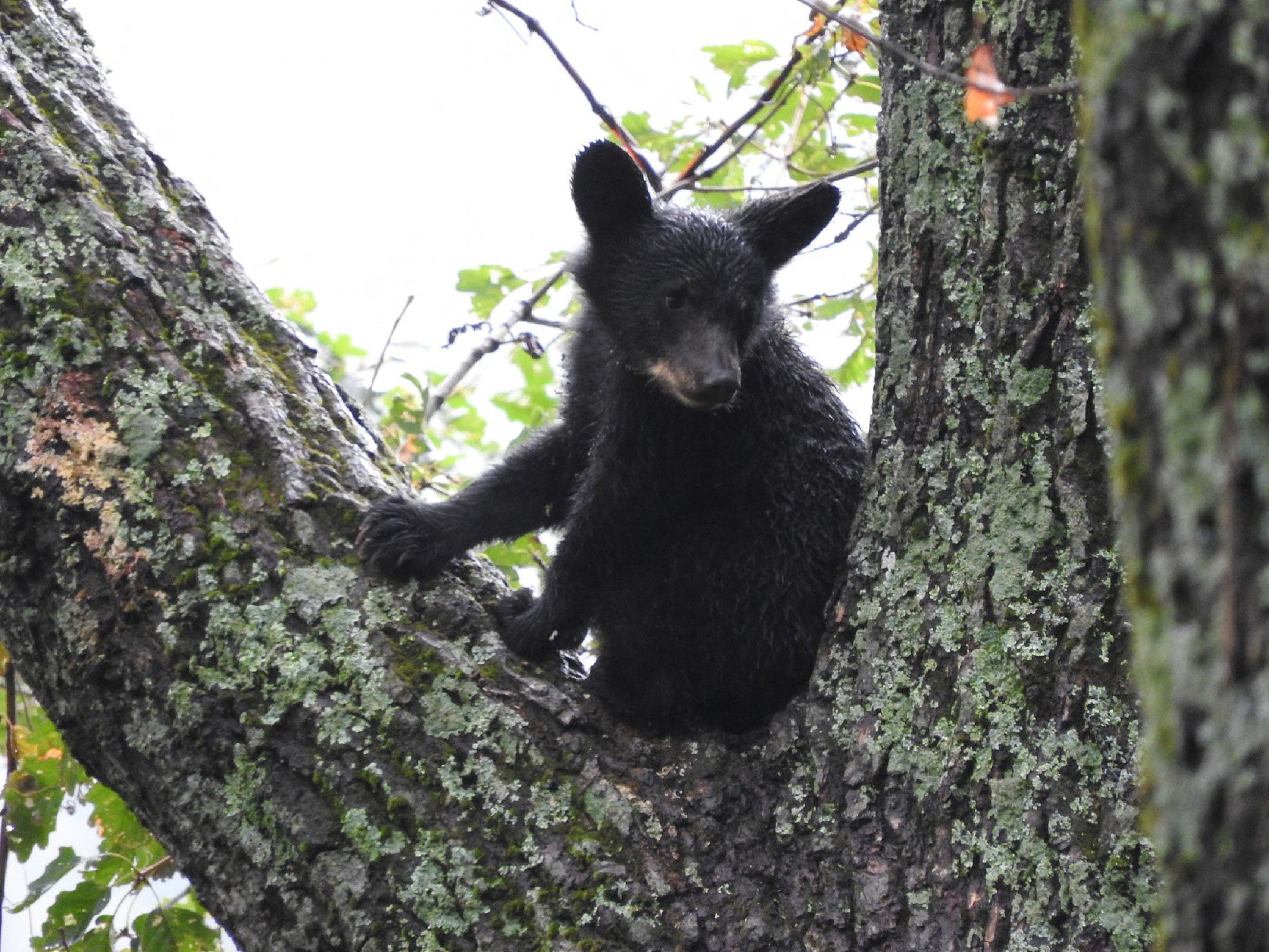
In recent weeks, mother bears have emerged from their dens with young cubs searching for limited early‑season food, according to Mime Barnes, spokesperson for the state agency. Adult bears without cubs are out now looking for food, and as June approaches, mother bears will kick their yearling male cubs out of the den to look for new territory. All that means chances of people in bear country meeting with one are increasing.
“In the springtime when subadults or younger bears move out on their own for the first time — and they’re looking for food, water, and shelter — they don’t always know what direction that’s in,” Barnes said. “Their noses lead them, so they can cross paths with humans.”
That’s why it’s important for people who live in bear country to put out their trash just in time for pickup and to keep tasty smelling barbecue grills and pet food stored where it can’t attract bears, Barnes said. Bird feeders attract all kinds of other wildlife, including bears, so it’s better to plant native trees, shrubs and flowers to provide food for birds.
(READ MORE: Florida kicks off first black bear hunt in a decade, despite pushback)
While inadvertent bear feeding is a problem, intentionally feeding bears is a preventable matter usually ending in a bear’s death, Barnes said, offering the wildlife mantra, “A fed bear is a dead bear.”
“Some people just want to see wildlife closer, but it really is harmful for the wild animal, any wild animal, to be habituated to human food,” she said. “The other thing that we faced in the past in the Chattanooga area, and in other places in the state, is that when a bear is spotted, everybody wants to go to that area and see the bear. That can create a really dangerous situation, so we just ask that if a bear is spotted in a neighborhood, people avoid that area and certainly don’t seek it out.”
What to do if encountering a black bear
In the woods:
— If you see a bear before it notices you: Stand still, don’t approach it and enjoy the moment. Then move away quietly in the opposite direction.
— If you encounter a bear that has become aware of you: Don’t run — running may trigger a chase response. Instead, back away slowly in the opposite direction and wait for the bear to leave.
In your backyard:
— From a safe distance, make loud noises, shout or bang pots and pans together to scare away the bear.
— When the bear leaves, remove potential attractants such as garbage, bird seed or pet food.
— Ask neighbors to remove attractants.
— Check your yard for bears before letting out your dog.
In a building, by a trash bin or around the corner:
— Give the bear a clear escape route — do not corner it.
— Leave any doors open as you back away from the bear.
— Do not lock the bear in a room.
If attacked:
— If a black bear attacks, fight back aggressively and do not play dead. Use pepper spray, sticks, rocks or anything at hand for defense. If cornered or threatened, bears may slap the ground, “pop” their jaws, or “huff” as a warning. If these behaviors are witnessed, you are too close. Slowly back away while facing the bear at all times.
Source: bearwise.org
NATIONAL FORESTS
Bears in the Cherokee National Forest aren’t causing major problems at the moment, according to Christopher Joyner, spokesperson for the U.S. Forest Service’s office based in Cleveland. The office oversees the Cherokee National Forest in Polk County.
“We haven’t had any bear encounter reports,” Joyner said by phone, noting the warmth this year has been unusual, possibly stirring bears early and certainly increasing the fire risk. “I don’t ever remember it being this hot, this early. It’s a very unusual spring already.”
(SIGN UP: Get breaking news in your inbox as it happens by going to timesfreepress.com/breaking)
The same appears to be true for the Chattahoochee-Oconee National Forest in North Georgia, according to a forest service spokesperson in Blue Ridge.
“We haven’t heard of any this year,” spokesperson Laura Fitzmorris said by phone. “I know last year, we had one or two, and we were working with the Georgia Department of Natural Resources on that.”
Contact Southeast Tennessee reporter Ben Benton at bbenton@timesfreepress.com or 423-757-6569.