
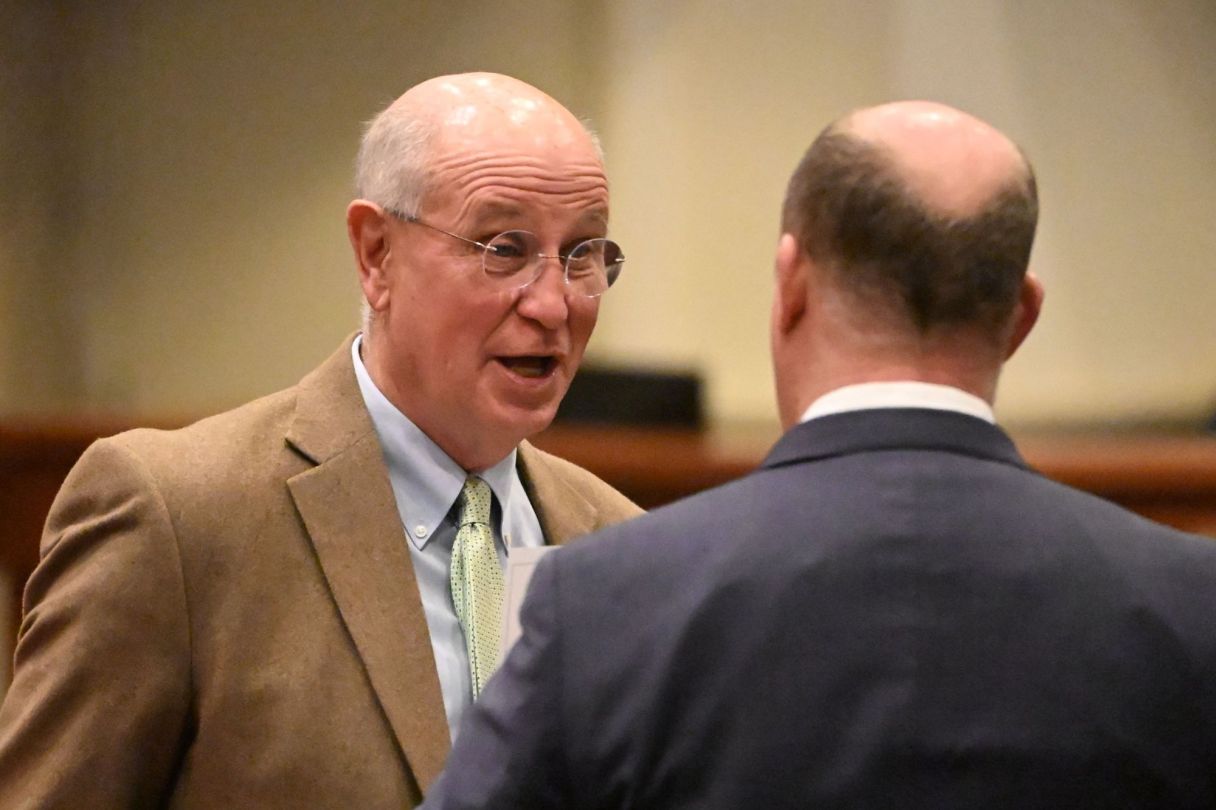
Several Alabama legislators hope an upcoming audit of the Alabama Department of Corrections will pull back the curtain on an agency engulfed in violence and consuming an ever-larger share of the state budget.
The audit from the Alabama Department of Examiners of Public Accounts, an arm of the Legislature, is part of a pilot initiative to investigate the conditions in one facility that has yet to be named.
The examiners department regularly audits the books of state agencies, but this specific audit stems from legislation filed by Sen. Larry Stutts, R-Tuscumbia, because of sustained troubles he has observed from the department.
“There is just a tremendous need,” Stutts said in an interview. “We have the highest inmate mortality rate in the nation. I guess the timing of it, we are getting ready to move into a new prison facility, and we don’t need to take the current culture with us to the new facility.”
The audit could take place this summer, with results released in October. A message was sent to the Corrections Department seeking comment.
LITIGATION
The audit reflects mounting frustration among lawmakers in both parties with corrections. Alabama faces multiple federal lawsuits over violence, inadequate staffing and inadequate health care delivery in the state’s correctional facilities.
The problems endemic to the Corrections Department are known nationwide.
“Alabama is absolutely an outlier,” said Michele Deitch, director of the Prison and Jail Innovation Lab at the University of Texas at Austin. “It is, by far, the worst system in the country to the extent that we are aware of that sort of thing. The violence levels are completely out of control. Every system is going to have some level of violence for sure, but this is on a scale that is not like anywhere else in the country.”
Incarcerated people continue to die in Alabama’s prisons at rates far higher than other state prison systems, according to criminal justice reform groups, despite a recent decline in deaths.
“We still had a death rate in 2025 that was three times the national average,” Elaine Burdeshaw, policy director for Alabama Appleseed, a criminal justice reform organization based in Birmingham, told the Legislature’s Joint Prison Oversight Committee. “We still have this prevalence of drugs and contraband inside DOC, we still have family members, parents, getting extorted for significant amounts of money. And we still have a state agency, despite the very little return we are getting, we have spent more money on it than almost every other budget priority in the state.”
According to a report by Eddie Burkhalter, a researcher with Alabama Appleseed, drawn from corrections records, at least 202 people died in the state’s prisons last year. That is fewer than the 277 who perished in 2024 while incarcerated and that was less than the record-high number of deaths in 2023.
An Alabama Appleseed report estimated that 25% of the deaths that took place in Alabama prisons between 2019 and 2024 were drug-related, while another 6% were homicides.
All are multiple times higher than the deaths that happen in state prisons across the nation. The rate of drug-related deaths, for example, is seven times the national average, while the rate of homicides is six times that of the rest of the country.
Abuse perpetrated by several corrections officers remains rampant.
The state has paid millions of dollars to law firms to defend corrections officers against civil rights complaints filed by people who are incarcerated and their families. In December 2024, the Contract Review Committee approved such three contracts to one law firm, totaling almost $7.7 million.
Families continue to attend Joint Prison Oversight Committee meetings and speak about the harm that their loved ones face while incarcerated in the state prisons. According to corrections statistics, about 355 incidents of assault were reported in 2025.
Last week, corrections told lawmakers at the Joint Prison Oversight Committee it would cancel a $1 billion health care contract with Tennessee-based YesCare, citing financial issues with the company.
AUDITS
Before this year, Stutts, first elected to the Senate in 2014, had not filed many criminal justice reform bills. But in the recently-concluded legislative session, he filed two focused on improving the living conditions of people in corrections custody.
The first would have authorized the Alabama Department of Public Health to oversee the kitchen and meal service areas within corrections. Senate Bill 316 would have allowed the Alabama Department of Examiners of Public Accounts to investigate the activities and treatment of people housed in the state’s prisons.
The legislation would also have prohibited retaliation or discrimination by corrections officers or others incarcerated for cooperating with investigation, authorized the use of a special prosecutor to prosecute for criminal activity in the prisons and created a board to oversee the investigation into the prison conditions.
Neither bill passed, but officials from corrections and the Department of Examiners of Public Accounts reached an agreement to investigate the treatment and living conditions in one of correction’s sites.
“We will start out with one prison,” Rachel Riddle, chief examiner with the Alabama Department of Examiners of Public Accounts, told lawmakers at a Joint Prison Oversight Committee meeting. “I will not state what that prison is, for obvious reasons. And we will look at a plethora of issues. Those mainly were outlined in the bill.”
Stutts cited “The Alabama Solution,” an Academy Award-nominated documentary that used cell phone video taken by people in custody to document the violence within the prison system.
“We all know about the violence, but it just had come to the forefront,” Stutts said. “The documentary about it brought it to everyone’s attention. But we have known the statistics.”
He also said, “When you hear from the families, you know the violence is there. I have talked to the commissioner about it, and the deal is, it is the culture. A lot of problems are with the corrections officers. You saw that in the documentary.”
THE NUMBERS
Lawmakers have also become frustrated with what they call a lack of responsiveness from corrections to questions about prison conditions.
“I know about substance abuse program problems, everybody knows about substance abuse program problems,” Rep. Matt Simpson, R-Daphne, said following the committee meeting. “We know about substance abuse program problems because of our profession. They say, ‘We’ll get back with you.’ It is three months later, and they have not gotten back with us. We have not gotten the numbers.”
The frustration is compounded by the Corrections Department’s demands on the state’s general fund budget. The money given to corrections increased by about 275% between 2002 and 2025, going from $197 million to almost $750 million. Corrections, along with Medicaid, consumed about half of the general fund budget for 2025.
Alabama Appleseed began pushing for a prison audit several years ago after years of documenting the conditions in state prisons, said Burdeshaw, the organization’s policy director.
“We tried to think through what is something that will actually help, what is a solution that we could bring to the table that could help improve the conditions at the department,” she said.
The organization solicited input from national groups and experts in other states about prison oversight and whether independent oversight would help improve prison conditions.
Deitch, the University of Texas lab director, said there are best practices to conduct audits to monitor prisons systems, saying every prison system needs an independent group, “some set of outside eyes looking at what is going on inside.”
“You need that check and balance, you need the external scrutiny to shine a light on what is happening inside, to provide more transparency, and to give people inside a vehicle for reporting things that are concerning them or where they feel at risk, she said.”
Deitch also said the investigating agency needs “golden key access” to prisons to conduct interviews, review records and visit all places.
“The prison agency needs to have a requirement to respond in writing to the review with an action plan for how they are going to fix the problems,” Deitch said.
After that, Deitch said an oversight body should ensure that the corrections agency has implemented the reforms that it said it would perform.
“You want to make sure that is not a paper review that gets filed somewhere and goes into the trash can,” Deitch said. “It needs to be something that is meaningful.”
A FRAMEWORK
In 2024, the Legislature approved an Alabama Appleseed-backed bill that established constituent services to communicate with family and friends about the status of loved ones who are incarcerated in Alabama’s prisons.
Alabama Appleseed brought the audit framework to Stutts because “he is very passionate about the issue,” Burdeshaw said.
The framework would have another body monitor how the prisons operated and would have “golden key access” to corrections to create more transparency, report it publicly and offer solutions to improve conditions for people in the state custody.
Findings from the audit will then be compiled into a report that the Department of Examiners of Public Accounts will furnish for lawmakers, including members of the Joint Prison Oversight Committee, to review.
“It is very important to me that we do a pilot program of this because, as you all know, we do a lot of reports in government that sit on a shelf,” said Riddle, the chief examiner for Public Accounts. “I do not want to do that. I want this to be meaningful.”
Lawmakers will then review the process with Riddle to determine if it is meaningful, or if other information would be useful.
“I want this to be a good, informational, efficient process that helps you, as a policymaker, make decisions,” she said.
Read more at AlabamaReflector.com.