
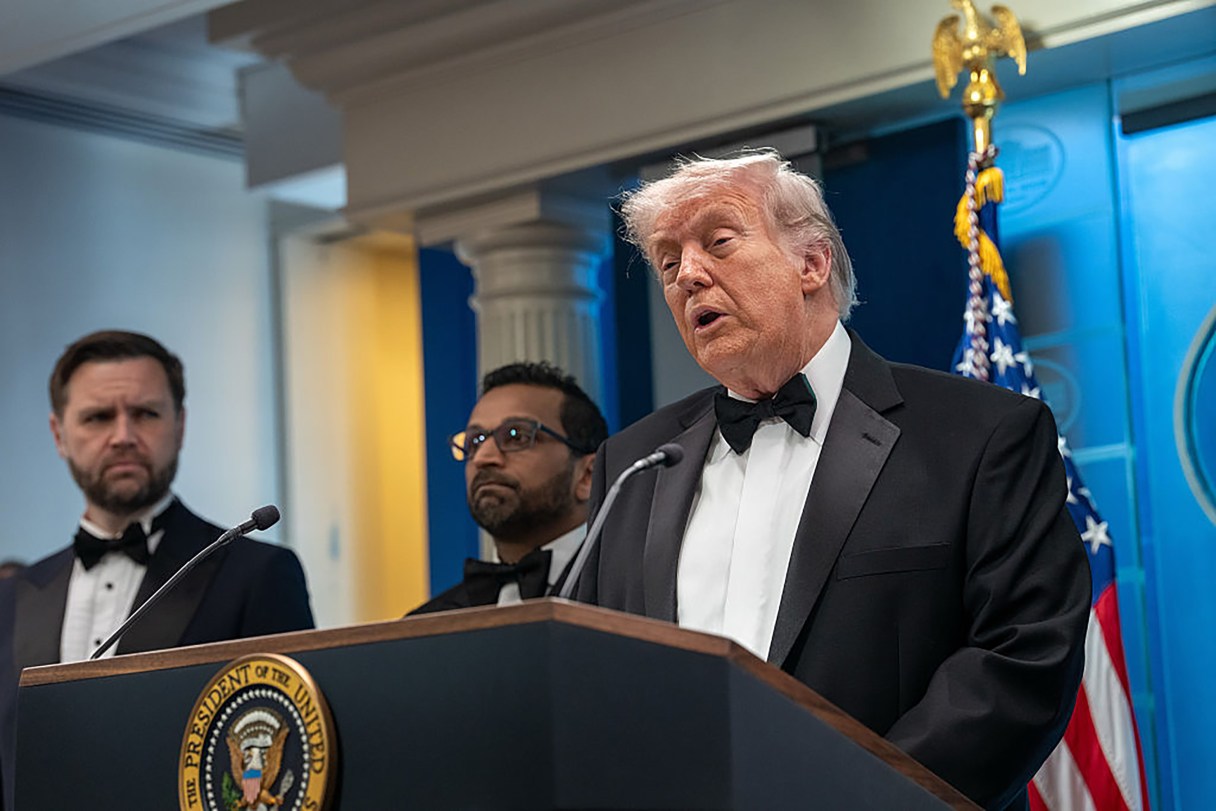
When an active shooter threat disrupted the White House Correspondents’ Dinner, the president and members of his Cabinet were evacuated swiftly and efficiently. Then President Donald Trump returned to the podium to make the case for his long-sought $400 million White House ballroom, one that would supposedly prevent criminals from entering. The solution to a potential mass killing was a bulletproof ballroom.
I was an elementary student when Columbine made school shootings a national emergency. The safe haven of school became a potential war zone overnight, and the fear that settled into children never fully left. But how could it? The Sandy Hook Elementary School shooting happened when I was a new high school teacher. Parkland when I was a doctoral student. Uvalde during my first faculty position. The shooting at Brown University happened during my 15th year working in education.
Gun violence has followed me my entire educational career. Nearly three decades later, I am still waiting for the final straw, the moment that produces gun reform and makes school feel safe again. Instead, I have more thoughts and prayers, and no gun reform in sight.
What struck me watching footage from the dinner wasn’t the chaos, but the normalcy. In the videos, I heard the clinks and clanks of wait staff collecting plates while journalists knelt on the floor. Attendees drifted toward the floor as if unsure whether to be alarmed, as if violence was something that happened to other people, in other rooms. Those sounds and slow movements told me everything I needed to know: The people in that room had no idea what to do.
I’ve spent years learning exactly what to do in those situations. Active shooter drills are now standard in schools. We learn to lock and barricade classroom doors. We learn to cut the lights and stay still so the shooter believes the room is empty. We learn to jump out of windows and fight back by throwing objects. We learn to play dead in order to live.