
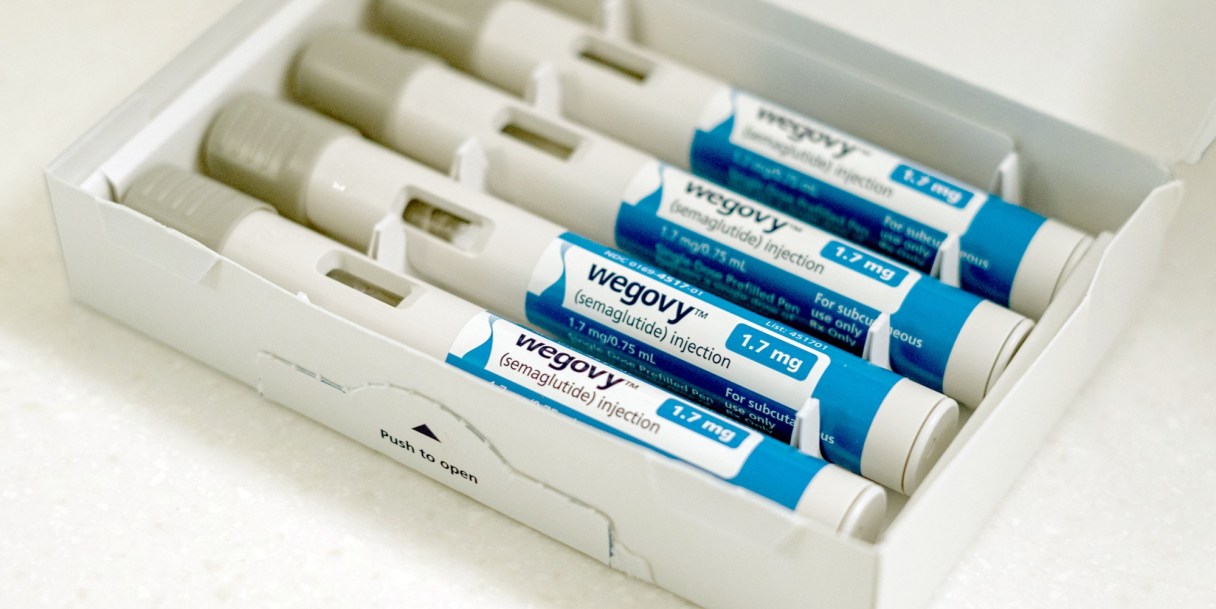
Last November, a patient of mine — 19 years old and established in our primary care clinic in Massachusetts — came in for her annual physical. She’d done everything we’d asked for her chronic obesity. She’d traded the bus for a mile-long walk to school, every day, both ways.
She and her grandparents, who do the family’s grocery shopping on an EBT card, had stretched what they could afford into more balanced and nutritious meals. Yet the number on the scale hadn’t moved. She asked, quietly and with exhaustion, if there was anything else we could try.
There was. But getting there wouldn’t be simple. Before MassHealth, Massachusetts’s Medicaid program, would even consider a GLP-1 medication, it required an initial six-month trial of phentermine — a clinical cousin of amphetamines. This step-therapy trial was required despite the 2026 American College of Physicians guideline recommending GLP-1s as the first-line treatment for obesity, ahead of phentermine, on the basis of both superior efficacy and toleration. So we started phentermine.
My patient returned in May having taken phentermine at the highest dose she could tolerate. To neither of our surprises, her weight remained unchanged. She was finally ready — clinically and bureaucratically — for the medication most likely to help.
And that’s when we heard that MassHealth would stop covering GLP-1s for obesity entirely, effective July 1, 2026. Massachusetts is not alone — from 2025 to 2026, an estimated 12 million Americans lost coverage for Zepbound and another 12 million lost coverage for Wegovy. Only 13 state Medicaid programs covered GLP-1s for obesity at the start of 2026, down from 16 the year before.