
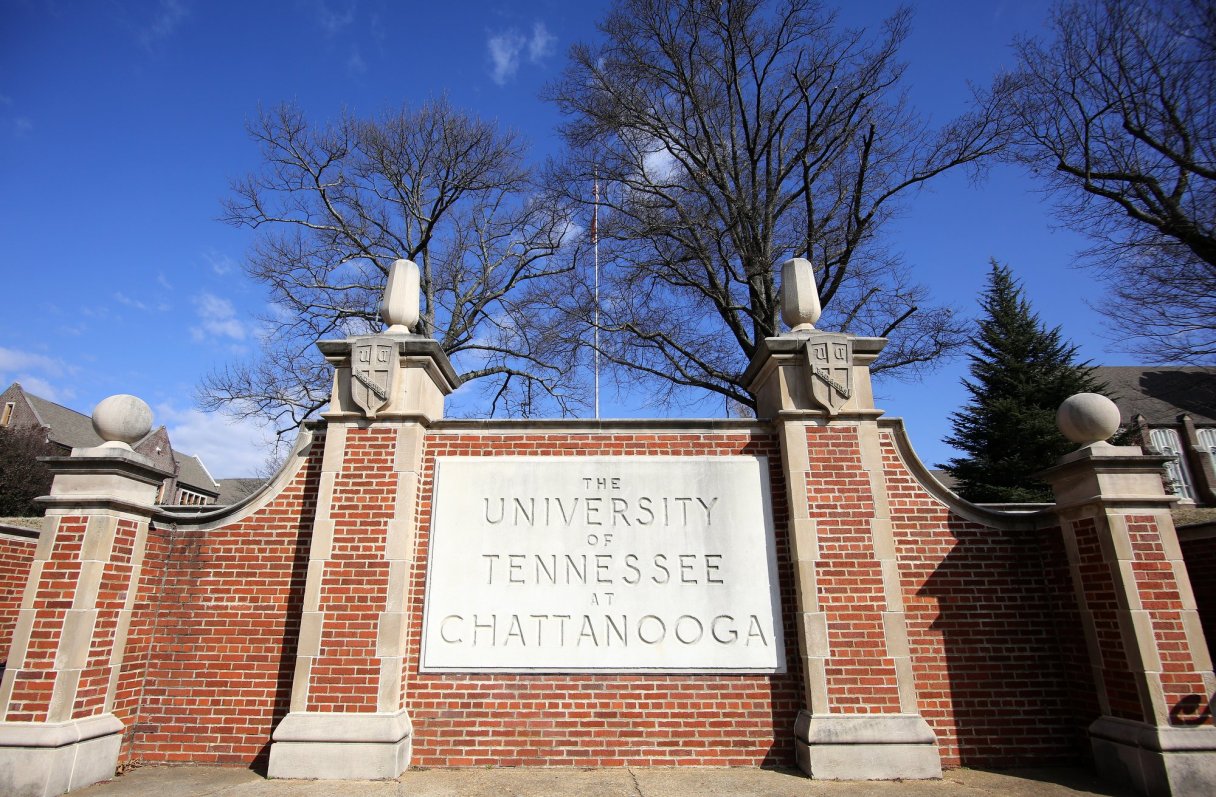
With the state and country facing a shortage of addiction counselors, the University of Tennessee at Chattanooga has launched a new certificate program aimed at bridging that gap.
Over the course of a year, students in the clinical addiction studies certificate program will take six asynchronous online classes that meet the educational requirements to become a licensed alcohol and drug abuse counselor in Tennessee.
The license, which also requires students to complete clinical hours, allows counselors to diagnose and treat substance-use disorders.
The format means the classes are accessible to anyone who wants to take them, said Tyler Oberheim, an assistant professor of counselor education who coordinates the certificate program. Previously, he said, Chattanoogans often had to travel to Nashville to complete the educational requirements for licensure.
“We tried to make it as quick and streamlined as possible,” he said in a video interview. “We need to start addressing the shortage of addictions counselors that is being experienced not only in Chattanooga, but also in Tennessee in general, because the opioid epidemic is not slowing down.”