
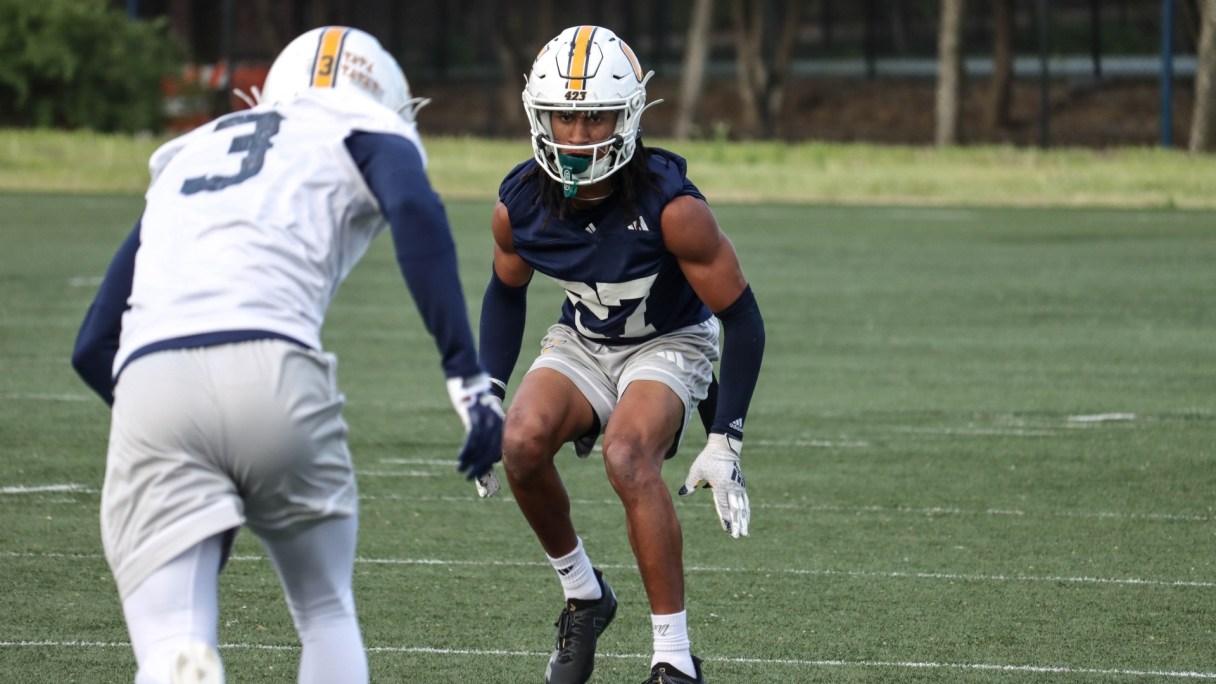
Because of their willingness to contribute to the University of Tennessee at Chattanooga football program from the moment they stepped on campus, cornerback D.J. Adams and linebacker Zion Rutledge found their way onto the field with the Mocs as freshmen in 2023.
They’ve been able to remain relatively healthy, and having no need of redshirt seasons — traditional or medical — the clock had been winding down on their UTC careers. So for Adams, Rutledge, fourth-year Mocs defensive back Kam Baah-Slay and other seniors on the 2026 roster, it looked like they were entering their final college season.
Earlier this summer, however, the NCAA approved a new rule that allows student-athletes to have five years to play five seasons. It has been hailed as a common-sense decision and received praise from athletes, coaches and outside observers.
After all, players who took a redshirt — whether because of injury, to allow them time to develop, or because it met the immediate or long-range needs of their team — were being permitted five years to be a part of college programs. Those who had neither of those reasons were essentially being limited to four, and some college athletes weren’t able to complete their degrees during the eligibility period. NCAA rules even assumed a five-year window, with the sanctioning body having built progress-toward-degree rules that required 40% of a student-athlete’s coursework to be done by their second season, 60% done by their third and 80% by their fourth.
Starting with the 2026-27 school year, though, those athletes are allowed five years, redshirt or not. Or in another way of looking at it, they’re allowed five seasons, but they must use them in a five-year window — with few exceptions — that starts with them entering college no later than the academic year after their 19th birthday.