
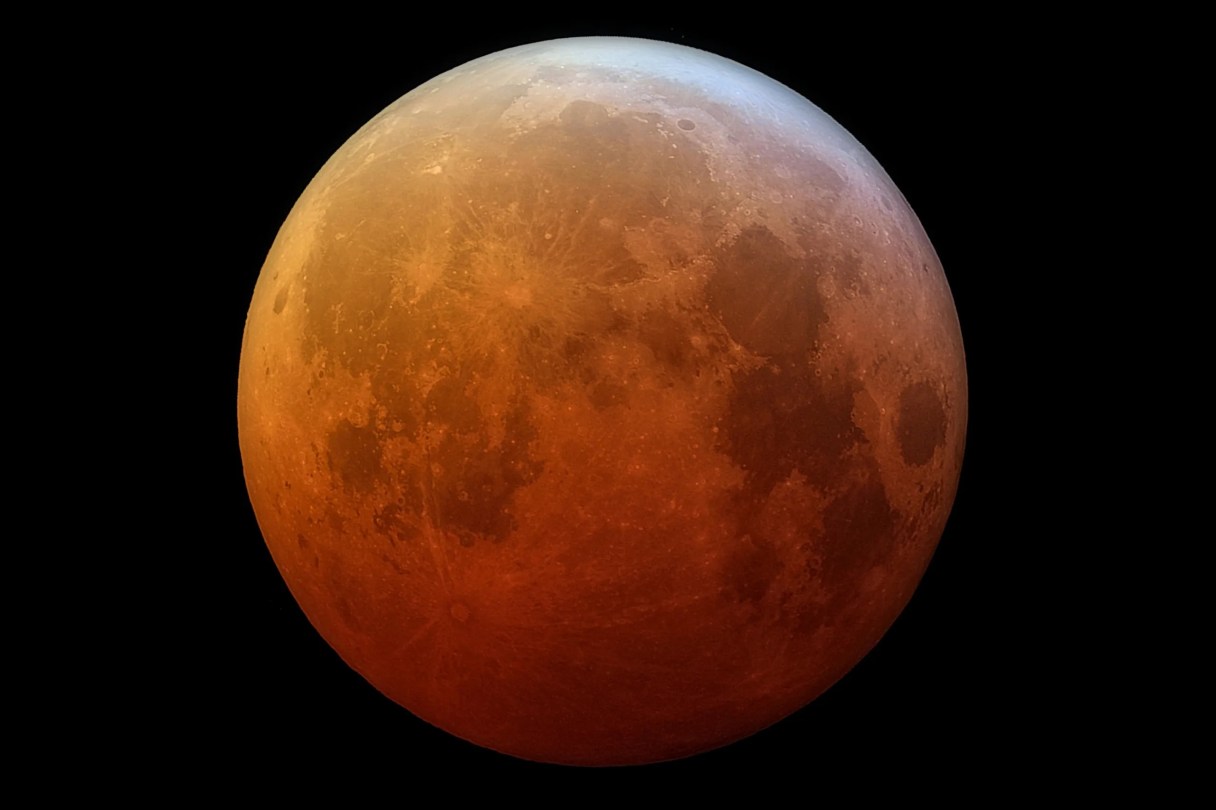
Following the total solar eclipse on Aug. 12, it’s the Moon’s turn to line up for some time in — or, rather, out of — the spotlight during a deep partial lunar eclipse tonight, Aug. 27. And unlike the solar eclipse that was only visible over Greenland, Iceland and parts of Europe, tonight’s spectacle can be seen from your backyard right here in Chattanooga.
Lunar eclipses are sometimes called Blood Moons because the Moon can take on a blood-red color. During a total lunar eclipse, the entire Moon turns to blood. But even at the moment of maximum eclipse during tonight’s event, not all of the Moon will sit in Earth’s shadow — a small sliver will remain outside Earth’s inner shadow, glowing its usual bright white.
When to look up
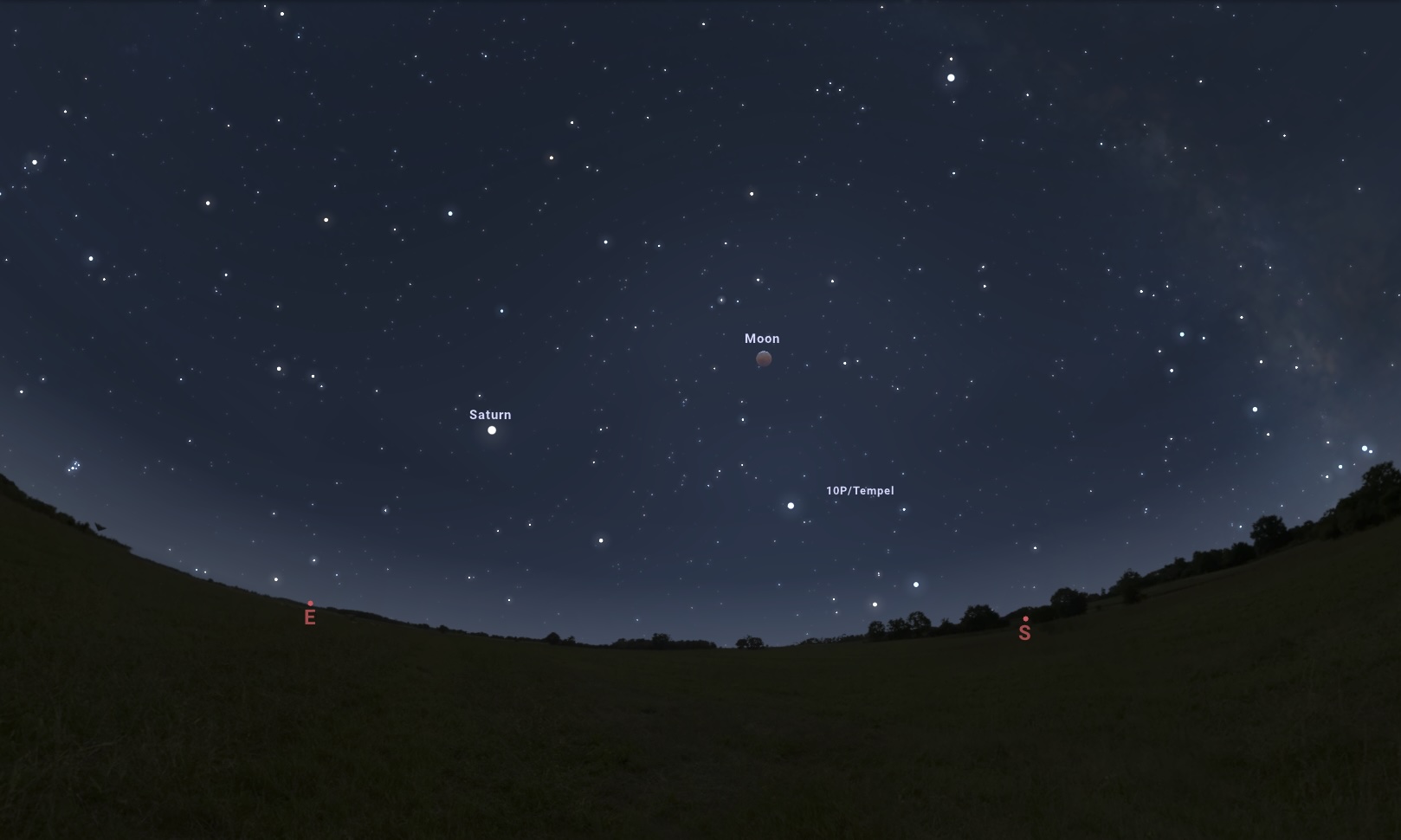
The Moon rises over the city around 8:04 p.m. EDT in the east-south-east. The show doesn’t really start until 10:33 p.m. EDT, when the Moon first slips into what’s known as the umbra — the dark, innermost core of Earth’s shadow — and the partial eclipse begins. From there, the shadow creeps across the Moon’s face for hours.
Maximum eclipse hits just after midnight, at 12:13 a.m. EDT. At that moment, 96% of the Moon sits inside Earth’s shadow, glowing a dim orange-red. A thin, bright segment along the northeastern edge will stay outside the shadow entirely, untouched by the effect — a striking contrast next to the darkened rest of the disk.