
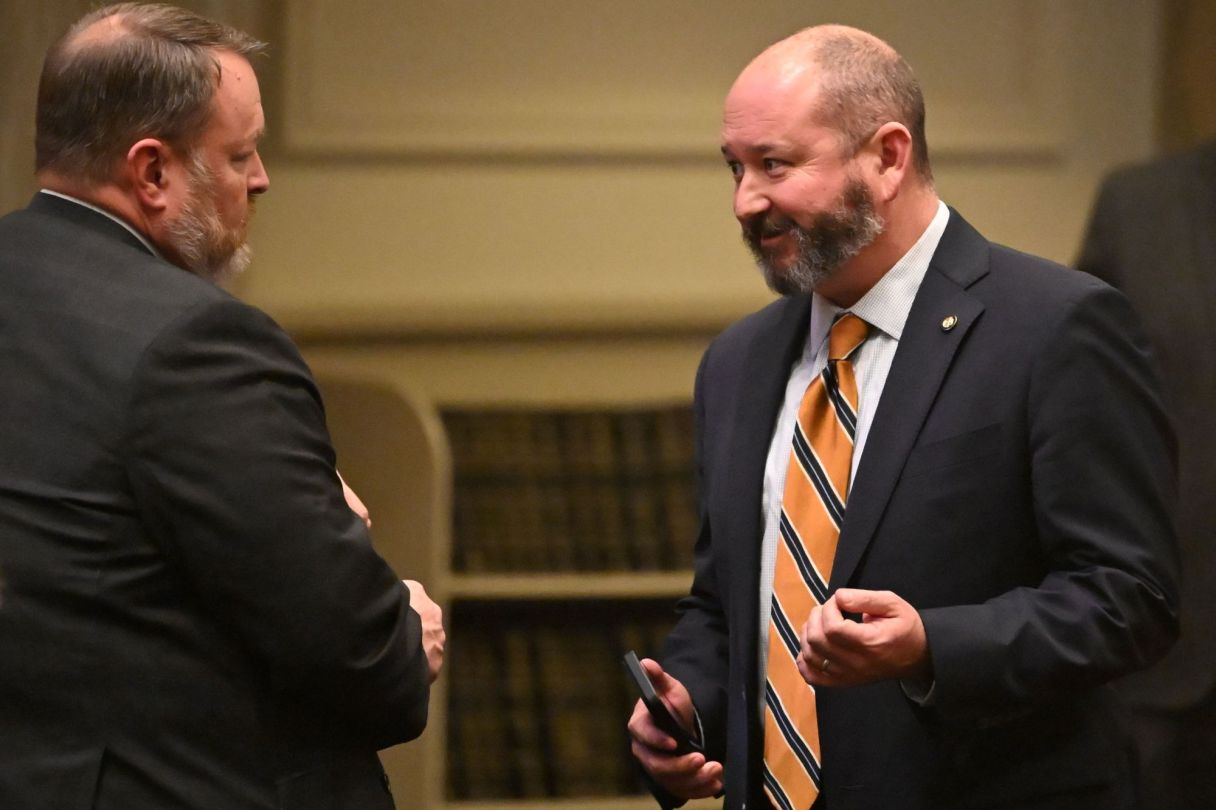
The Alabama Senate County and Municipal Government Committee approved a bill allowing local governments to terminate the members of library boards.
Senate Bill 26, sponsored by Sen. Chris Elliott, R-Josephine, the chair of the committee, passed on a 6-1 vote. Sen. Merika Coleman, D-Pleasant Grove, was the only no vote.
“I am real big there being a path between the people and those that serve them in whatever capacity, and that there is some recourse, in some way, shape, form or fashion,” Elliott said.
The legislation would give local governments the ability to remove a member of a library board by a two-thirds vote of a governing body.
The bill comes as conservatives and right-wing organizations in Alabama continue to target library books, particularly those with LGBTQ+ themes. The Alabama Public Library Service Board last year approved a ban on books with “gender ideology,” a broad term it does not define. Last month, the board voted to withhold state funds from the Fairhope Public Library over the placement of books like “The Handmaid’s Tale” in a teen section.
Read Freely Alabama, a nonprofit that opposes the recent restrictions, said in a statement that the bill was “blatantly designed to wrest decision-making authority from local library boards and put it in the hands of politicians.”
“Our libraries have experienced enough political strife already,” the statement said.
Elliott first introduced the bill in 2024, where it got out of a House committee but did not come to a vote. A similar bill filed last year passed the Senate but did not come to a House vote. Representatives from Read Freely Alabama and the Alabama Library Association spoke against the bill at a public hearing Wednesday.
One of opponents’ main concerns is language in the bill that states “shall serve at the pleasure of his or her respective appointing authority and may be removed at any time by a two-thirds vote of the appointing authority.”
Currently, city councils and county commissioners cannot remove members of library boards at will according to state statute.
“The cause, literally, could be about anything,” said James Gilbreath, president of the Alabama Library Association.
Speakers also criticized a provision requiring local library boards to provide a report to the governor’s office, the speaker of the House of Representatives and president pro tempore of the Senate to review and remove library materials from their collections throughout the year.
Sen. Linda Coleman-Madison, D-Birmingham, introduced an amendment that the committee approved that effectively removed that section of the bill.
Regardless, Elliott continued to advocate for the legislation.
“Guys, these are volunteer appointments,” he said regarding concerns about due process. “This is not a job. This is a volunteer appointment. These folks are not employed; it is not a due process or for cause type of situation.”
The bill moves to the Senate.
Read more at AlabamaReflector.com.