
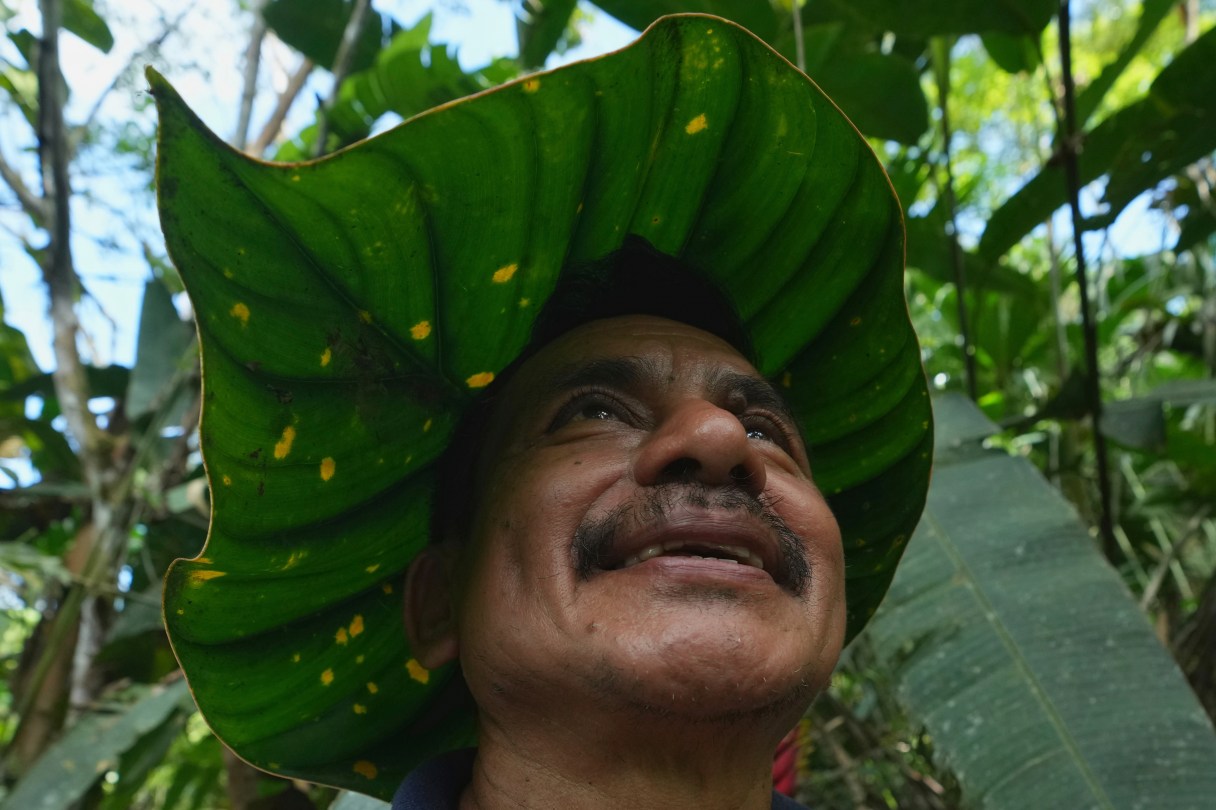
ALTO ILA, Ecuador (AP) — On a recent journey into the Ecuadorian Amazon jungle, Ramón Pucha realized he was being trailed. Fresh puma tracks now lined the path alongside his own footprints. Unfazed, he continued his trek, focused entirely on the precious cargo he carried — seeds from some of the world’s most endangered plant species.
Pucha and his family have spent years recreating their own piece of jungle with rescued species on a 32-hectare farm called El Picaflor in the Indigenous Quichua community of Alto Ila, 128 kilometers (80 miles) southeast of the capital, Quito.
“I have a passion for nature, for plants, for animals,” said Pucha, 51, noting that his drive to protect the environment is so intense that many people in his community consider him “crazy.”
To save endangered plant species, Pucha ventures deep into the jungle, often alone, for up to five days at a time. On more than one occasion, he said he returned empty-handed because — as a consequence of climate change and severe droughts across the region — many of the large trees had stopped producing seeds annually.
Once the seeds reach home, Pucha’s wife, Marlene Chiluisa, takes charge. She plants them in suitable soil and compost so that they can begin to grow into plants that are then replanted in the rainforest. The family even shares the fruits of their labor, selling or gifting a percentage of the plants to neighbors committed to forest regeneration.