
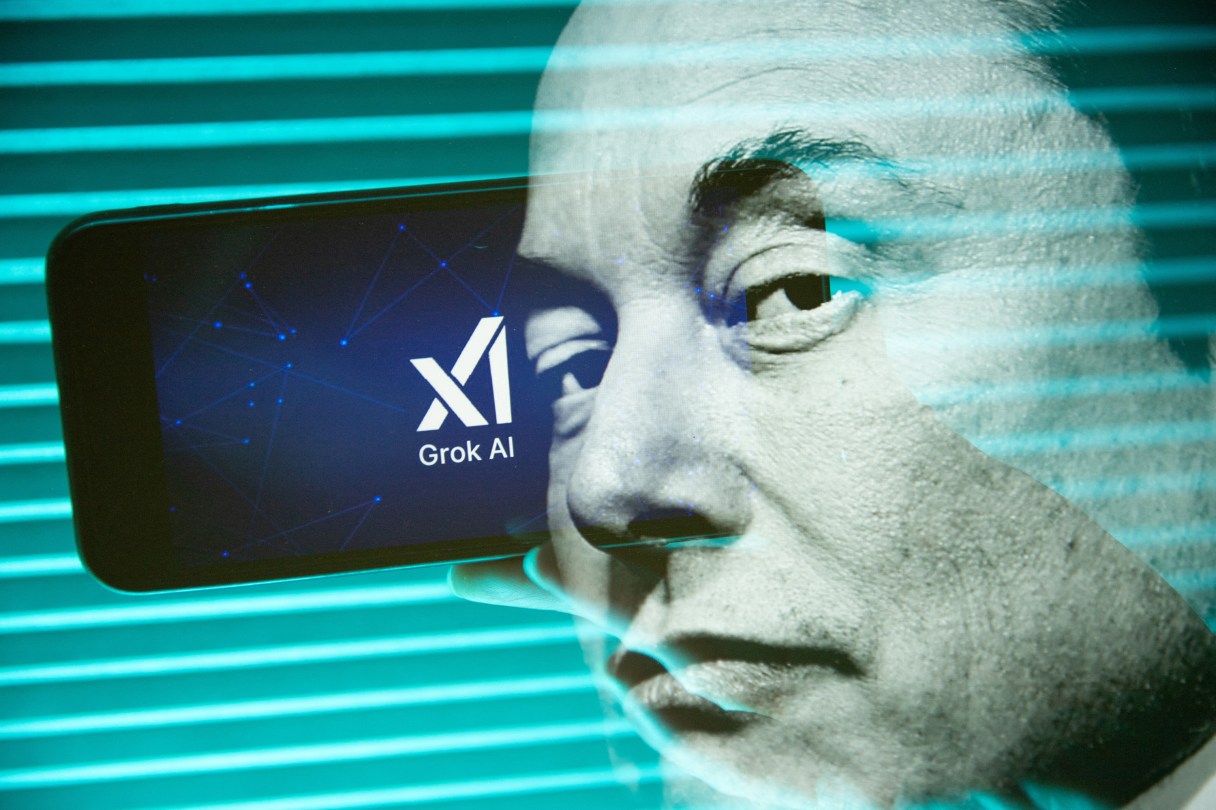
On Dec. 24, Elon Musk, CEO of xAI, encouraged people to try the Grok chatbot’s new image editing feature. Users quickly began using this tool to sexualize images, mostly of women and in some cases children.
Following Musk’s Dec. 31 posts showcasing Grok-edited images of himself in a bikini and a SpaceX rocket with a woman’s undressed body superimposed on top, requests and outputs surged. Over a nine-day span, Grok generated roughly 4.4 million images on X, nearly half of which contained sexualized imagery of women.
These images included sexually explicit deepfakes of real people and synthetic images not linked to specific individuals. Although xAI’s own terms of service prohibit the “sexualization or exploitation of children” or “violating a person’s privacy,” X and Grok users were able to prompt Grok to create synthetic images of real individuals “undressed,” without their consent and without any apparent safeguards to prevent it.
These are not cases of fringe misuse, but rather evidence of the lack of meaningful safeguards. Tech companies have recklessly engaged in creating and deploying powerful new AI tools that are causing foreseeable harm.
On Jan. 3, amid global criticism, X promised to take strong action against illegal content including child sexual abuse material. But rather than disable the feature, X on Jan. 9 simply limited it to paid subscribers. It also announced blocking of users from jurisdictions where generating images of real people in bikinis or similar attires is illegal.