
Monday, November 16, 2026Nov 16

Kim reelected to top post of North Korea’s ruling party as it hails his nuclear buildup

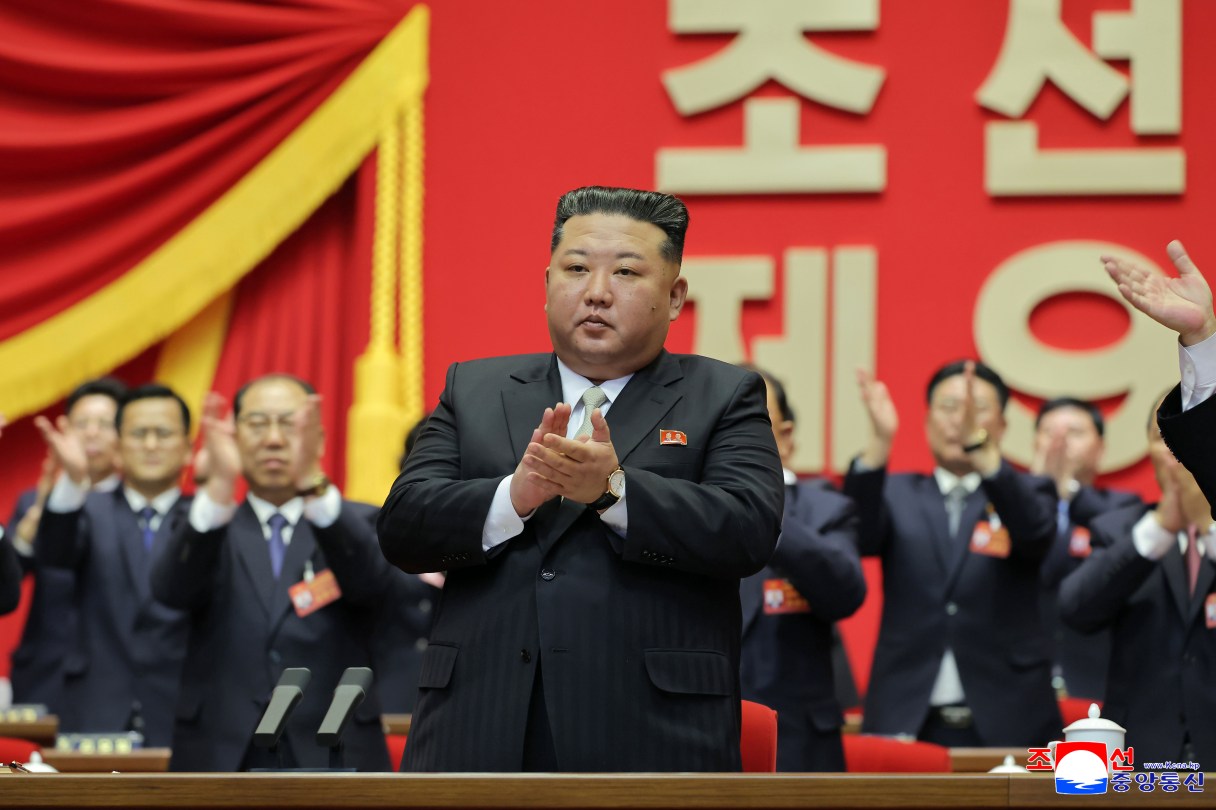
This photo provided Monday, Feb. 23, 2026, by the North Korean government, its leader Kim Jong Un, center, claps hands as he was re-elected to the top post of the ruling Workers’ Party, during the party's Congress in Pyongyang, Sunday, Feb. 22, 2026. Independent journalists were not given access to cover the event depicted in this image distributed by the North Korean government. The content of this image is as provided and cannot be independently verified. Korean language watermark on image as provided by source reads: "KCNA" which is the abbreviation for Korean Central News Agency. (Korean Central News Agency/Korea News Service via AP)


SEOUL, South Korea (AP) — North Korean leader Kim Jong Un was reelected to the top post of the ruling Workers’ Party, with delegates crediting him for bolstering the country’s nuclear arsenal and strengthening its regional standing, state media reported Monday.

The report from the party congress, where Kim is expected to outline his key political and military goals for the next five years, suggests he will double down on accelerating a military nuclear program already equipped with missiles capable of threatening Asian U.S. allies and the American mainland.

The congress, which began last Thursday, comes as Kim grows increasingly assertive in regional politics, following an aggressive expansion of his nuclear arsenal and closer ties with Russia forged through joint war efforts in Ukraine, which have deepened his standoffs with Washington and Seoul.

Analysts say Kim will likely use the meeting to unveil new military goals, including strengthening conventional forces and integrating them with nuclear capabilities, while reemphasizing a campaign for economic “self-reliance” through mass mobilization, following gradual post-pandemic gains fueled by rebounding trade with China and arms exports to Russia.