
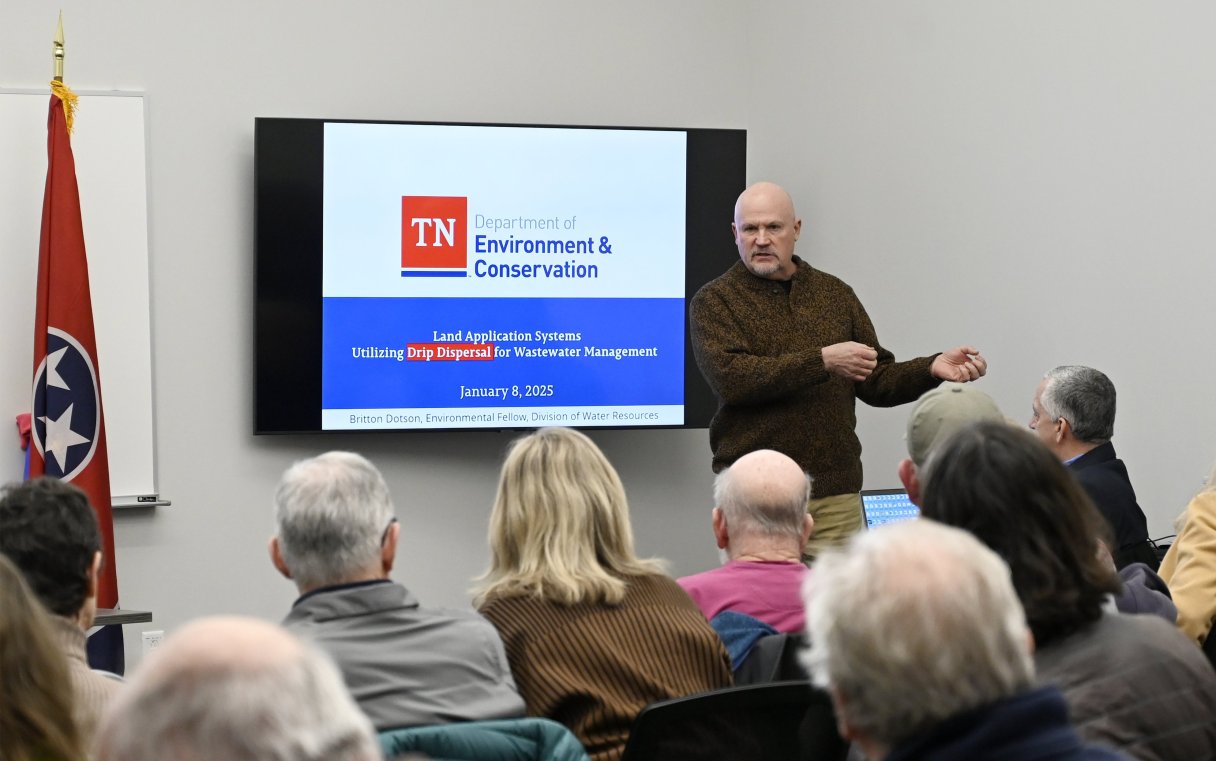
Why is Tennessee SB564/HB803 important to Hamilton County residents? It could affect your property value, creates an uncertain financial liability for municipalities and residents, and can affect public health.
The bill, as written, removes local authorities from upfront consultation, review and approval of new wastewater systems and instead defers to statewide Tennessee Department of Environment and Conservation (TDEC) guidelines. This removes the Hamilton County Commission, the county’s Water and Wastewater Treatment Authority (WWTA) and Chattanooga’s wastewater department from design input and construction oversight. Considering the different terrains across Tennessee, these systems are not “one size fits all.”
(IN THE NEWS: Senate advances bill seeking greater accountability for failing wastewater systems)
Upon completion, the developer would offer the system to the local utility to accept ownership and operation. What utility or municipality would accept such liability with no collaboration? Upon refusal, the developer can seek an alternate owner or operator for these risky systems. Although state certified, these new and mostly private operators are not in tune with local environmental, ecological and historical infrastructure nuances.
Hamilton County has a deep bench of industry experts that know local sewer systems, decentralized drip systems and local topography and soil types. To take this knowledge base out of the equation is not wise. Metro Chattanooga districts are not immune to these problems; with strategic land acquisition and even higher density, they will be affected!
(IN THE NEWS: Hamilton County looking at alternatives as growth strains waste capacity)
The much-talked-about decentralized drip systems have an important and growing role in Hamilton County where sewer is not available. More stringent region-specific regulations promote long-term success and protect residents and natural resources.
A large proposed development in 2024 initiated an intense six-month study and discussion of these systems. WWTA considered significant public input, TDEC presentations, advice from professors, local engineers, local developers, and a 2024 state inspection report of 360 existing systems and their significant failure data. Ultimately, the WWTA meticulously created region-specific rules thought best for this service area and for public health.
County commissioners voted in March 2025 to require all decentralized systems to be constructed to standards established by WWTA, then transferred to the authority for ownership and operation. This protects Hamilton County residents from any risks from systems that could fail with no accountable owner. No bonding or financial insurance will totally cover the cost to rebuild million-dollar systems.
If new developments follow only general state guidelines, not more stringent local regulations, they risk poor operational oversight and inconsistent construction. The resulting failed systems will impact property value, homeowner liability and public health. Examples of failures elsewhere in the state, with lawsuits, E. coli outbreaks, sewage needing to be trucked out and high unexpected homeowner fees to connect to a utility sewer are numerous.
To be clear, mistakes happen, pipes crack, processes need altering, machines break down. No entity, organization or company is without need for continuous improvement or maintenance. All local stewards are doing what they believe best for Hamilton County today and future generations. Hamilton County should grow while remaining beautiful, safe and healthy.
This bill is very bad for Hamilton County. In my opinion, the simple solution is to exempt Hamilton County from this legislation or amend it with clear language that “developers must follow state or local regulations, whichever is more stringent.”
State lawmakers are swamped and need to know which policies are important. I am happy to say our local legislators are actively seeking your opinion of risks to Hamilton County. Please contact them and express your concern on SB564/HB803.
Wayne Behlau is the utilities commissioner for Lakesite and vice chair of the Hamilton County Water and Wastewater Treatment Authority board.