
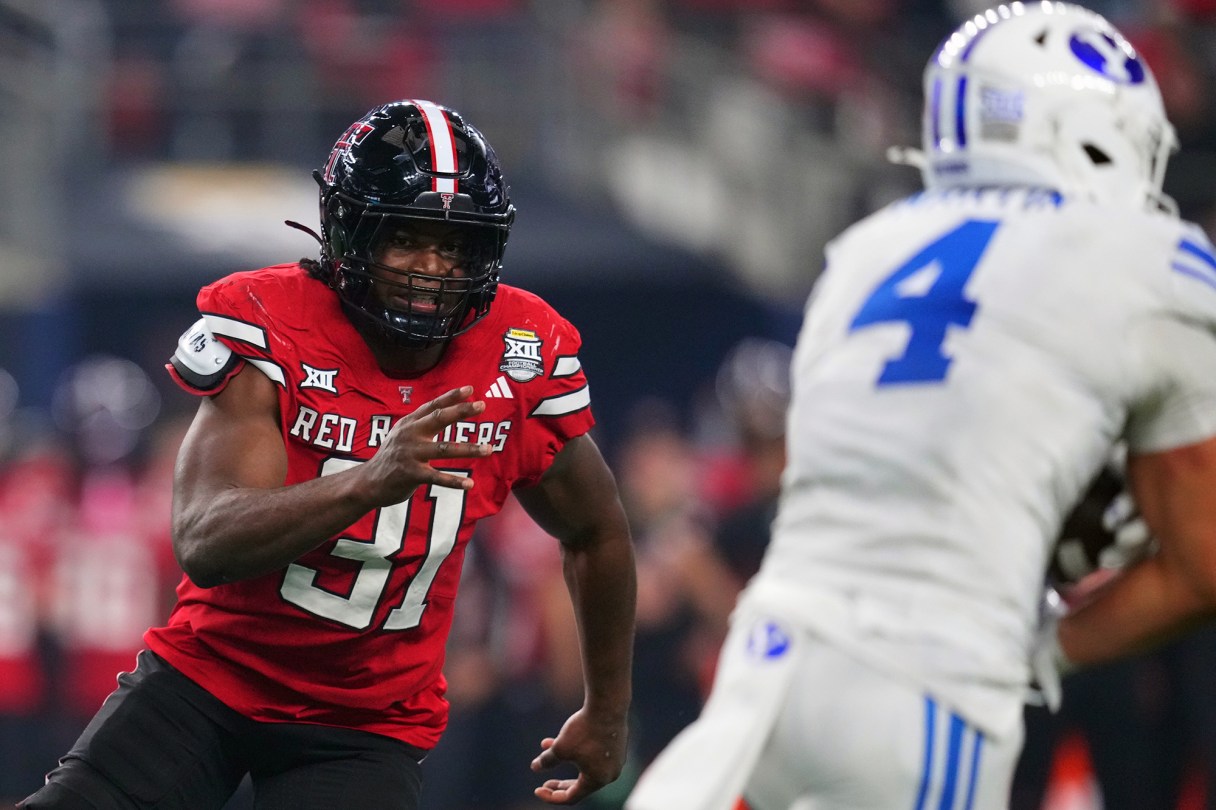
INDIANAPOLIS — Texas Tech had the best college defensive line money could buy last season.
David Bailey and Romello Height, the starting ends, each reached double-digit sacks and both were ranked among the top 15 in the Football Bowl Subdivision. Skyler Gill-Howard and Lee Hunter, the top tackles on the roster, relished their opportunities to take on blockers and let teammates fill in the gaps.
The immediate payoff came with the Red Raiders celebrating their first outright league title since 1955 — it was their first Big 12 crown ever — and their first appearance in the College Football Playoff.
Four of the five transfers who helped transform Texas Tech into a national power received a different reward: appearing at the NFL’s annual scouting combine, where the on-field evaluation are set to begin Thursday at Lucas Oil Field, with defensive linemen and linebackers up first at the home of the Indianapolis Colts.
“All five of those guys we had come in, they’re really good football players, tremendous football players, and pretty much they’re all here getting ready for the combine,” former Texas Tech linebacker Jacob Rodriguez said Wednesday.
“Shoot, they’re even better human beings. The people that they care about, the way they came in the program and made a difference in the program was really special.”
Rodriguez benefited, too. Playing behind the speedy pass rushers and beefy interior linemen, the 6-foot-1, 233-pound senior had the best season of his college career with 128 tackles, seven forced fumbles, four interceptions and two fumble recoveries. His draft prospects soared, and Rodriguez finished fifth in Heisman Trophy balloting.
Still, it was a costly proposition for Texas Tech, which paid an estimated $7 million to get the five game-changing linemen. Nearly half of that total reportedly went to Bailey, reported by some outlets to be college football’s highest-paid defensive player in the five years NCAA athletes have been allowed to benefit financially from their name, image and likeness.
Bailey, of course, insists he was worth every penny, and few at Texas Tech would quibble with him, given the results.
“They should have paid the inside linebackers a little bit more,” he said. “They were the leaders of the defense; everything ran through them.”
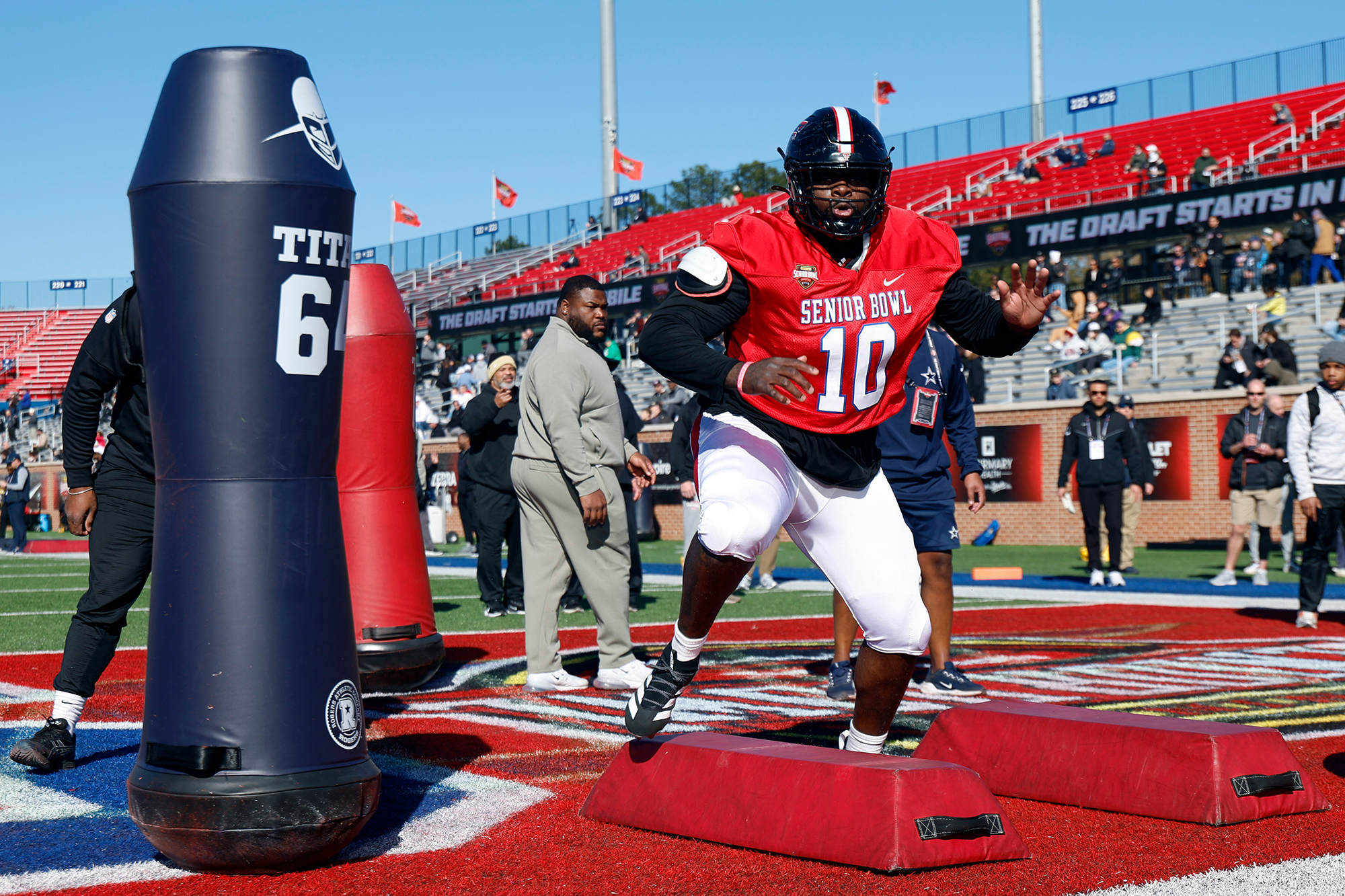
For combine observers, this is life in a new world, one where more than 300 invitees no longer arrive dreaming of big paydays, which so many of them have already experienced; instead, they’re joking about how some players might pocket less cash after turning pro.
“I never had to deal with that,” 53-year-old New York Jets coach Aaron Glenn said, discussing the absence of NIL deals during his college days in the early 1990s. “I do know it’s a real thing and a lot of these players are taking pay cuts (to play in the NFL). But I will say this is what they deserve, probably, because of the amount of money they bring to the college.”
Just how much has changed? Wednesday’s interview room could have doubled as an entrepreneurs’ roundtable.
At one point, defensive tackle Cam Ball explained why he spent all five seasons at Arkansas and how he’s attempting to honor his late father’s passion for barbecuing. Ball grew up moving grills for the Atlanta-based catering company owned by his father, Charles, and once his NIL deals kicked in, he continued to help his dad despite no longer needing the paycheck.
Eight months after his father died, Ball and his girlfriend are still cooking. Ball continues to perfect his secret, vinegar-based sauce with seasonings and trimmings his father taught him, while his girlfriend takes care of things such as baked beans and macaroni and cheese.
“Every now and then I would help with the grills on his truck; I started to become more curious about it,” said Ball, wearing a large silver chain with a large photo of his father dangling near his heart. “When I got to college, I started experimenting on my own how to do things, how to cook, how to season meats, because he taught me how to do all those things. We had NIL in my second or third year, so I didn’t really need the money, I just wanted to get the experience.”
Former University of Cincinnati defensive tackle Dontay Corleone, naturally, has an NIL deal with a restaurant in that city that features “The Godfather” burger.
And Hunter explained how he used his NIL money to buy his mother a house and a car, to care for his 5-year-old daughter, Kaylee, and to help his brother start a trucking business by purchasing two 18-wheelers.
“It feels amazing,” Hunter said. “There’s still more. Now I’m working to get (my brother) a bigger truck. That’s my goal, to provide for my family and the people I love.”
Texas Tech gave him that opportunity last season, and he and the school both cashed in. Now the question is whether that will continue in the NFL.
While Bailey could be a top-five selection at April’s draft in Pittsburgh, and Hunter and Rodriguez are both ranked in the top 10 among prospects at their respective positions, the futures of Gill-Howard and Height are more uncertain.
At Texas Tech, though, there’s no doubt about their overall value.
“I think we had the best defensive front in the country this year. It was a lot of fun to play behind those guys and play with them,” Rodriguez said. “They should have paid them more, I guess. They were as advertised and better.”