
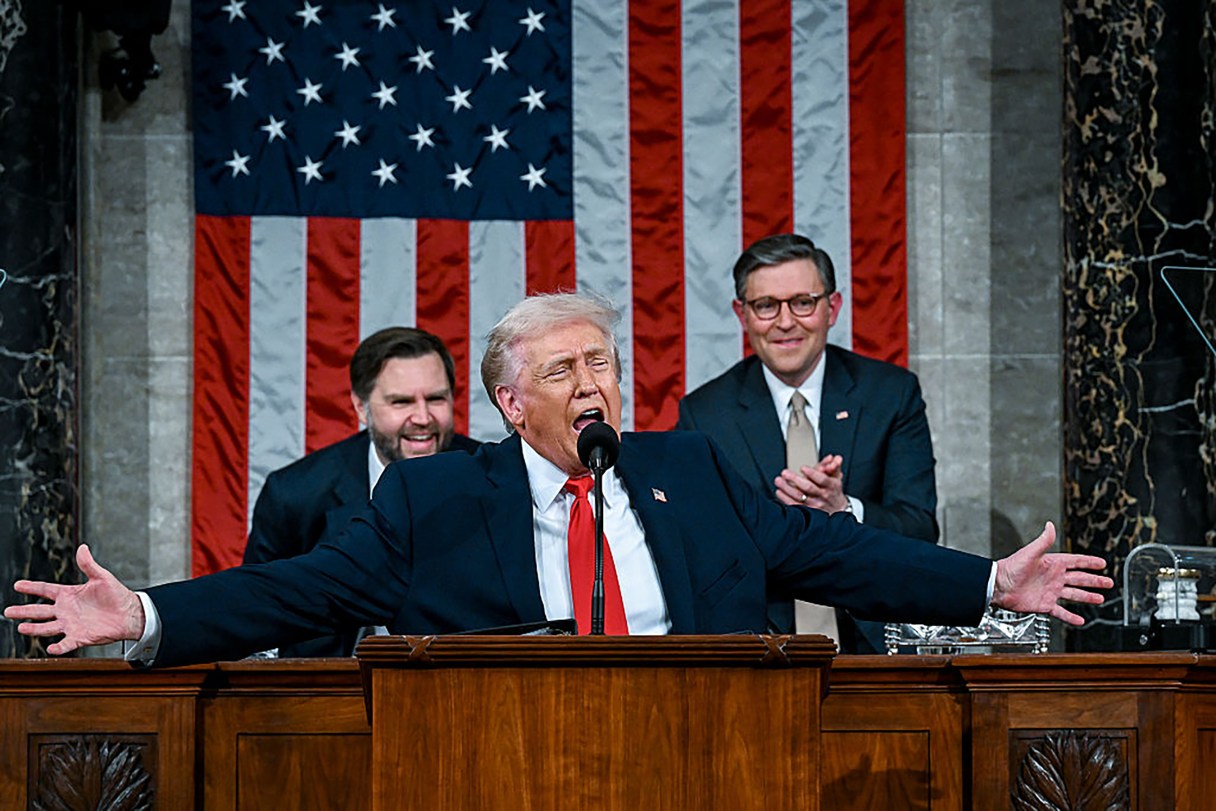
It’s hard to pinpoint when the concept of the State of the Union address jumped the shark. But a good starting point for discussion would be 1996, when President Bill Clinton devoted considerable time in his long-winded oration to championing uniforms in public schools.
Since then, the events have become rather mundane affairs, often devolving into a monotonous laundry list of various policy proposals sprinkled with a few turns of phrases intended to juice the faithful.
President Donald Trump is a different animal, of course. To some extent, he has reinvigorated the tradition. Love him or hate him, he has an “it” factor that commands attention. Supporters and detractors tune in for the same reason many fans might watch the Daytona 500: Will there be a spectacular spectacle? Meanwhile, his political foes play to the cameras with their heckling and childish disruptions. It’s must-see TV.
Substantively, however, Trump broke little new ground Tuesday — other than to set the modern-day record for the longest speech before a joint session of Congress, at 108 minutes. Trump should realize that brevity is a virtue. Given the country’s limited attention span, how many Americans had the stamina to watch from beginning to end?
As expected, the president emphasized the economy. It was a wise move. Economic indicators are moving in a positive direction — a roaring stock market, reasonable growth, cheaper gasoline prices, lower inflation — yet polls show many Americans are frustrated with the cost of living and worried about the future. Trump’s challenge heading into the midterms is to convince swing voters that his agenda of lower taxes and fewer regulations will create opportunity and wage growth for working Americans. He laid the groundwork Tuesday for such an approach.