
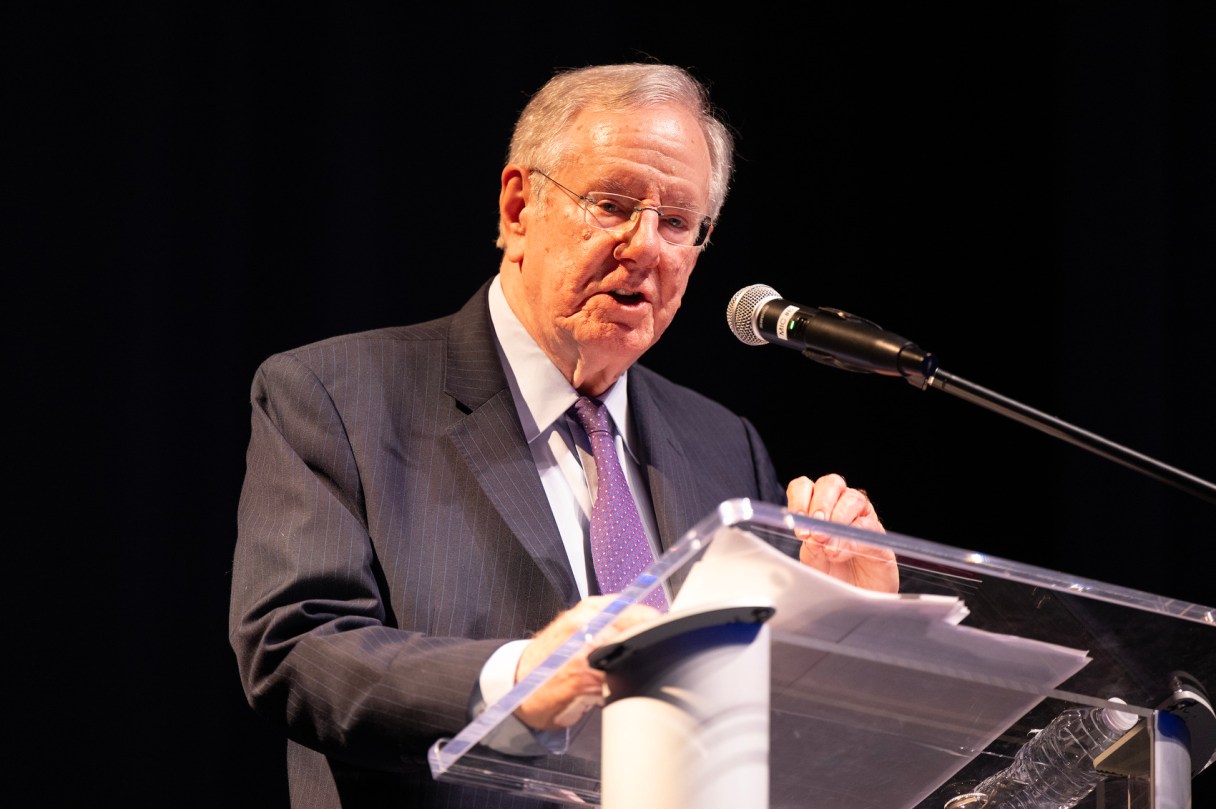

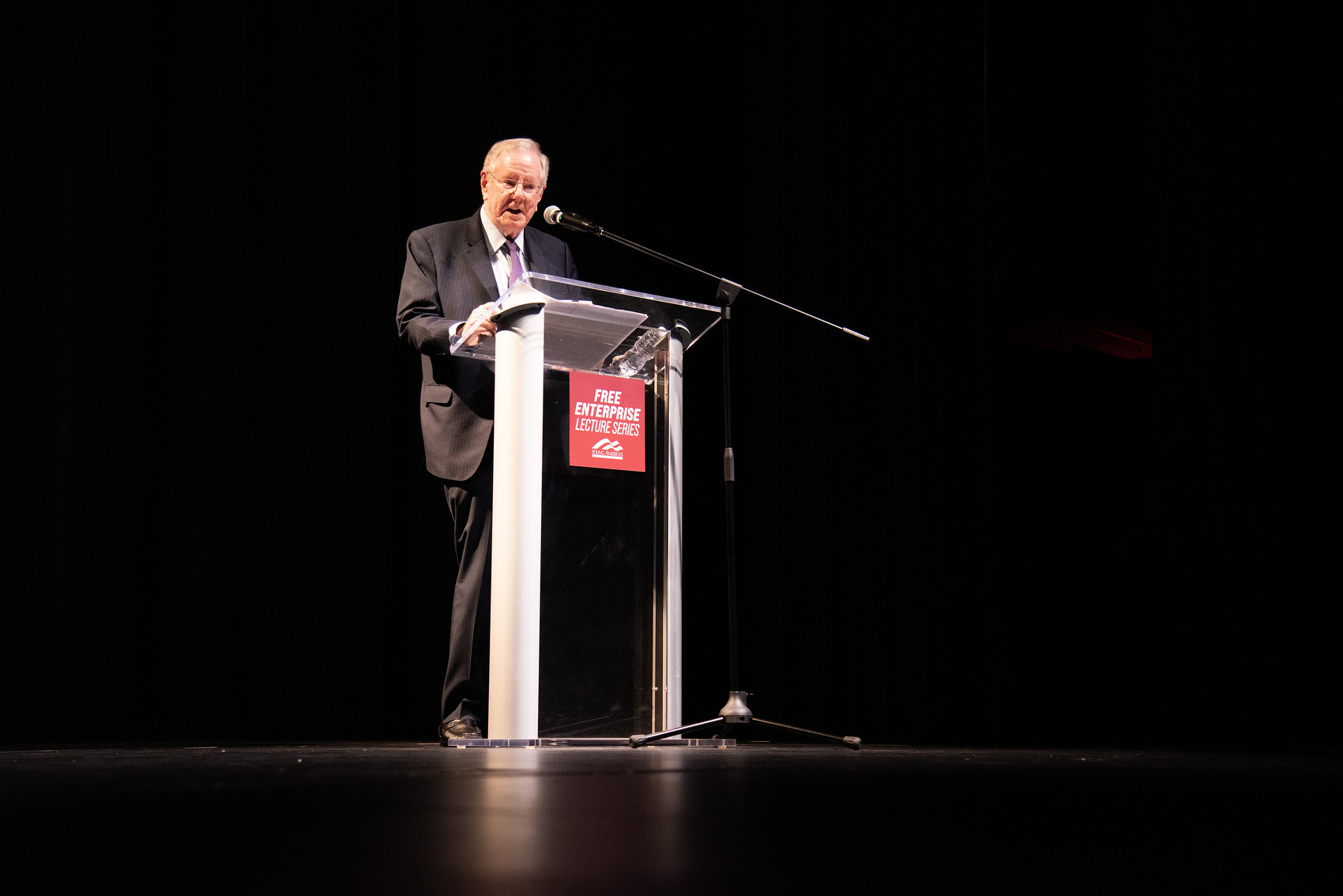
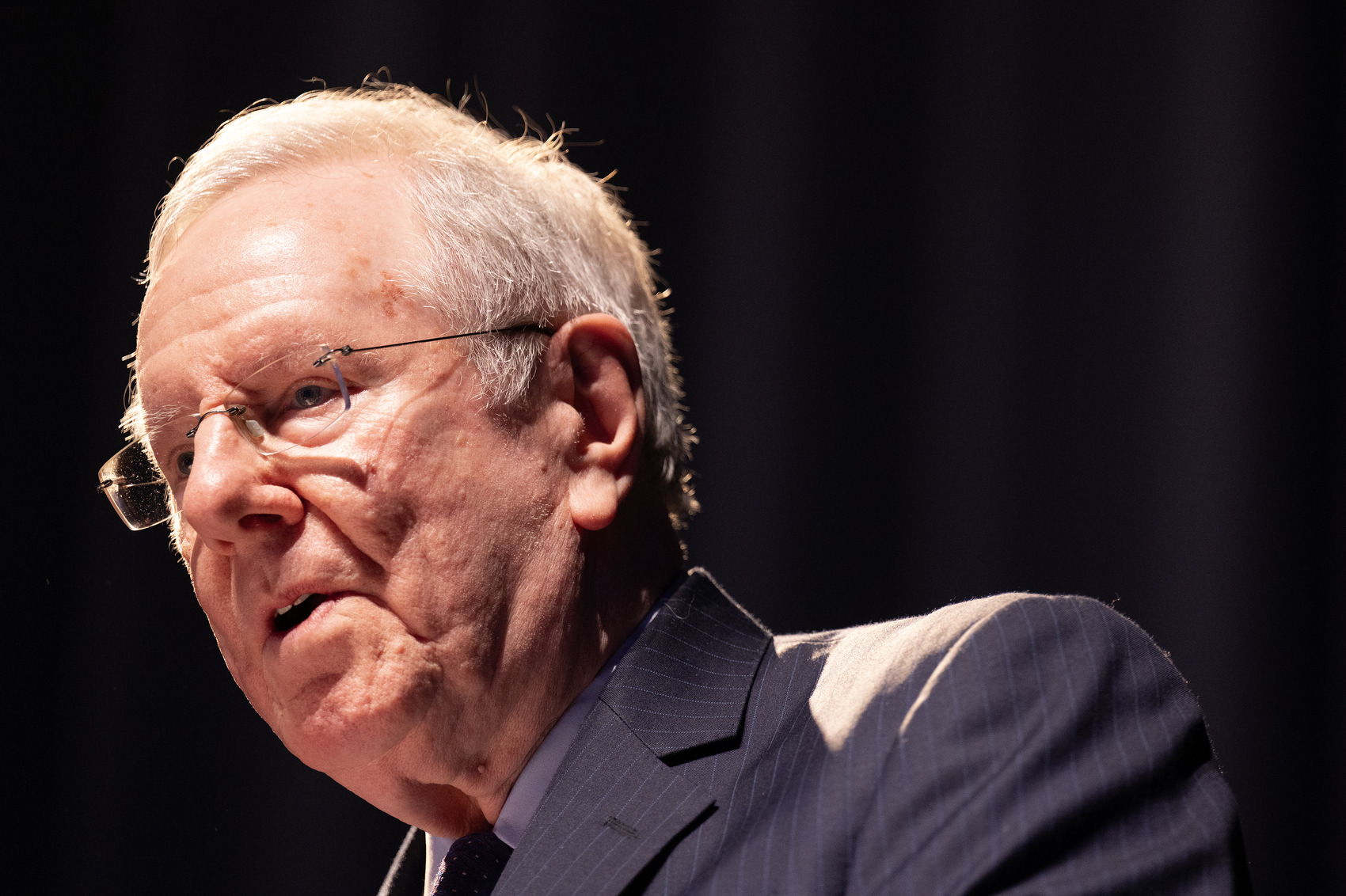
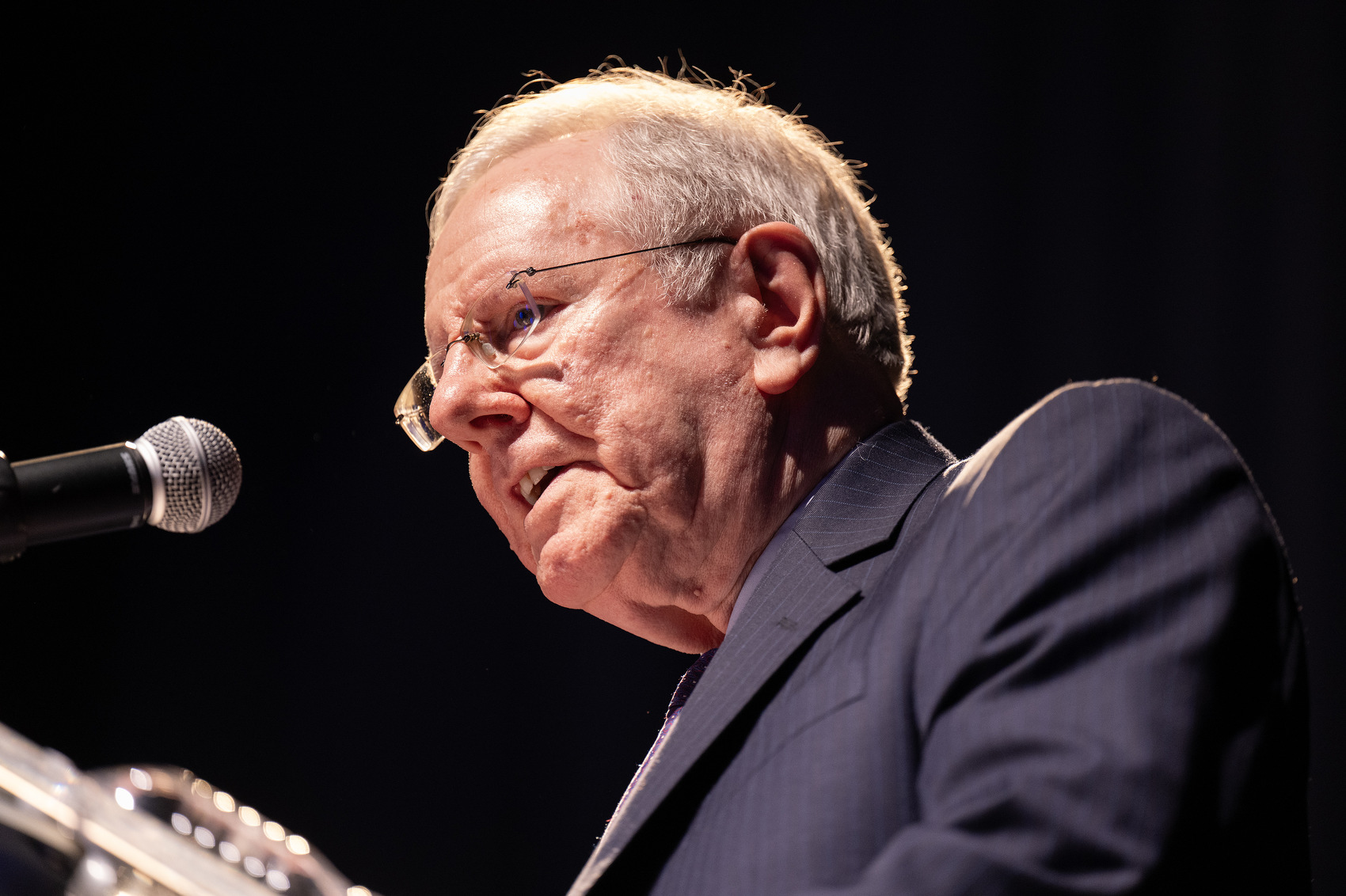
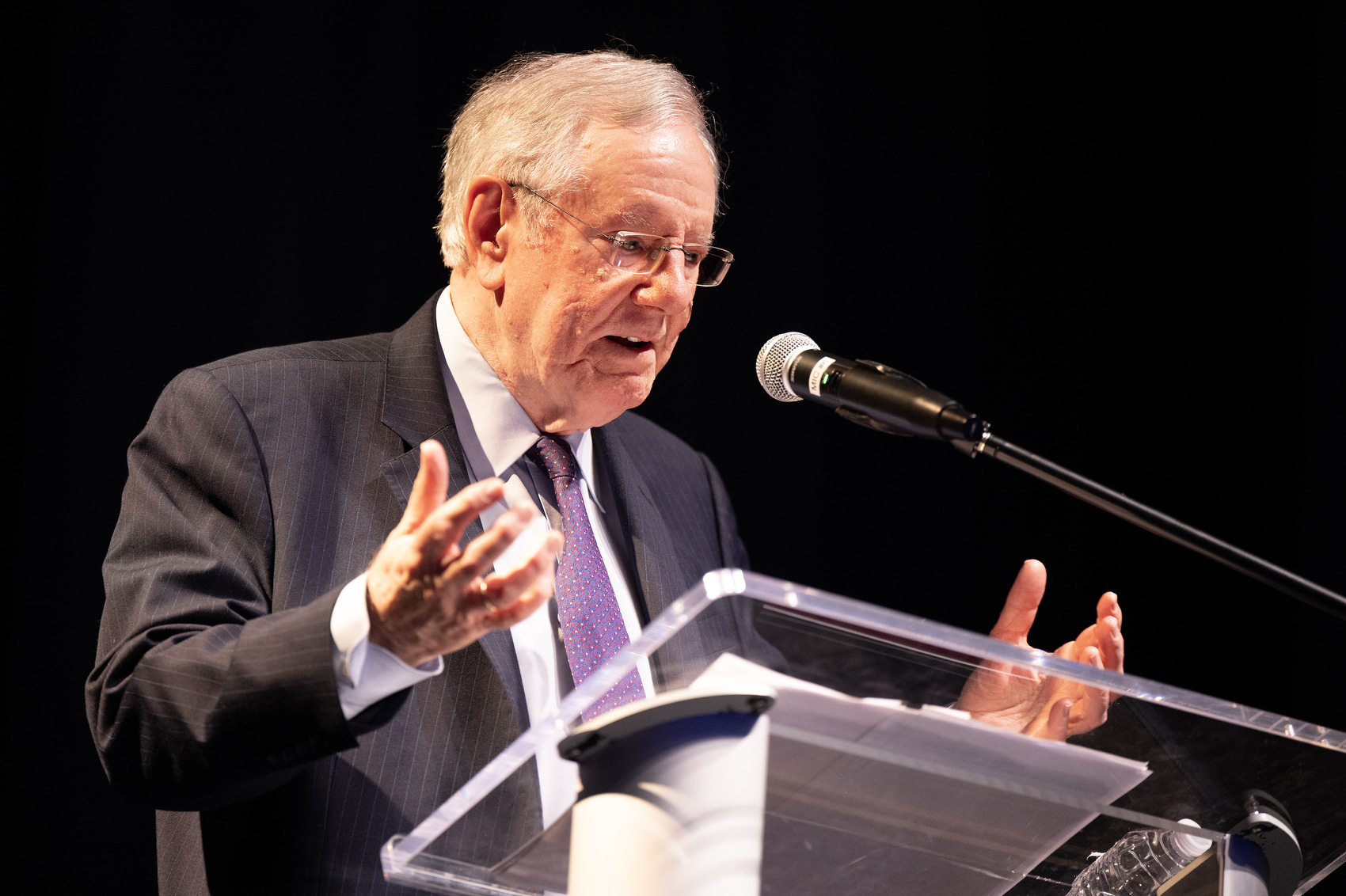
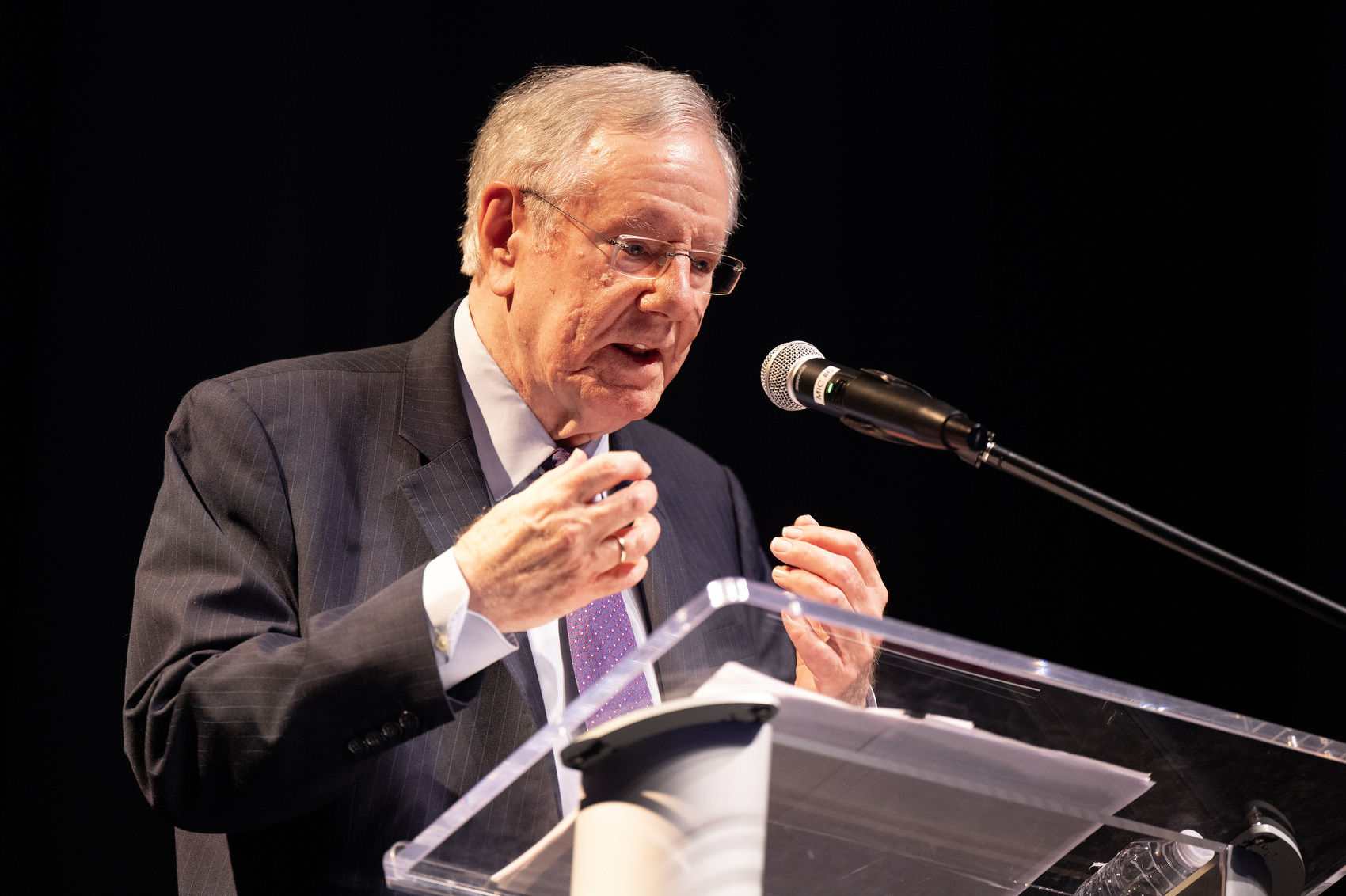
Steve Forbes, the third-generation editor and chair of Forbes magazine, provided a dose of pure free-market capitalism in a lecture at the University of Tennessee at Chattanooga that praised American entrepreneurs and criticized President Donald Trump’s unpredictable tariff policies.
The talk came nearly a week after the U.S. Supreme Court struck down tariffs the president had enacted on most other countries, ruling 6-3 that Trump did not have the power to impose taxes on imports under an emergency powers law.
“I’m glad our president isn’t here tonight,” Forbes said at the UTC Fine Arts Center. “Tariffs are a tax, and the Supreme Court made the right ruling that the Constitution’s very clear. Only Congress can enact taxes.”
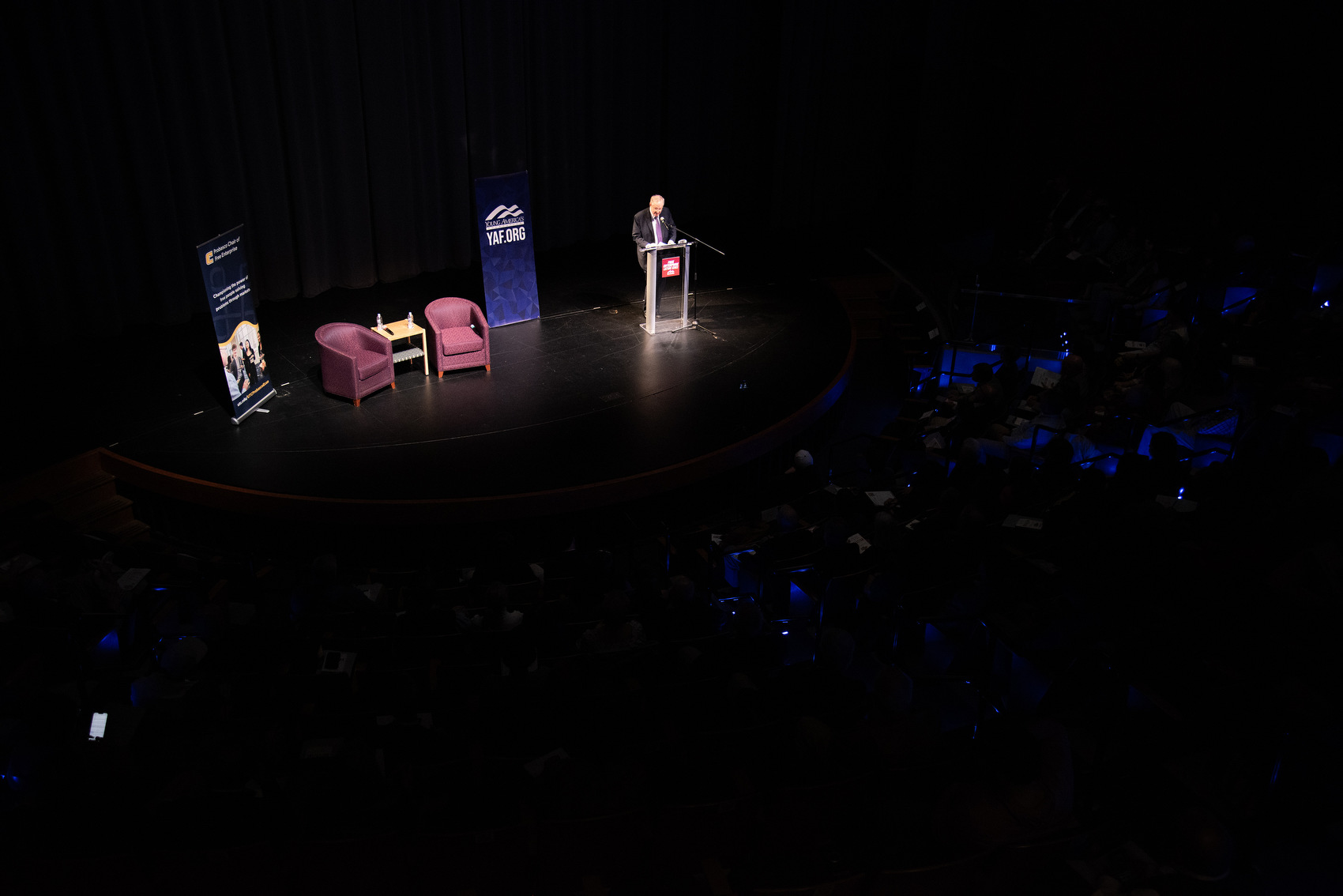
Forbes, 78, visited UTC on Thursday to deliver the Burkett Miller Distinguished Lecture, hosted by the Gary W. Rollins College of Business and the conservative Young America’s Foundation.
Forbes editor criticizes Trump tariffs, celebrates US companies in UTC lecture
(Q&A: Steve Forbes talks to Times Free Press on free enterprise, the Fed and life lessons)
Forbes focused on the role of free enterprise in strengthening the U.S. and argued for a smaller role for government, both through deregulation and lower taxes.
When Forbes sought the Republican nomination for president in 1996 and 2000, he made a 17% flat-tax rate central to his policy platform. America should regain its “phobia to taxation” at its 250th anniversary, he said, arguing it was a quality central to the nation’s founding.
The tariff ruling could end up working in the president’s favor by providing more certainty to U.S. businesses for long-term planning, Forbes said. Trump has vowed to enact tariffs through other means, including limited powers granted to the White House under the Trade Act of 1974.
“What I think, even though President Trump won’t realize it yet, is that actually, the Supreme Court did him a favor,” Forbes said. “Now, when a tariff is enacted, even if it’s through a laborious process, people know it doesn’t change overnight.”
Tariffs should be a tool to target specific trade imbalances, Forbes said, citing tariffs imposed on Japanese automobiles and motorcycles by former President Ronald Reagan in the 1980s.
“We don’t need these big, sweeping tariffs,” Forbes said. “We need the Reagan laser-like approach for abuses.”
Forbes became CEO and editor-in-chief of Forbes in 1990 after the death of his father, Malcolm Forbes. His grandfather, B.C. Forbes, founded the business magazine in 1917.
The magazine has become best known as a source of information about the most powerful executives and companies, including the annual Forbes 400 ranking of the richest people in the U.S.
PRO-ENTREPRENEUR
The ability for creative individuals to establish and grow successful companies has set the U.S. apart from other nations, Forbes said.
Forbes listed off short biographies of famous entrepreneurs and business leaders in the style of a series he produces with Izzit, a nonprofit that creates educational material.
The stories included Margaret Rudkin, founder of Pepperidge Farm; A.P. Giannini, founder of the Bank of America; George Eastman, founder of Kodak; Malcolm McLean, inventor of the shipping container; and Howard Schultz, the longtime former CEO of Starbucks.
In a question-and-answer portion after his lecture, Forbes encouraged UTC students in the audience not to feel rushed to achieve success right out of college. The average age of an entrepreneur is 39 years old, he said.
“The purpose of business is to produce happiness, not to pile up money,” Forbes said, recalling something his grandfather wrote in the magazine’s first issue. “This belief in entrepreneurship has been with us since the get-go … We see entrepreneurs not as scoundrels, as most others do in the media. We see them as heroes, flawed sometimes, but as people trying to do real things.”
Claudia Kramer, a professor of economics who holds the Probasco Distinguished Chair of Free Enterprise at UTC, introduced Forbes and moderated the discussion.
CHANGES COMING
In a period of sustained inflation, as affordability becomes a central political rallying cry, Forbes said there was a “crazy” debate emerging between capitalism and socialism. He derided New York City Mayor Zohran Mamdani, who describes himself as a democratic socialist and has become a popular target for conservative figures.
Forbes is headquartered in Jersey City, New Jersey, across the Hudson River from New York City.
“Socialism is an idea that has never worked. It produces misery,” Forbes said. “The more socialism, the more misery.”
While Forbes praised the free market as a means to turn scarcity into abundance and luxury items into commonplace goods, he did not address a common criticism leveled by leaders like Mamdani, who argue low taxes and deregulation have created growing wealth disparity.
(READ MORE: Chattanooga should move fast to capitalize on quantum, consultant says)
Forbes was optimistic about major changes he predicted would come to the U.S. economy, including a new gold standard that would stabilize the value of the U.S. dollar and a more decentralized health care system that puts more authority in the hands of patients.
The media mogul was even optimistic about artificial intelligence, which he said companies could adjust to like they did with the internet. While the internet destroyed Forbes’ previous business model, where it published between 800 to 1,000 print articles a year written by staff, the magazine has learned a new model.
Forbes now has more than 1,500 contributors under contract who help the magazine publish 100,000 articles a year, he said.
Contact business reporter Daniel Dassow at ddassow@timesfreepress.com or 423-757-6318.