
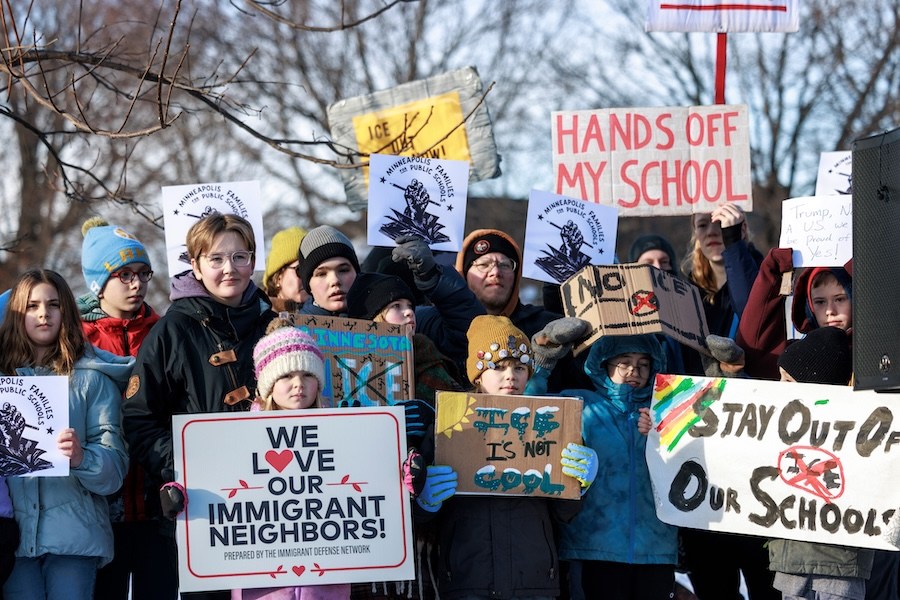
MINNEAPOLIS (AP) — The Minneapolis school system will offer families the option of remote learning for a month, officials said Friday, responding to concerns that children might feel unsafe venturing out in a city where tensions are high over federal immigration enforcement.
Under the temporary plan, teachers will simultaneously deliver lessons from their classrooms to students in the classroom and at home, similar to the way many did during the COVID-19 pandemic.
Immigration enforcement in cities across the U.S. has led to dips in attendance, parents and educators say. Advocates in other cities facing federal interventions have sought remote learning options, particularly for immigrant families that might feel vulnerable, but Minneapolis appears to be one of the few districts to reintroduce the option of virtual learning.
“This meets a really important need for our students who are not able to come to school right now,” a Minneapolis school administrator wrote in an email to their staff late Thursday.
Administrators’ emails to staff indicate the decision to offer remote learning wasn’t a quick one. They refer to long meetings with input from school principals and the teachers union, acknowledging the planning and coordination required to deliver virtual school. In light of the devastating academic and emotional impact remote learning had during the pandemic, some also see it as a last resort.