
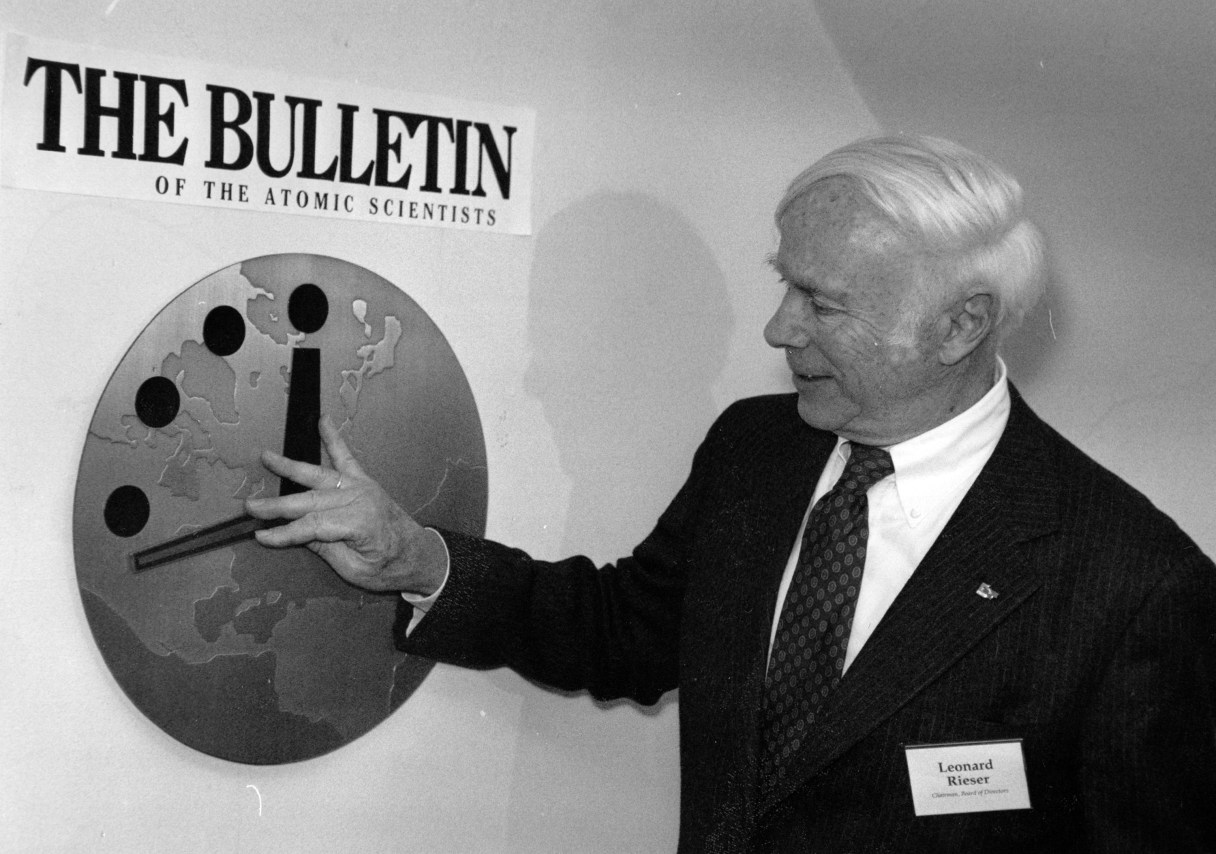
This month, the Bulletin of the Atomic Scientists at the University of Chicago is scheduled to announce whether the hands of its famous Doomsday Clock will move closer to midnight. It feels like a safe bet that Armageddon is drawing nearer today than it has in a long, long time.
The Doomsday Clock started almost 80 years ago, when physicists who developed the atomic bomb grew alarmed at its use against Japan to end World War II.
Between the late 1940s and the early 1990s, nuclear war almost happened, repeatedly, as America and the Soviet Union fought the Cold War. Chicago’s atomic scientists moved the hands of their clock from seven minutes to midnight at its start in 1947 to just two minutes to midnight as of 1953, when the U.S. and Soviets started testing enormously powerful hydrogen bombs.
The 1990s ushered in a period of relative peace and proactive disarmament. In 1991, after the U.S. and Soviet Union signed the START treaty reducing strategic nuclear stockpiles, the clock was turned back to 17 minutes before the hour. The stockpile of nuclear warheads shrunk. Test explosions became increasingly rare.
Today, the world is entering a more dangerous phase. The number of doomsday weapons and the number of countries wielding them threatens to grow. The clock gives humanity just 89 seconds to reverse course, its most perilous setting ever. Yet fewer people are paying attention.