
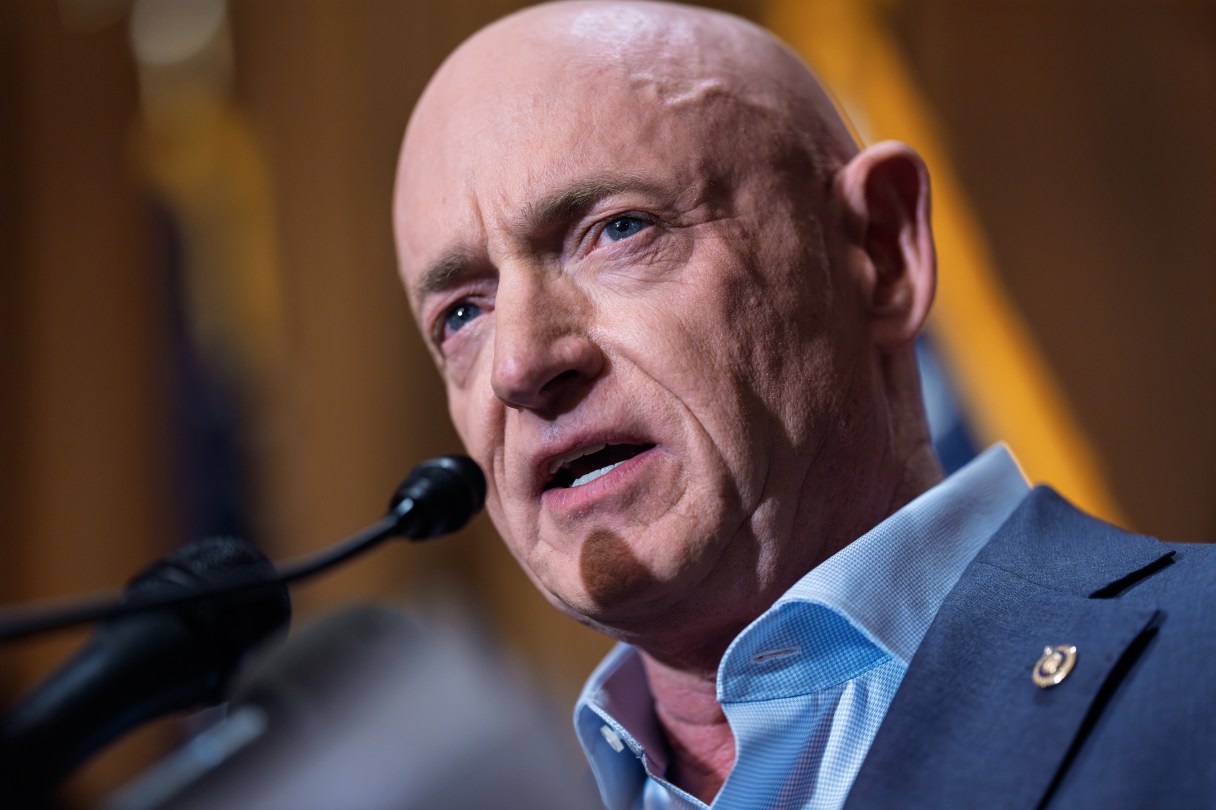
WASHINGTON (AP) — Democratic Sen. Mark Kelly sued the Pentagon on Monday over attempts to punish him for his warnings about illegal orders, claiming the Trump administration trampled on his constitutional rights to free speech.
Kelly, a former U.S. Navy pilot who represents Arizona, is seeking to block his censure last week from Defense Secretary Pete Hegseth, who said he censured Kelly over his participation in a video that called on troops to resist unlawful orders.
Hegseth said the Jan. 5 censure — by itself simply a formal letter with little practical consequence — was “a necessary process step” to proceedings that could result in a demotion from Kelly’s retired rank of captain and subsequent reduction in retirement pay.
Kelly asked the federal court in Washington, D.C., to rule that the censure letter, the proceedings about his rank and any other punishments against him are “unlawful and unconstitutional.”
“The First Amendment forbids the government and its officials from punishing disfavored expression or retaliating against protected speech,” his lawsuit says. “That prohibition applies with particular force to legislators speaking on matters of public policy.”