
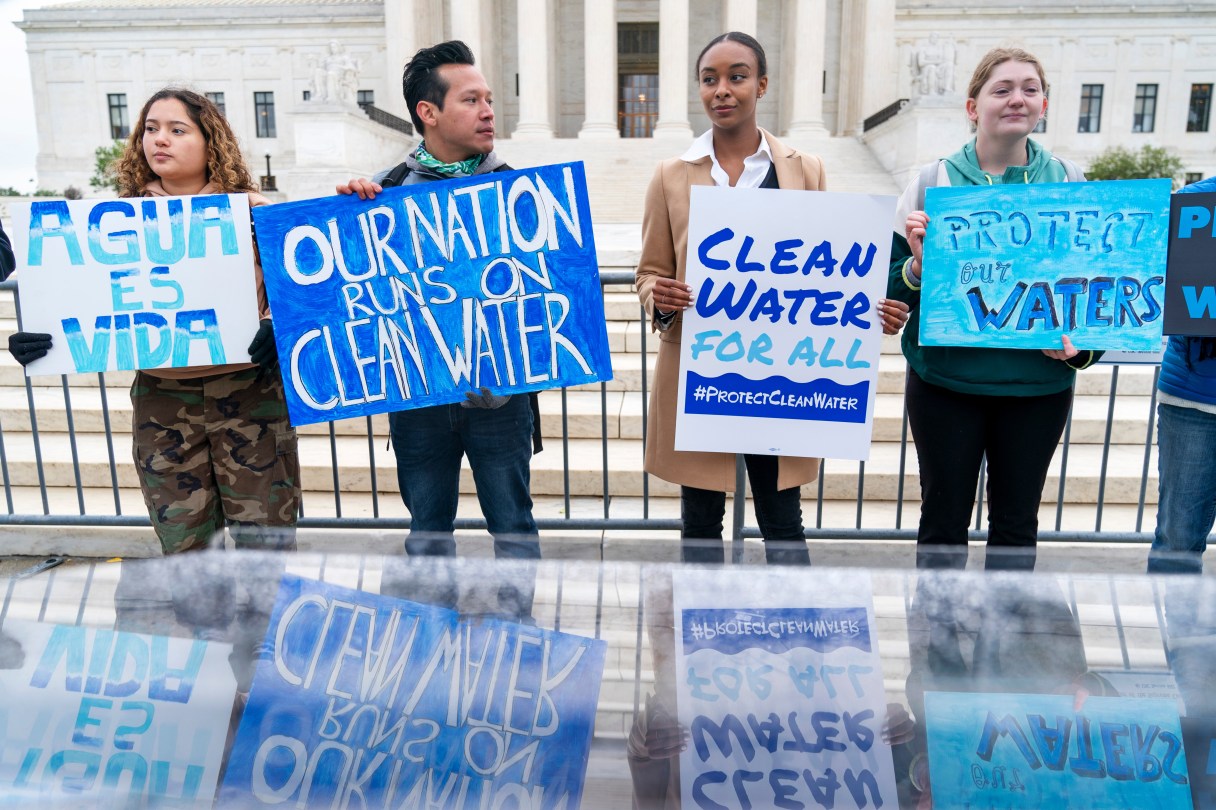
WASHINGTON (AP) — The Environmental Protection Agency on Tuesday proposed limiting states’ and Native American tribes’ power to wield the Clean Water Act to block major projects like natural gas pipelines, advancing the Trump administration’s goal of accelerating the construction of new fossil fuel infrastructure and data centers.
The agency said new constraints on local water quality reviews for federally regulated projects will still allow states to protect their environment while preventing unnecessary delays. Successive administrations have seesawed on the scope of states’ power. President Donald Trump’s first administration reduced it, the Biden administration restored it and now the Trump administration is once again adding constraints to what’s called Section 401 of the Clean Water Act.
“When finalized, the proposed rule will increase transparency, efficiency and predictability for certifying authorities and the regulated community,” said Jess Kramer, EPA’s assistant administrator for water. “It will also ensure states and authorized tribes adhere to their Section 401 role.”
The Clean Water Act allows states and some authorized tribes to review what effect pipelines, dams and other federally regulated projects have on water quality within their borders. Pipelines, for example, might cross rivers, streams and wetlands — disruptions that states can scrutinize and that have caused holdups before. In 2017, for example, New York regulators rejected a permit for a pipeline, saying there weren’t sufficient protections for hundreds of streams and wetlands.