
MIAMI BEACH, Fla. — The leaders entrusted with making decisions about the College Football Playoff’s future gave every indication Sunday that they remain stuck in a yearlong debate about expanding the field from its current dozen teams to 16 or beyond.
The CFP Board of Managers, made up of 11 university chancellors/presidents, and the CFP Management Committee, made up of 11 conference commissioners and the athletic director for football independent Notre Dame, met on the eve of the title game while facing a Friday deadline from ESPN — the $7.8 billion bankroller of the postseason — to decide on changing or staying at the current 12-team model for determining a national champion in NCAA Division I’s upper-tier Football Bowl Subdivision.
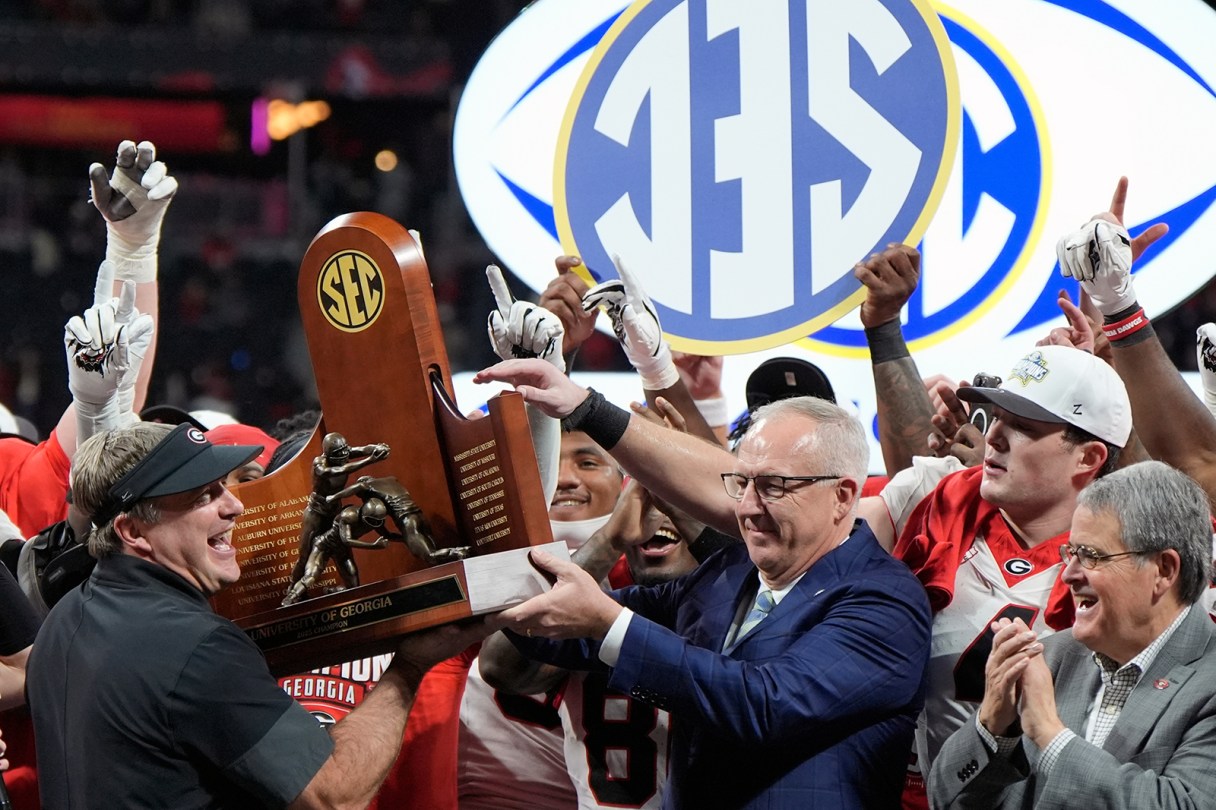
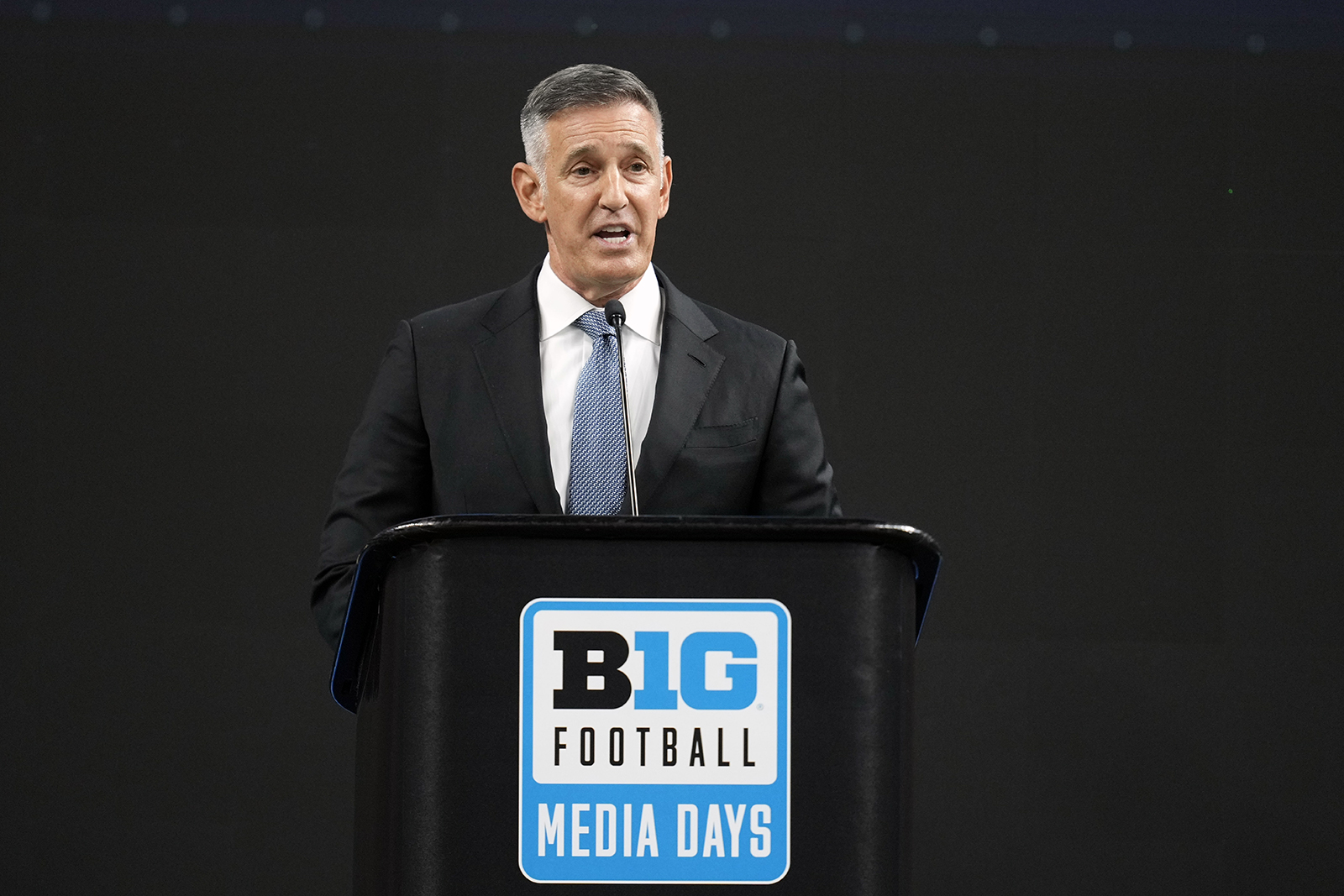
The debate boils down to two of the most powerful leagues, the Big Ten Conference and the Southeastern Conference, that both want to expand but have widely different visions of how far that should go.
“I think that’s up to two people,” said Tim Pernetti, commissioner of the American Conference.
He was speaking of Tony Petitti of the Big Ten and Greg Sankey of the SEC, who did not reach any agreement during the last scheduled meeting before the upcoming deadline.
“Still more work to do,” Pettiti said as he quickly made his way toward an escalator at the Miami Beach hotel where the meeting was held. “100%, we’re still working.”
Monday night’s matchup between No. 1 Indiana (15-0) and No. 10 Miami (13-2) at Hard Rock Stadium in Miami Gardens will mark the end of the current contract, and a six-year deal worth $1.3 billion a year kicks in next season. Its revenue distribution model doles out more to the SEC and Big Ten than the Atlantic Coast and the Big 12, the two other conferences that make up the Power Four.
Just as importantly, it leaves the two most powerful leagues squarely in charge of what comes next.
The SEC is pushing for an expansion to 16 teams, and with an emphasis on at-large bids — a format favored by the three other Power Four conferences and most of the smaller leagues that are hoping for access into whatever comes next.
The Big Ten has pushed for a bracket of up to 24 teams with multiple automatic qualifiers from each conference. It could do away with the need for conference title games and replace them with seeding games to determine two or three of the automatic spots.
“It’s a system that would keep a lot of teams in it, put some more value into the regular season,” Indiana athletic director Scott Dolson said in an interview Saturday, adding that the process “is really about quality people coming together” to make a decision.
If CFP leadership can’t agree on a new number, the tournament would automatically stay at 12, with a deadline of Dec. 1, 2026, to make any changes for the following season. This is the second season with a 12-team bracket. From the CFP’s inception in 2014 (as the successor to the BCS national championship game) through the 2023 season, it was a four-team event with a semifinals-plus-final format.
The 12-team bracket comes with four byes for the first round, when the other eight teams match up in on-campus games hosted by the better seeds. The New Year’s Six bowls — the Cotton, Fiesta, Orange, Peach, Rose and Sugar — rotate in hosting the four quarterfinals and two semifinals to set up the championship game.
The only real news coming out of the weekend was a social media post from U.S. President Donald Trump saying he would sign an executive order to give an exclusive four-hour window to the Army-Navy game, which takes place the second Saturday in December — a date currently wedged between conference title games and the start of the playoff.
A move to 16 or more games could put the playoff in conflict with the annual meeting between those service academies, which is typically followed by the Heisman Trophy presentation that evening in New York.
“This national event stands above Commercial Postseason Games,” wrote Trump, who will attend Monday night’s CFP final.
Mark Keenum, the president of SEC member Mississippi State and chair main of the the CFP Board of Managers, tried to strike a tone of calm, not committing to the idea that any chance for compromise is dead.
“This was not a deadline day of any kind,” Keenum said, “so they’re still talking, and we anticipate the discussions will continue.”