
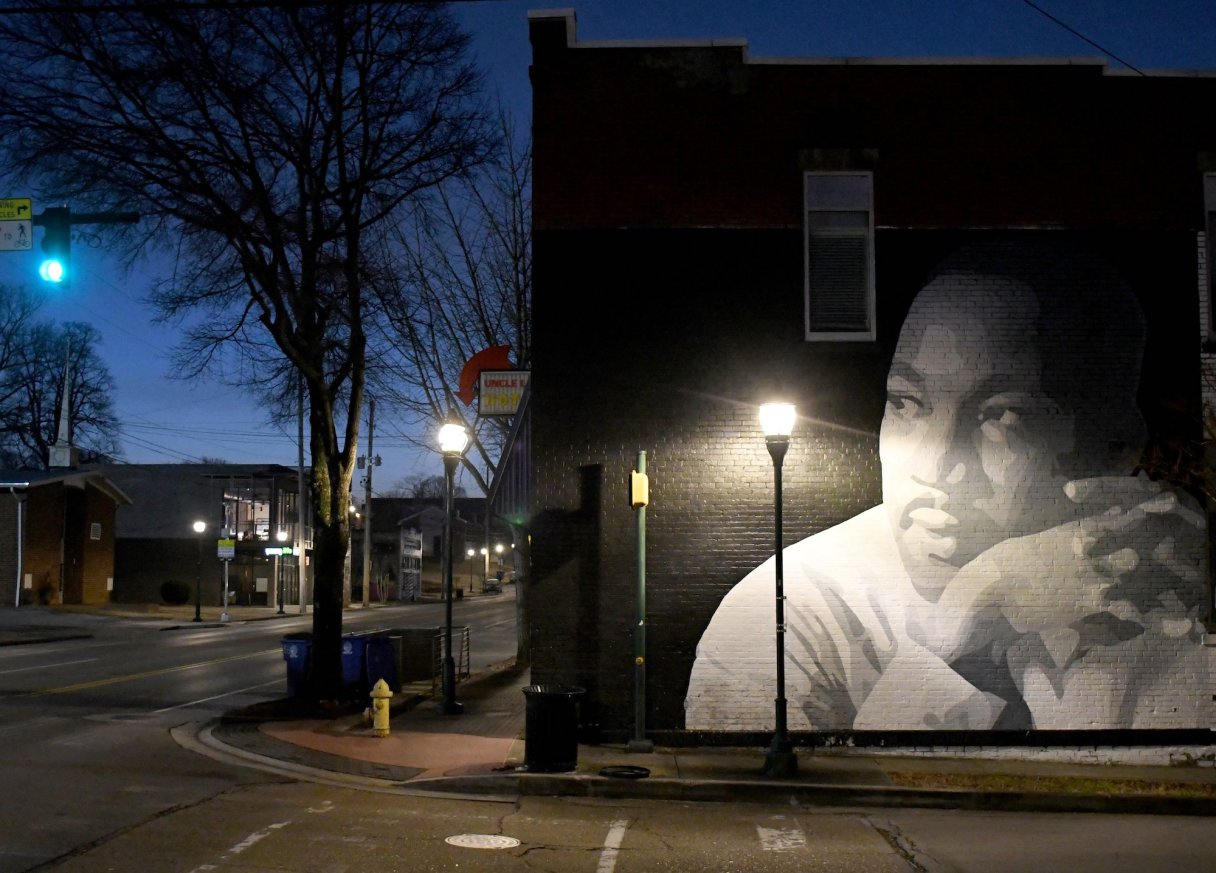
Across the country, streets named for the Rev. Martin Luther King Jr. don’t need explaining in Black communities.
They are known by feel. Among long corridors where beauty supply stores sit beside corner stores, where barbershops outlast boarded-up buildings, where potholes crowd the pavement and front-porch conversations stretch past sundown. These are not symbolic roads. They are places where Black life continues, day after day, despite decades of disinvestment, living in the shadow of a name that promised justice long before cities were ready to deliver it.
In Tennessee, King’s legacy is etched into the geography of the state itself. His name appears on green street signs and stretches of asphalt that carry daily life: commuters heading to work, children walking to school and churches opening their doors on Sunday mornings.
But those streets did not come easily.
The fight to name roads after King in the Volunteer state unfolded over decades, shaped by local politics, racial resistance and a persistent question about where, and how, Black history is allowed to exist in public space: Is naming a street after King an act of honor, or a substitute for the economic and political investment his work demanded?