
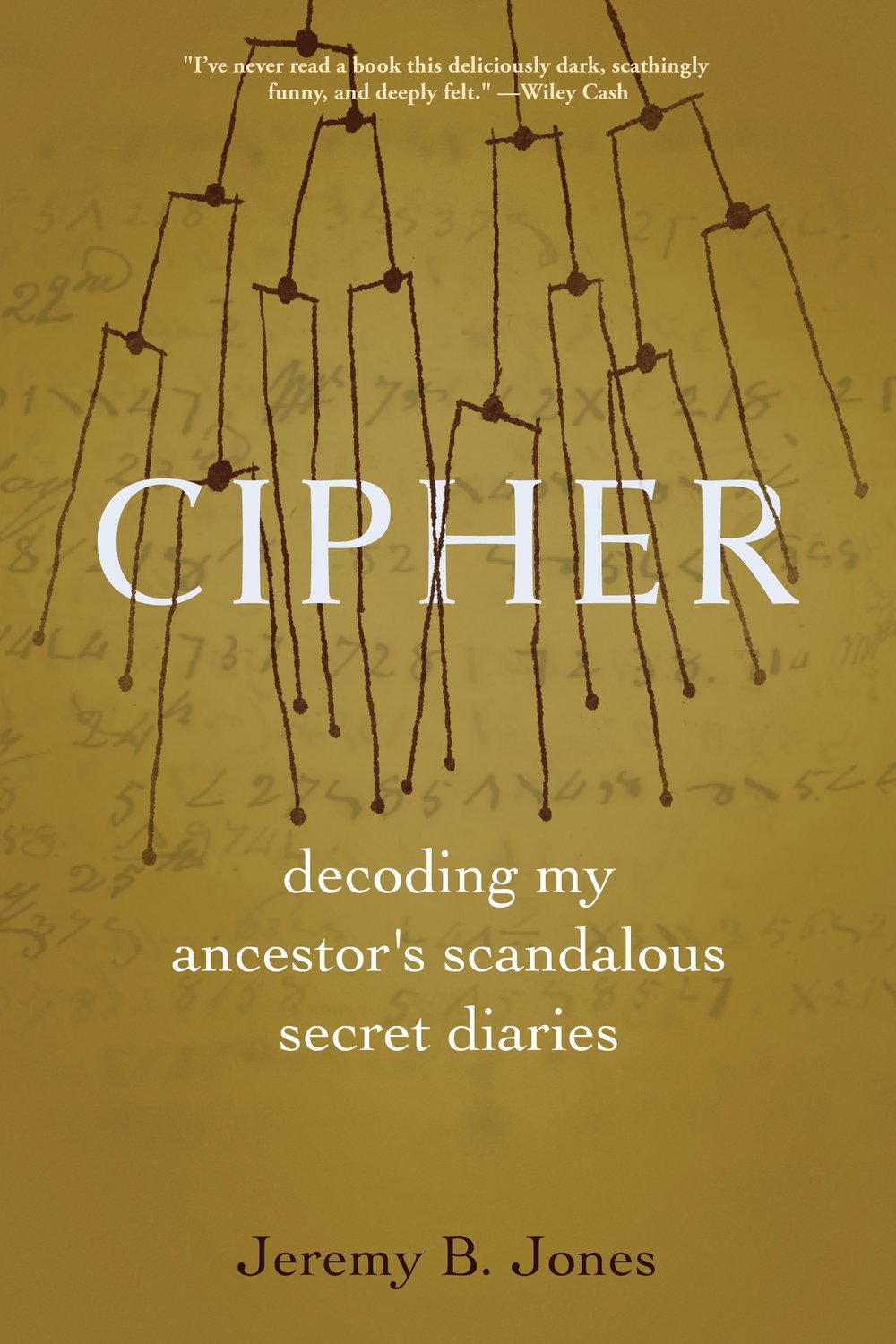
“Cipher: Decoding My Ancestor’s Scandalous Secret Diaries” By Jeremy B. Jones (Blair, 296 pages, $28.95)
Given the boom of the ancestry industry, Americans apparently have a limitless appetite for learning about their lineages. What happens, though, when one discovers a family history filled not with titans of industry or trailblazing scientists but with knaves and hate-mongers? Jeremy B. Jones faced this dilemma when he stumbled across encoded journals written by a 19th century forebear who owned slaves and recorded an astounding number of sexual conquests. Jones chose to meet the unsavory past head-on. In “Cipher: Decoding My Ancestor’s Scandalous Secret Diaries,” Jones does an admirable job of addressing his family’s connections to historical injustice and asking pointed questions about this distasteful patrimony.
Jones, a professor at Western Carolina University, makes no attempt to disclaim his relation to William Thomas Prestwood, who accounts for just 1/64 of Jones’ genetic make-up but who founded his family’s home in the Appalachian Mountains of North Carolina, where Jones’ family continues to live. Jones feels a deep attachment to his ancestry — “a people who’d abided in this very spot, living out quiet lives for generations” — and views “my whole story” as an accumulation of “the bodies that surround me,” living and dead. He naturally asks about Prestwood, six generations removed, “What slice of me is he?”
“Cipher” begins with a brisk history of the happenstances that led to Jones’ learning about the diaries. Prestwood left no instructions for their disposition; being written in a substitution code that employed foreign alphabets made them obscure to his children, virtually assuring their relegation to the trash heap. And they were thrown out, a century later, and then saved by a stranger and transported to a library, where they miraculously fell into the hands of just the right person, a retired cryptologist for the National Security Agency, who spent years translating each handsewn volume. The sheer unlikelihood of the diaries’ eventually coming to Jones’ attention commands his interest long before he gets to the naughty bits.
In addition to interrogating his relationship with Prestwood, Jones raises a number of ethical questions regarding the publication of private scribblings. “I had begun wondering if I should be doing any of this: unearthing the purposefully buried life of a man,” Jones writes. “Was I shrinking his life by bringing it out into the open?” Jones solves the quandary by turning the investigation into a dialogue. As he reads William’s diaries, he responds by writing “Dear William” letters and sharing relevant episodes from his own life. This exchange gives the book its structure, with each phase of his ancestor’s decoded life followed by personal essays on love, work and manhood.