
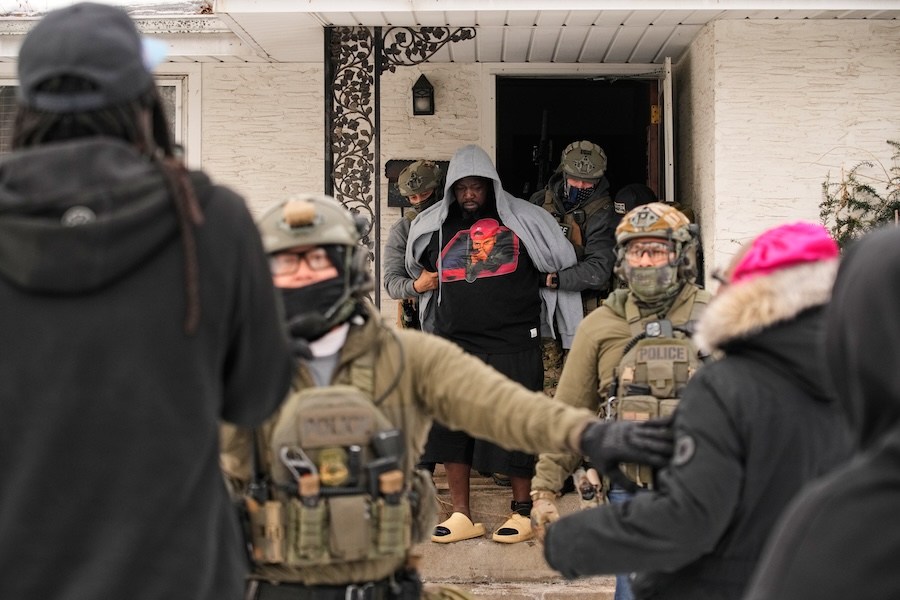
SAN DIEGO (AP) — Since coming to the United States 30 years ago from Mexico, Fernando Perez said U.S. immigration officers have stopped by his home numerous times, but he has never once answered the door.
“There are rules and I know them,” said Perez, speaking in a mix of English and Spanish in a Home Depot parking lot where he has routinely sought work as a day laborer from contractors and people renovating their homes.
Over the decades it has become common knowledge in immigrant communities across the country to not open the door for federal immigration officers unless they show a warrant signed by a judge. The Supreme Court has long held that the Constitution’s Fourth Amendment against unreasonable search and seizure prohibits the government’s forced entry into someone’s home.
As a result, immigration officers have had to adapt by making arrests in public, which often requires long hours of surveillance outside homes as they wait to nab someone walking to the street.
But an internal Immigration and Customs Enforcement memo obtained by The Associated Press states immigration officers can forcibly enter people’s homes without a judge’s warrant, marking a dramatic shift that could upend the legal advice given to immigrants for decades.