
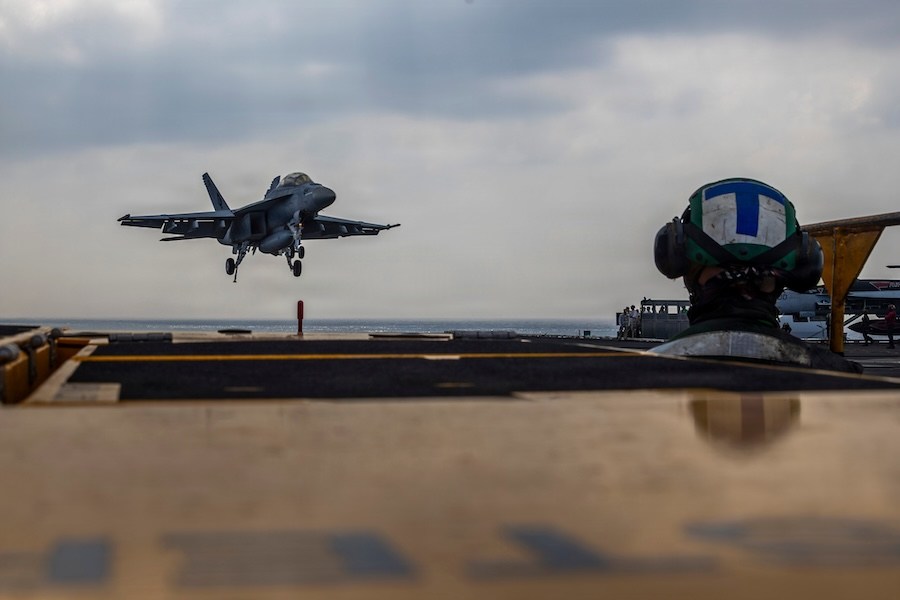
DUBAI, United Arab Emirates (AP) — Two Iranian-backed militias in the Mideast are signaling their willingness to launch new attacks, likely trying to back Iran, as officials acknowledged the arrival of a U.S. aircraft carrier to the region Monday. President Donald Trump ordered the carriers to move to the Middle East as he threatened military action over its crackdown on nationwide protests.
Yemen’s Iranian-backed Houthi rebels on Monday hinted they were ready to resume attacks on shipping in the Red Sea. That came just after Iraq’s Kataib Hezbollah paramilitary group, long supported by Iran’s paramilitary Revolutionary Guard, issued a direct threat late Sunday toward any attack targeting Iran, warning a “total war” in the region would be a result.
The statements came as the entire region is mired in a tense waiting game to see if Trump will strike. Both the Houthis and Kataib Hezbollah sat out from Israel’s 12-day war on Iran in June that saw the United States bomb Iranian nuclear sites. The hesitancy to get involved shows the disarray still affecting Iran’s self-described “Axis of Resistance” after facing attacks from Israel during its war on Hamas in the Gaza Strip.
US carrier arrives in region
The threats came as the aircraft carrier USS Abraham Lincoln and other guided missile destroyers in its strike group arrived in the region to “promote regional security and stability,” U.S. Central Command said Monday on social media.