
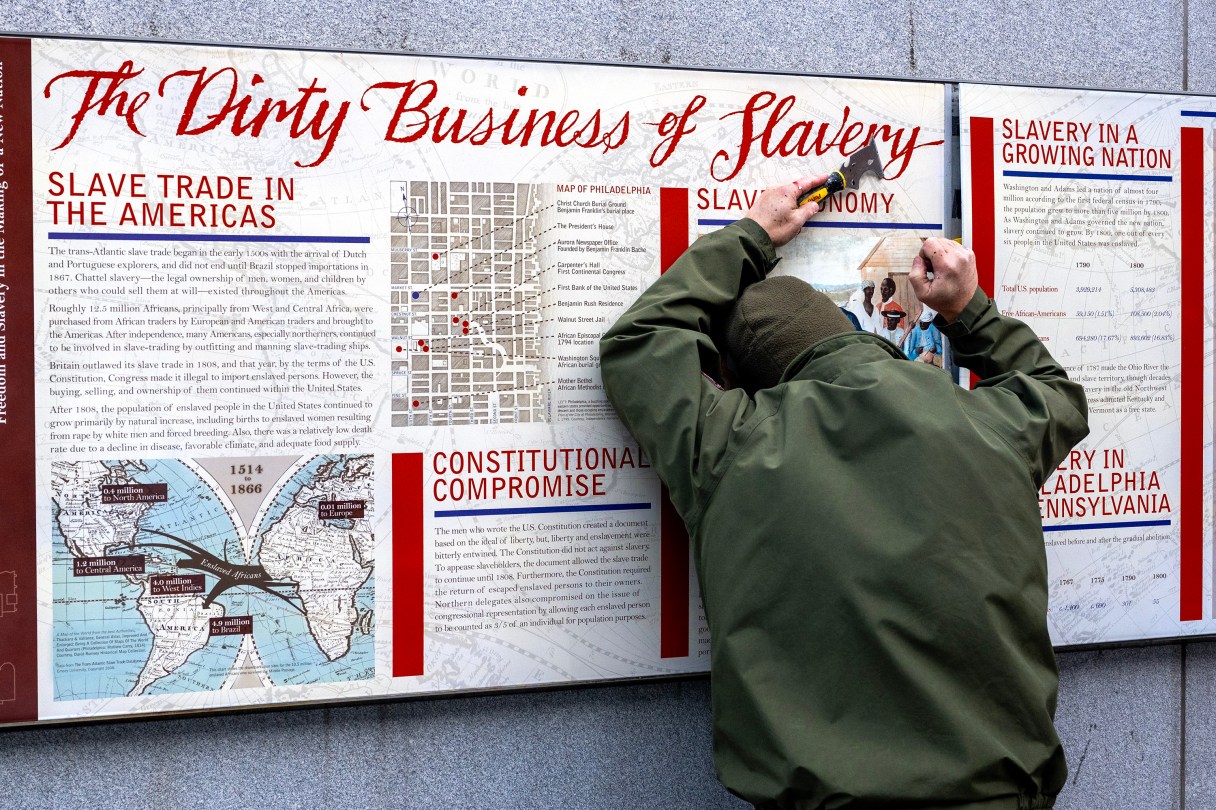
Despite widespread pushback, the Trump administration and the National Park Service removed exhibits on slavery from the President’s House, a recreation of the executive residence that once housed George Washington and John Adams.
The exhibits detailed facts about slavery in early America, including how Washington engaged in a human shell game with enslaved members of his own household. After the passage of Pennsylvania’s Gradual Emancipation Act in 1780, enslaved people were shuttled between Philadelphia and Mount Vernon every six months to obey the letter, if not the spirit, of the law.
The exhibits also memorialized the nine people first brought into bondage to the city with our nation’s first president. It is important to note their names and their stories.
Austin was a waiter who died while traveling on one of those trips back to Virginia. Paris was a young stablehand whose tenure in the city was short. Hercules was a celebrated chef who eventually escaped from Mount Vernon. Christopher Sheels served as Washington’s valet. Richmond was the son of Hercules and worked various roles, despite being just 11 years old. Giles drove Washington’s carriage. Oney Judge, a maid, famously fled bondage in Philadelphia, attracting the president’s ire. There was also Moll, a nanny, and Joe, a footman. Joe had to leave his wife and children behind in Virginia during his time working at the President’s House.
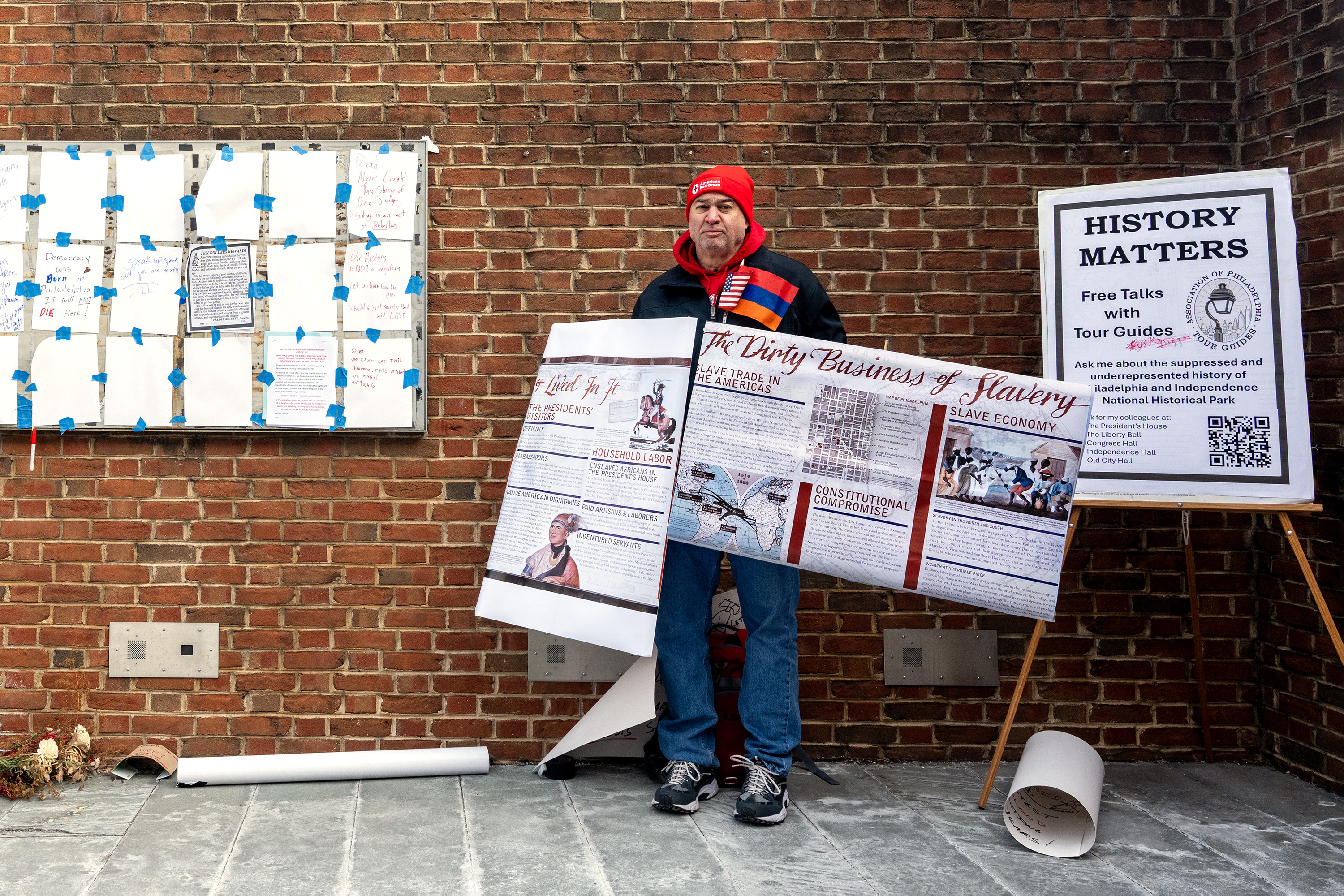
Evidence shows that the people whom Washington enslaved were well aware of the hypocrisy surrounding their situation. In a nation formed on the premise that “all men are created equal,” they found themselves bound by birth to a life of servitude of the new republic’s first leader. Their stories once adorned the President’s House. Now, blank spaces stand in their place.